Google & Shell Extend Lifespan of Dutch Offshore Wind Farm
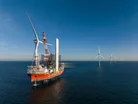
Google and Shell are partnering to extend the operational lifespan of the Netherlands' first offshore wind farm that began operations in 2007.
Through a new power purchase agreement (PPA), Google has committed to buying 100% of the 108-megawatt capacity of this pioneering wind farm.
The purchase enables Shell to pursue permit extensions and invest in critical upgrades that will keep the facility running for at least four years beyond its planned decommissioning date.

Extending lifespan and preserving clean energy
This agreement is the first time a corporate PPA has been used to extend the life of an offshore wind farm.
Without this intervention, the project was scheduled to be retired, despite its continued potential to deliver zero carbon electricity.
Instead, the farm will remain a valuable contributor to the Dutch grid, preventing the premature loss of carbon-free generation capacity at a time when accelerating the energy transition is more urgent than ever.
For Google, this is not a one-off investment.
To date, the company has supported more than a gigawatt of clean energy capacity in the Netherlands through similar agreements.
A model for sustainable partnerships
This investment aligns with Google’s broader ambition to operate on 24/7 carbon-free energy (CFE) across all grids by 2030.
Beyond simply buying clean power, Google is actively shaping the market to support the longevity and financial viability of renewable infrastructure.
By entering into this PPA, the company is showcasing how corporations can drive systemic change, not just by funding new projects but by extending the usefulness of existing ones.
The partnership also underscores the growing importance of lifecycle thinking in clean energy, focusing not just on building new capacity but on maintaining and optimising what already exists.
In doing so it sets a precedent for others to follow, particularly as many early wind and solar projects face upcoming decommissioning.
Google’s climate commitments
Google has set ambitious climate goals, including achieving net-zero emissions across its operations and value chain by 2030.
In 2023, the company matched 100% of its global electricity consumption with renewable sources and achieved a 64% hourly match with local carbon-free energy.
It is also making strides in water stewardship and circular economy efforts, pledging to replenish 120% of its water use and eliminate single-use plastics.
From AI-powered flood forecasting tools to energy-efficient data centres, Google is leveraging technology to reduce emissions and support communities on the front lines of climate change.
However, progress has not come without challenges.
Emissions rose 13% last year, primarily due to the growing demands of AI and data infrastructure.
However, Google remains committed to halving its combined Scope 1, 2 and 3 emissions by 2030.
Shell’s role in sustainable transformation
Shell has supported sustainability goals since the late 1990s and aims for net-zero emissions by 2050.
The company’s strategy includes increased recycling, responsible water use and biodiversity support.
More notably, it is investing in low-carbon solutions such as offshore wind and carbon capture and storage (CCS).
"Carbon capture and storage is a key technology to achieve the Paris Agreement climate goals," says Huibert Vigeveno, Shell’s Downstream, Renewable and Energy Solutions Director.
"The Polaris and Atlas projects are important steps in reducing emissions from our own operations."
Despite this, the majority of Shell’s capital expenditure remains focused on fossil fuels.
While oil output is expected to decline slightly, Shell plans to expand its fossil gas business significantly by 2030.
Its emissions strategy focuses on intensity rather than absolute reductions—an approach that has drawn criticism for not aligning with the urgency of climate science.
Nevertheless, Shell is positioning itself for long-term transformation.
"We have made significant progress against all of the targets we set out at our Capital Markets Day in 2023. Thanks to the outstanding efforts of our people, we are transforming Shell to become simpler, more resilient and more competitive," says Wael Sawan, CEO of Shell.
"We want to become the world’s leading integrated gas and LNG business and the most customer-focused energy marketer and trader, while sustaining a material level of liquids production.
“Today we are raising the bar across our key financial targets, investing where we have competitive strengths and delivering more for our shareholders."
Despite differing strategic approaches, the collaboration between Google and Shell to extend the life of a legacy offshore wind farm offers a rare example of pragmatic climate action.
Rather than allowing the retirement of viable infrastructure, this initiative breathes new life into it—demonstrating the climate value of not just building, but sustaining clean energy.
Explore the latest edition of Sustainability Magazine and be part of the conversation at our global conference series, Sustainability LIVE.
Discover all our upcoming events and secure your tickets today.
Sustainability Magazine is a BizClik brand