
GWEC: Why Isn’t the Global Wind Sector Growing Faster?
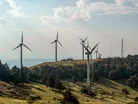
The global wind industry set a new benchmark in 2024.
Last year, the global economy increased its wind energy capacity by 117 GW, bringing global capacity to 1,136 GW.
Yet that headline figure masks a more complex reality.
In its 2025 Global Wind Report, the Global Wind Energy Council (GWEC) warns that current growth rates fall far short of what is required to meet the COP28 target of tripling renewable energy capacity by 2030.
“We are not going fast enough,” Jonathan Cole, Chair of GWEC, says in the report’s foreword.
“The rate of installation of wind energy needs to continuously increase, not hold steady or decrease.”
While wind now accounts for 20% of global renewable growth, installations remain heavily concentrated.
China alone accounted for 70% of new capacity in 2024, followed by the United States, Brazil, India and Germany.
Emerging markets including Uzbekistan, Egypt and Saudi Arabia made progress, but the growth of wind elsewhere in the world has been fairly limited.
Offshore wind, in particular, regressed. New capacity fell to 8 GW in 2024, down from 11 GW the previous year.
This decline was due in part to stalled projects in Europe and the US, where developers struggled with inflation-linked cost spikes and inflexible offtake contracts.
- An offtake contract is a binding agreement where a buyer (the "offtaker") commits to purchase all or a substantial portion of a product or service produced by a seller (the "producer") at a predetermined price and quantity.
Barriers to growth in the wind energy industry
Despite its growing competitiveness, wind energy still faces some structural and macroeconomic challenges.
Supply chain constraints, volatile auction frameworks and insufficient grid infrastructure all pose threats to the sector’s momentum.
But perhaps the largest challenge the sector has to contend with is financing.
Interest rate hikes and rising capital costs have made electricity more expensive, particularly in the offshore markets.
In the US, for instance, the price of electricity generated by offshore wind rose 50% between 2021 and 2023, meaning that some previously secured contracts are now being renegotiated or even cancelled.
“It is imperative that we address these barriers head-on and implement solutions that will enable us to achieve the scale and efficiency required to meet our climate goals,” says Girish Tanti, Vice Chair of the GWEC.
The growing fragmentation of global trade is only compounding these problems.
Protectionist measures such as local content requirements and tariffs are undermining cross-border supply chains and adding costs to manufacturing.
The report highlights that global manufacturing output for turbines remains below levels needed to meet even current policy-driven market forecasts, let alone the 320 GW annual capacity required by 2030 to stay on a 1.5°C pathway.
Gridlock and misinformation
Grid infrastructure is also proving to be something of a bottleneck when it comes to the growth of the wind sector.
According to the GWEC’s report, at least 3 TW of renewables are currently waiting in connection queues worldwide.
In essence, huge amounts of renewable energy are currently untapped, simply because our electricity grids are in need of upgrades.
Grid modernisation and expansion are not keeping pace with new renewable generation, particularly in Europe and parts of Asia.
Curtailment — where wind power is generated but cannot be delivered — is rising, along with periods of negative electricity pricing.
Then there’s the political headwinds that are gathering across the world.
The GWEC warns that orchestrated disinformation campaigns are threatening to sway the public’s opinion of wind energy.
“We must remain steadfast in fostering policymaking that is based on scientific and economic data and not on subjective opinion or disinformation,” Jonathan explains.
How policy can benefit the wind sector
Despite these challenges, GWEC maintains that the sector is well-positioned to accelerate if the right policy and regulatory frameworks are implemented.
“With the right conditions in place, the wind industry stands ready to triple growth to the 320GW necessary to reach the COP28 goal to triple renewable energy capacity by 2030, as a crucial climate change mitigation measure,” says Ben Backwell, CEO of the GWEC.
With streamlined permitting, flexible auction designs, investment in grid resilience and stronger international collaboration, the GWEC believes that wind energy will flourish.
Encouragingly, several markets are making progress. The UK enacted reforms to support its goal of 80 GW of wind capacity by 2030.
Germany tendered a record 11 GW in new onshore wind.
Meanwhile, South Africa, Brazil and Central Asian states like Kazakhstan are expanding policy support and infrastructure investment.
“Let us harness the power of the wind to create a cleaner, greener and more sustainable world for future generations,” says Girish.
But as the report makes clear, turning ambition into reality will require not just wind, but political will.
Explore the latest edition of Sustainability Magazine and be part of the conversation at our global conference series, Sustainability LIVE.
Discover all our upcoming events and secure your tickets today.
Sustainability Magazine is a BizClik brand