
How Biofuels and Renewable Energy are Used in Formula 1
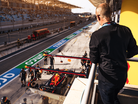
The roar of engines, the smell of burning rubber and the thrill of wheel-to-wheel racing at more than 200mph.
It’s fair to say that Formula 1 has never been a sport associated with environmentalism.
The European leg of the 2025 season is set to be a little different, though.
F1 is implementing a comprehensive alternative fuel strategy in service of its 2030 net zero goals as it attempts to transform how the sport operates both on and off the track.
The season’s nine European races, which stretch from May to September, will see the introduction of biofuel-powered lorries delivering freight, renewable energy systems powering entire paddocks and much more.
As the most viewed motorsport series in the world, F1 has a huge responsibility to decarbonise, but it is showing that it is willing to embrace radical, meaningful change.
Powering the paddock with renewable energy
The most visible change arrived in May 2025, at the season’s inaugural European race, the Emilia-Romagna Grand Prix.
Here in Imola, the course’s paddock was entirely powered by a low-carbon energy system.
This centralised approach, supplied by F1 partner Aggreko, promises to slash associated carbon emissions by approximately 90% – a figure that would have seemed impossible just a few years ago.
Rather than each team operating their own generators scattered throughout the paddock, a single compound provided renewable energy from multiple sources.

Hydrotreated vegetable oil (HVO), solar panels and battery energy storage systems (BESS) worked in tandem to power everything from the pit lane to the event technical centre.
This isn't F1 taking a punt on untested technology. The system has been trialled at four previous European races, including the 2023 Austrian Grand Prix and three events in 2024.
Each trial saw impressive carbon reductions, giving the sport the confidence to roll out the technology across all nine of its European races this season.
The benefits extend beyond mere carbon reduction. By eliminating the need for dozens of individual generators, the system also reduces transportation emissions – a crucial consideration for a sport that moves an entire circus across continents throughout the year.
Biofuel lorries and sustainable logistics
Perhaps the most practical demonstration of F1's commitment to sustainability is in its changes to logistics.
This season sees the return of DHL's biofuel fleet, with 37 specially adapted lorries transporting freight across Europe using alternative fuels rather than traditional diesel.
During the 2023 European leg, these biofuel-powered vehicles achieved an average reduction of 83% in logistics-related emissions compared to conventional fuel.
For a sport that requires the precise, time-critical movement of millions of dollars worth of equipment across the world, this represents a quite remarkable achievement without compromising on efficiency.
The fuel of the future
Perhaps most significantly for the sport's future, the 2025 season has seen F2 and F3 cars successfully transition to 100% advanced sustainable fuel, developed by Aramco.
This move builds on the 2024 season's use of 55% sustainable fuel and serves as a crucial testing ground for Formula 1's own transition, which is due in 2026.
The timing is deliberate. Next year's introduction of new hybrid engines in F1 will coincide with the sport's adoption of these advanced sustainable fuels, representing the most significant technical regulation change in years.
But the implications stretch way beyond the circuit.
The sustainable fuel being developed for Formula 1 is designed to be a 'drop-in' replacement, meaning it can also be used in conventional road cars without any modifications necessary.
It could prove transformative for the broader automotive industry, offering a sustainable alternative that requires no infrastructure overhaul or consumer behaviour change.
It’s also further proof that elite level sport is a prolific testing ground for innovations that change life on Earth.
F1’s relationship with SAF
F1's alternative fuel strategy extends into the skies, too.
In 2024, the sport’s governing body made significant investments in sustainable aviation fuel (SAF), which delivered an estimated 80% reduction in flight-related carbon emissions compared to conventional aviation fuel.
Working with partners DHL and Qatar Airways, this initiative reduced total emissions by more than 8,000 tonnes of CO₂ equivalent – roughly equivalent to taking 1,700 cars off British roads for an entire year.
For a sport that operates globally, with races across five continents, aviation emissions are one of the biggest challenges for F1’s net zero prospects.
The 19% reduction in related emissions across the 2024 flyaway events goes to show that meaningful progress is possible even in aviation, traditionally one of the hardest sectors to decarbonise.
The road to 2030
Ellen Jones, Formula 1's Head of ESG, captures the ambition perfectly.
"We remain on track to be Net Zero by 2030, and it is new technologies and innovations such as this that will see us hit our goal," she says.
Her emphasis that the sport can "grow sustainably, with no compromise to our on-track product or fan experience" addresses the elephant in the room – can F1 maintain its mass appeal while going green?
Early evidence suggests the answer is a yes.
Viewership for the series continues to grow globally, attendance at races remains strong and the technical innovations being developed for F1's sustainability drive are finding applications in road cars and beyond.
Explore the latest edition of Sustainability Magazine and be part of the conversation at our global conference series, Sustainability LIVE.
Discover all our upcoming events and secure your tickets today.
Sustainability Magazine is a BizClik brand
