
Revealed: Formula 1’s Rapid Roadmap to Net Zero
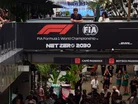
Motorsport is a uniquely fast-paced industry – and not just on track.
The next deadline is often the next race, so change can happen in a matter of weeks.
In the race to net zero, Formula 1 is leading the field, aiming to reach this target by 2030.
Its 2024 Impact Update says that Formula 1 is on track to deliver on this goal.
Ellen Jones, Head of ESG at Formula 1, says: “Innovation and community drove Formula 1's work in 2024. We are thrilled to outline our progress and continued work in this space.
“Formula 1 as a sport is uniquely positioned to take action through our global reach and technological leadership.”
Fuelling F1 cars sustainably
F1’s cars run on E10 fuel, a blend of 10% green ethanol and 90% fuel – but this is planned to change in 2026.
Cars will soon run on 100% sustainable fuel, where the carbon used to produce the fuel is of the same quantity as that emitted when it is used.
F1 has been working in partnership with Aramco and the FIA to develop this fuel and have tested more than 39 blends in the process.
In 2024, F2 and F3 cars ran on 55% Aramco advanced sustainable fuel and the FIA medical and safety cars operated on 40%.
This will move to 100% in F2 and F3 cars for 2025 ahead of F1 cars adopting the fuel.
Throughout the 2024 season, all cars also operated using FSC-approved Pirelli tyres, ensuring compliance with strict forest sustainability standards.
Sustainable fuels off-track
The cars on track represent just 1% of F1’s carbon footprint and already use the most efficient hybrid engines in the world.
Most of the sport’s emissions are off-track, where cars, equipment and teams need to be transported to each of the race locations.
The report says that in 2024, F1’s investment in alternative fuels drove carbon reductions in its air and road logistics alongside circuit operations and on track.
It also made significant investments in sustainable aviation fuel (SAF) as part of this ultra-efficient logistics strategy with DHL and Qatar Airways.
This combined investment reduced total related emissions by more than 8,000 tCO₂e, or roughly 19%, compared to traditional aviation fuel.

Low-carbon energy generation systems began testing and were used in 2024 at the Red Bull Ring, the Hungarian Grand Prix and the Italian Grand Prix in Monza.
For 2025, the programme will be rolled out to reduce more than 90% of carbon emissions at all European Grand Prix using technologies such as hydrotreated vegetable oil (HVO), biofuel, solar panels and batteries.
Reducing logistics emissions
Transporting the equipment for 24 races around the world is no small feat.
As part of Formula 1’s efforts to reduce travel and logistics emissions, it has made improvements to the geographical flow of races around the world.
The race in Japan will move from September to April, fitting with the Asia Pacific segment of the schedule and Azerbaijan has been moved to align with Singapore.
The Qatar Grand Prix will move to the penultimate race of the season, putting it next to Abu Dhabi.
From 2026, the Canadian Grand Prix will be hosted earlier in the year and the Monaco Grand Prix will take place on the first full weekend in June, consolidating the European leg of the season to remove an additional transatlantic crossing.
Stefano Domenicali, President and CEO of Formula 1, said: “The change will make the future flow of our calendar not only more sustainable, but logistically more sensible for our teams and personnel.
“Our net zero by 2030 commitment continues to be a priority for us as a sport and it is thanks to changes like this that we are on track to hitting our goal.”
Formula 1’s social initiatives
In 2021, the Hamilton Commission proposed 10 recommendations including the implementation of a Diversity and Inclusion charter.
Formula 1, the FIA and all 10 F1 teams have now signed the charter, aiming to improve diversity and inclusion across motorsport with initiatives like scholarships, apprenticeships and access for those from underrepresented communities.
In 2024, Formula 1 entered the fourth year of its F1 Engineering Scholarships programme which, by the end of 2025, will have supported 50 underrepresented students.
It launched the Learning Sectors global education programme in collaboration with the British Council to inspire young leaders which kicks off in 2025.
The programme aims to inspire 130,000 students in 700 schools across Brazil, India, South Africa and the UK to pursue STEM subjects.
F1 Academy’s partnership with international karting series Champions of the Future increased female participation in racing from 5% in 2023 to 25% in 2024.
Explore the latest edition of Sustainability Magazine and be part of the conversation at our global conference series, Sustainability LIVE.
Discover all our upcoming events and secure your tickets today.
Sustainability Magazine is a BizClik brand
