How Phlair & Frontier Are Solving DAC’s Energy Problem
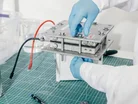
Frontier has signed a landmark deal with Phlair, an innovative direct air capture (DAC) company, to remove 47,000 tonnes of carbon dioxide from the atmosphere between 2027 and 2030.
The agreement, valued at US$30.6m, will support the construction of Phlair’s first commercial-scale DAC facility in Alberta, Canada.
This deal marks a significant step in the fight against climate change as companies seek cost-effective carbon removal solutions.
About Frontier
Frontier is the name of an advance market commitment (set up by a group of some of the world’s biggest businesses) to buy at least US$1bn of carbon removal by 2030.
The group hopes to accelerate the development of high-quality DAC solutions by securing long-term commitments from buyers.
Its five founding companies were Stripe, Google, Shopify, McKinsey and Meta.
Beyond its founding members, Frontier has also facilitated purchases for companies such as Autodesk, H&M Group, Workday and Salesforce.
Through its partnership with Watershed, organisations including Canva, Match Group, Samsara, and Zendesk have also joined the initiative.

Phlair’s energy-efficient approach to DAC
Frontier’s latest investment is Phlair, but why does the German start-up stand out in a crowded DAC market?
Phlair’s approach to direct air capture is unlike anything that has come before, as it addresses one of the sector’s biggest stumbling blocks - high energy demand.
By using an electrochemical process instead of conventional thermochemical reactions, Phlair’s system eliminates the need to heat and cool capture materials, significantly improving efficiency.
"Direct air capture’s energy intensity doesn’t have to be a deal-breaker for DAC to scale to gigaton-level," says Hannah Bebbington, Head of Deployment at Frontier.
"Phlair’s combination of swapping heat for electrochemistry as well as its flexible energy management process shows one path to building energy-efficient DAC systems."
The company aims to achieve an energy requirement of less than 1.5 megawatt hours per tonne of CO₂ captured, roughly 1.3 times lower than other electricity-intensive carbon dioxide removal (CDR) approaches.
If successful, this efficiency could translate into savings of approximately US$15 per tonne of CO₂ removed, bringing the long-term cost closer to the industry’s US$100 per ton target.
Leveraging renewable energy for cost savings
A key innovation in Phlair’s approach is its ability to operate flexibly based on the availability and cost of renewable energy.
Unlike conventional DAC systems that require a constant power supply, Phlair can adjust its energy use according to fluctuations in solar power availability.
When electricity is abundant and inexpensive, the system runs at full capacity and stores excess capture and release liquids in holding tanks.
During periods of high electricity prices, Phlair can shut down its energy-intensive electrolyser while continuing to operate other parts of the system.
Phlair is also set to become one of the first DAC companies to deploy behind-the-meter solar power.
By installing dedicated solar panels on-site, Phlair can bypass grid constraints and ensure a consistent supply of low-cost renewable energy.
This strategic move not only reduces the facility’s reliance on external energy sources but also bolsters its economic viability.
"Our unique edge in energy procurement and access to cheap electricity enables us to demonstrate low-cost DAC to our forward-leaning group of customers," said Malte Feucht, Co-Founder and CEO of Phlair.
"This offtake unlocks and drives down the cost of our supply chain, accelerating Phlair’s scale-up by several years."
Scaling up with modular technology
Phlair’s approach to scaling its DAC operations also sets it apart from other players in the space.
Instead of relying on custom-built, large-scale facilities, Phlair’s system is designed with modular components similar to solar panels.
This allows for phased deployment, reducing upfront investment and making expansion more manageable.
By leveraging existing electrochemical industrial systems, such as commercial electrolysers and fuel cells, Phlair benefits from established supply chains and lower material costs.
This approach minimises financial and logistical hurdles, positioning the company as a competitive player in the growing DAC market.
Growing demand for high-quality carbon removal
The deal with Phlair is part of a broader effort by Frontier to facilitate large-scale carbon removal purchases.
As demand for carbon removal solutions grows, particularly among businesses striving to meet net zero targets, Phlair’s scalable and energy-efficient approach could set a new standard for DAC deployment.
The success of this model will be closely watched as companies seek viable pathways to reduce atmospheric CO₂ concentrations while managing costs.
With construction of Phlair’s Alberta facility set to begin, the carbon removal industry is poised for a pivotal moment.
If Phlair’s technology performs as expected, it could reshape the economic landscape of DAC, making it a more accessible tool in global decarbonisation efforts.
Google’s Carbon Captures & Removals Lead, Randy Spock, is excited by the potential of Frontier’s purchase agreement with Phlair.
“As with Google’s early support for Holocene, our funding through Frontier for Phlair’s first commercial-scale facility in Alberta is aimed to accelerate progress toward lower-cost DAC approaches that could help reach net zero emissions on a planetary scale,” he says.
Explore the latest edition of Sustainability Magazine and be part of the conversation at our global conference series, Sustainability LIVE.
Discover all our upcoming events and secure your tickets today.
Sustainability Magazine is a BizClik brand