
Is Shipping’s First Carbon Levy ‘Too Little, Too Late’?
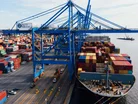
The International Maritime Organisation (IMO) has agreed to implement the world’s first global carbon levy on shipping, marking a historic moment for climate policy in a sector that accounts for around 3% of global greenhouse gas emissions.
The new system, due to take effect in 2028, will impose a fee of US$380 per tonne on high-emission fuels, with an additional US$100 per tonne charge for emissions above set thresholds.
This measure will also allow carbon credit trading among ships, a mechanism designed to incentivise the transition to low-emission fuels and operational improvements.
Despite being a landmark moment in carbon pricing, the deal has left many developing nations frustrated and disillusioned.
Developing nations express disappointment
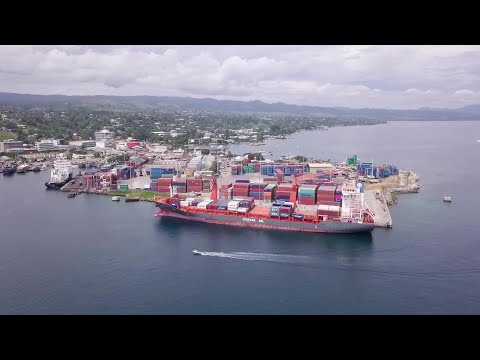
In a joint statement after the vote, a coalition of 24 nations — including the Republic of Fiji, the Republic of the Marshall Islands, the Republic of Seychelles, the Solomon Islands, Tuvalu and the Republic of Vanuatu— said the outcome “would do too little, too late to cut shipping emissions and protect their islands”.
Pacific Island nations are amongst the most vulnerable countries in the world when it comes to climate change, with rising sea levels threatening to completely submerge them.
The group had supported a more ambitious proposal – a flat, 1.5°C-aligned fee for every tonne of carbon emitted, which analysts estimate could have raised up to US$60bn annually.
Instead, the final agreement is expected to generate around US$10bn a year, a figure that will be reinvested into the shipping industry itself rather than being directed toward nations suffering the brunt of climate impacts.
“Let us be clear about who has abandoned 1.5°C,” said Ralph Regenvanu, Environment Minister of Vanuatu.
“Saudi Arabia, the US and fossil fuel allies pushed down the numbers to an untenable level and blocked progress at every turn.”
The IMO vote passed 63-16, with China and Brazil — both previously opposed — swinging in support of the compromise framework.
However, petro-states such as Saudi Arabia, Qatar and Russia remained in opposition.
Why the US has opted out of the process
The United States’ stance added further controversy.
Just days before the final agreement, the US formally withdrew from the negotiations, stating it “rejects any and all efforts to impose economic measures against its ships based on GHG emissions or fuel choice”.
A leaked diplomatic cable also revealed that the US urged allies to “reconsider their support” for the proposals, vowing to “consider reciprocal measures” against any levy affecting US-flagged vessels.
This withdrawal starkly contrasted with the ambitions of many low-lying and climate-vulnerable countries seeking more robust climate finance mechanisms from major emitters.
Environmental goals fall short
Commercial shipping consultancy UMAS projects the agreed levy will reduce emissions by 8% by 2030 — well below the IMO’s stated aim of cutting annual greenhouse gas emissions by at least 20% by that year.
Critics argue that the reduced ambition undercuts the IMO’s own net zero target for around 2050.
The carbon trading mechanism, while innovative in concept, has sparked concerns over enforcement and equity, particularly among nations with limited capacity to retrofit fleets or invest in alternative fuels.

A fractured global response
The shipping industry, responsible for transporting around 90% of the world’s traded goods, has long been seen as a difficult sector to decarbonise due to its heavy reliance on fossil fuels and long asset lifespans.
Yet its role in climate change is undeniable.
If ranked as a nation, global shipping would be the sixth-largest emitter of greenhouse gases.
Despite the symbolic significance of the carbon levy, critics say the new scheme falls short of delivering the transformational change needed to keep 1.5°C within reach.
The policy will be formally adopted by the IMO in October, with implementation slated for 2028.
However, key details remain unresolved, including how funds will be administered and whether additional support will be provided to developing nations to facilitate compliance.
What is clear is that the nations most in danger from the threats of climate change are livid.
“The developing countries with the greatest need came here and offered a solution,” says Antony Derjacques, Minister for Transport for the Seychelles government.
“How can the other major economies ask us to take a weak deal home to our people, who are suffering as a result of the climate crisis?
“And how can they take it back to their own constituents?”
Explore the latest edition of Sustainability Magazine and be part of the conversation at our global conference series, Sustainability LIVE.
Discover all our upcoming events and secure your tickets today.
Sustainability Magazine is a BizClik brand