Kuehne+Nagel and Milence Drive Electric Freight Forward
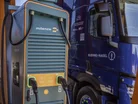
Electric trucks offer rechargeable batteries, zero emissions and reduced noise pollution, proving ideal for urban and rural environments.
Kuehne+Nagel, a global logistics company, and Milence, a company building Europe’s largest public charging network for trucks, have come together to demonstrate the viability of electric road freight.
The partnership aims to shift the focus to the possibilities rather than the limitations of electric trucks.

Integrating electric vehicles
Kuehne+Nagel’s electric heavy goods vehicles are becoming integrated into operations as they collect loads from the Able Humber Port (AHP) thanks to Milence’s first UK charging hub located in Immingham.
“Alongside supportive measures to scale depot charging – such as faster access to grid connections and enabling policy measures – we also need high-performance, reliable and cost-effective public charging hubs,” says Kate Broome, Sustainability and Social Impact Director at Kuehne+Nagel UK.
“We’re proud to be among the early adopters using Milence’s hub, proving that electric heavy trucks are not just the future – they’re already here.”
With high-performance 400 kW CCS chargers, charging currently takes around one to 2.5 hours for a full charge.
There is also a future plan to add a MegaWatt charger, reducing the time to 30-45 minutes (depending on battery size, vehicle specifications and truck type).
Kuehne+Nagel and Milence both share the ambition to accelerate fleet electrification by exchanging operational information, for example, determining strategic locations for charging hubs.
“Electric road transport is no longer a future ambition, it’s happening now,” says Roel Vissers, CCO at Milence.
“With more than 20 operational hubs across Europe, our first green corridors are emerging and the shift to sustainable logistics is gaining momentum.
“To scale this transformation, utilisation is key.
“At Milence, we collaborate closely with key stakeholders across the transport sector.”
Defining EV regulation
Both companies also partner with policymakers to support electrification efforts.
As a member of eFREIGHT 2030, part of the UK Government’s ‘Zero Emission HGV and Infrastructure Demonstrator Programme’, Kuehne+Nagel has been feeding back real-world data and learnings since the electric heavy-duty trucks arrived in early 2025.
“Partnerships with pioneers like Kuehne+Nagel are essential to shaping the infrastructure and services our industry needs,” says Roel Vissers.
“Our hubs are designed as safe, comfortable charging stops that support both drivers and fleets on their electric journeys.
“The transition won’t happen overnight but by working together, we’re moving closer to a road transport system that is not only sustainable but also economically viable.”
Tackling EV limitations
Electric trucks offer significant environmental benefits, particularly in reducing emissions but several challenges hinder their widespread adoption.
One major issue is their limited range and battery capacity; current lithium-ion batteries provide less energy density than diesel, leading to shorter ranges, heavier vehicles and reduced payloads.
Inadequate charging infrastructure, especially high-capacity stations for heavy-duty use, further limits practicality, compounded by long charging times that disrupt operations.
High upfront costs also deter investment, with the added burden of battery replacement expenses.
The weight of the batteries not only lowers payload capacity but may also accelerate wear on roads and bridges.
Environmental and ethical concerns arise from battery production and disposal, including hazardous waste and the impact of mining practices for materials like lithium and cobalt.
Moreover, the sustainability benefits depend on the electricity’s source, fossil-fuel-based power undermines the emissions advantage.
Finally, the technology itself remains in development, with unresolved issues around battery lifespan, reliability in harsh conditions and performance consistency compared to diesel trucks.
The partnership between Kuehne+Nagel and Milence is a major step in the adoption of not only sustainable cars, but sustainable freight.
By collaborating the list of limitations will reduce and the list of adoptions and possibilities will extend, all for a cleaner future.
Explore the latest edition of Sustainability Magazine and be part of the conversation at our global conference series, Sustainability LIVE.
Discover all our upcoming events and secure your tickets today.
Sustainability Magazine is a BizClik brand