
Q&A: Ellen MacArthur Foundation’s Joe Murphy on Circularity
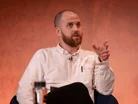
During Day One of Sustainability LIVE: Net Zero at London’s iconic QEII Centre in Westminster, leading executives came together for the Global ESG Strategies panel.
One of the key discussion points was circularity. A circular economy is based on three principles: eliminate waste and pollution, circulate products and materials, and regenerate nature.
This means reusing materials and reforming the corporate culture of disposal.
Joe Murphy, Executive Lead of Network at the Ellen MacArthur Foundation (an organisation which focuses entirely on creating a circular economy), was the panel expert on circularity.
After coming off stage, Joe came to speak with Sustainability Magazine about how the organisation promotes circularity, the Global Plastics Treaty, the recent criticisms of ESG and much more in this exclusive Q&A.

Please introduce your role at the Ellen MacArthur Foundation and how you first got into sustainability.
The Ellen MacArthur Foundation is an international NGO founded in 2010 with a mission to accelerate the transition to a circular economy.
When I first finished university I went to work in the private sector, so I was in professional services and finance.
I really enjoyed aspects of that, but found it fundamentally a bit narrow and it didn’t take on some of the big things that we needed to address as a society.
After that, I went to the charity sector and worked in boots-on-the-ground charities for a couple of years, but I found that quite limiting too.
I was looking for something that was kind of in the middle of those two, that could leverage the kind of entrepreneurship associated with business as well as the actual intent to create something meaningful and lasting and value-adding.
Circularity is all about fundamentally redesigning the economy, rather than putting plasters on it.
We have a story about growth, about job creation, about innovation and entrepreneurship, but design it in a way that addresses the root causes of the issues we have today, like waste and pollution.
In your words, what is the relationship between the circular economy and net zero?
So, net zero is really optimizing for climate. A lot of the focus around net zero has really been on the energy transition and rightly so.
But less talked about is the production and consumption side of that.
What about the energy that goes into producing all of the clothes we wear or chairs we sit on or the microphone I'm speaking into?
The circular economy has a massive role to play in making sure that the embodied carbon or emissions that go into producing these products is kept at its highest utility for as long as possible.
It removes the need to create more stuff, which is going to drive more consumption and drive more energy usage.
We've done some work to say that the circular economy will be required to tackle about 45% of the emissions to stay within the 1.5°C scenario. So it's just under half of the climate solution.
What does the Ellen MacArthur Foundation have planned for 2025? Do you have any top priorities?
As an organisation, I think we're at a moment where the circular economy has had huge uptake.
75 countries around the world now have circular economy roadmaps. 55% of businesses have circularity in their strategy, or have some related targets.
The focus now is on implementation. People have adopted the idea, they believe in it, they've incorporated it into their strategies – now it's about doing it.
We are set up to support that kind of implementation. For example, we do a lot of work on plastics packaging and there are a couple of key challenges there.
One is that we need to scale reusable packaging solutions. So, how do we scale so that 20% of plastics packaging is covered by reuse systems.
Another challenge is that we need to design out some of the problematic formats.
Some companies sell very complex multi-material sachets containing things like shampoo, which are often really small format, very high volume.
But they're often sold in markets where there is not sufficient recycling infrastructure. Because of the way they're made, they have no economic value, so they're not often collected because they can't really be recycled.
Off the back of that, I wondered if the Foundation had done any sort of work around the Global Plastics Treaty that is being negotiated. Are you doing anything around that?
Absolutely, we're doing a lot around that. I think the negotiations are ongoing, but it failed to reach a conclusion on the timeline that was set out, but we should acknowledge it was a really ambitious timeline.
It would have been the fastest that a global treaty like that would have ever been negotiated. It was always ambitious and we are really hopeful that there are still opportunities to get conclusions out of it in the next steps.
We formed a business coalition as part of our work around the treaty last year. These businesses were really trying to send very clear messages to negotiators and policymakers about the need for global rules.
So, we have that coalition, it still exists, we're still convening and we're anticipating that voice will continue in parallel with the negotiations.
We've been hearing a little bit of news recently about ESG being under threat from critics, companies or investors who think it's not as valuable a proposition as it used to be. Do you think ESG is still going strong today?
I think that it’s coming under pressure because, fundamentally, even when companies are making really ambitious targets, the ability for them to meet those targets is often contingent on things beyond their control.
Strategy alone will not deliver the level of scale of change that we need.
Of course, report target setting, voluntary commitments and disclosure are all essential.
But really, if we're honest, we also need to be looking at more ambitious industrial policies that create the economic conditions for new business models, new feedstocks, new infrastructure.
I think what all the criticism of ESG is really pointing to is the need for more market reform, more ambitious market transformation that actually makes these solutions more economically viable. And I could give an example about that if you'd like.
In China, for example, the adoption of EVs has been remarkable and I think we're essentially at a tipping point in that market.
That has been driven by a long-term industrial strategy that has aligned policy with investment, with innovation.
When you look at the European market, we are not seeing that same level.
So many automotive manufacturers are saying: “Look, we can't reach the targets that we've been set because the demand isn't there.”
One of the reasons the demand isn't there is because the charging infrastructure isn't there. It's not the only reason, but it's one of the reasons.
Finally, if you had to give one piece of sustainability advice, what would it be?
If you feel like you're running uphill trying to get people to come to you, think about how you can meet that business where it is.
Explore the latest edition of Sustainability Magazine and be part of the conversation at our global conference series, Sustainability LIVE.
Discover all our upcoming events and secure your tickets today.
Sustainability Magazine is a BizClik brand