How Siemens Is Masterminding Poland's Energy Transition
Each country embarks on its unique path to a green future, tailoring strategies to its geographical advantages to expedite the transition to renewable energy.
Research from Ember highlights significant advancements in Poland's energy sector during 2023.
The nation achieved new heights in renewable energy use and saw a substantial decline in coal usage.
According to Ember, this is "paving the way for the new government to deliver a long awaited clean energy transition".
“Contrary to common expectations, and assumptions behind the gas expansion plans of Poland’s previous government, the collapse in coal in the EU is not resulting in a rise in gas,” says Paweł Czyżak, Regional Lead for Central and Eastern Europe at Ember.
“In fact, gas generation fell by 15% (-82TWh) in 2023 to 452TWh, the fourth consecutive year of gas generation decline."
Modernisation through strategic investments
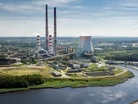
Poland's largest power producing company, Polska Grupa Energetyczna (PGE), collaborates with Siemens Energy on multiple innovative projects including the Baltica 2 offshore wind project and Rybnik gas and steam unit.
Notably, the Rybnik project showcases a state-of-the-art Siemens Energy SGT 9000HL turbine, the largest of its kind installed in Poland to date.
This gas-steam unit at Rybnik is a significant milestone in Poland's energy landscape.
With a capacity of 882.9MW and an efficiency rate of nearly 64%, this facility significantly reduces CO₂ emissions—three times lower than traditional 200MW coal-fired units—and nearly eliminates dust emissions.
The project not only benefits the energy sector but also promises substantial positive impacts across the Silesian region, encompassing Poland, Germany and Czechia.
"This is another key step in the realisation of an investment that will strengthen the security and stability of Poland's energy system," says Grzegorz Nalezyty, VP and MD at Siemens Energy Poland.
"This is an important investment not only for the energy sector but also for the entire region."
A commitment to climate neutrality by 2050
PGE sets a bold target to achieve net zero greenhouse gas emissions by 2050, focusing predominantly on enhancing its portfolio of renewable energy sources such as wind and solar power, in response to the global call for sustainability.
Currently, more than 80% of PGE's generation relies on hard coal and lignite.

"In the 2030 horizon, we intend to maintain our position as the leader in generation based on strengthening the portfolio of renewable generation sources and conversion of coal fuel to gas in district heating," says Former President of PGE, Wojciech Dąbrowski.
"Natural gas is a transition fuel and its use will remain possible for about 20 years."
He goes on to detail that following investments will adapt based on the development of alternative technologies.
With sustainability demands growing from consumers, Wojciech understands the pressure he and the rest of the energy sector are under.
"In 2050 we will provide our customers with 100% green energy," he says.
To achieve this, PGE Group is expanding its renewable capacity significantly by 2030, planning the development of 2.5GW in new offshore wind capacity, installing 3GW of photovoltaic systems and enhancing its onshore wind farms by at least 1GW.
A complementary energy storage programme of at least 0.8GW capacity is also being rolled out, ensuring more stable and flexible operations of the power systems.
"Our long-term strategic goal is for 100% of the energy sold by PGE to come from renewable sources in 2050," Wojciech explains.
"Our customers expect energy produced in an environmentally friendly way. Therefore, we will implement an ambitious programme of building offshore and onshore wind farms and photovoltaics.
"We will also seek acquisition opportunities for further renewable projects.
"We know that the energy transition is a multidimensional process, therefore the construction of the RES market share, apart from large-scale investments, will be strengthened by long-term cooperation with our customers."
Explore the latest edition of Sustainability Magazine and be part of the conversation at our global conference series, Sustainability LIVE.
Discover all our upcoming events and secure your tickets today.
Sustainability Magazine is a BizClik brand