Virgin was 1st – But Will Other Airlines Fly With 100% SAF?
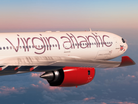
In November 2023, Virgin Atlantic was the first airline to fly a plane using 100% sustainable aviation fuel from London Heathrow to New York JFK.
While the SAF market is scaling up, the flight is not about to be followed by a host of others powered solely by SAF.
According to IDTechEx’s report, ‘Sustainable Biofuels & E-Fuels Market 2025-2035: Technologies, Players, Forecasts’, its use is growing.
Airlines including IAG, United, Japan Airlines and FedEx Express are increasing their SAF take-up and innovation is accelerating the process.
But IDTechEx adds that aviation remains “one of the most difficult transport sectors to decarbonise” and highlights how SAF remains between two and 10 times the price of traditional jet fuel.
Its report explores how SAF can be produced in different ways, the key innovations taking place in the industry, as well as how regulators are pushing for SAF adoption and airlines are getting involved in the sector.
SAF market will take off
The report predicts that the SAF market will go through “significant growth” in the coming years, with IDTechEx forecasting the global renewable diesel and SAF production capacity will exceed 57 million tonnes annually by 2035 – growing at a CAGR of 8.5% between 2025 and 2035.
It says: “This impressive growth trajectory underscores the increasing importance of sustainable fuels in the global energy mix.”
It highlights major growth drivers, including:
- Policy developments, such as SAF fuel mandates in the EU and UK or the US' SAF Grand Challenge
- A push from vehicle fleet operators and airlines to reduce carbon emissions
- The emergence of a wide range of production technologies and their commercial uptake in sustainable fuel production projects.
The challenges
The report goes on to say there are “significant challenges” that continue to restrict growth.
They include the overall energy efficiency of SAF when compared to e-fuels for EVs for road transport, feedstock availability, project development issues (long development timelines and significant funding needed) and achieving cost parity with conventional fossil fuels.
IDTechEx says: “Together, these drivers and challenges are shaping this rapidly developing market.”
Worldwide regional targets for implementing SAF are at the forefront of SAF policy implementation
Airlines in the UK will be required to use 10% SAF by 2030, rising to 22% by 2040, while the EU mandates 6% SAF use by 2030 and 34% by 2040.
The report goes on to give its assessment of various low-carbon fuel options.
Biofuels from waste feedstocks
The report says fuels from cooking oils or animal fats are currently gaining “rapid adoption”.
It says: “They are set to become one of the most widespread feedstocks for biofuels, whereby hydroprocessing is used to produce SAF.”
However, IDTechEx says concerns over competition with food production, lifecycle emissions and land use are pushing key regions like Europe and the US to adopt more advanced alternatives.
They include second-generation biofuels, derived from lignocellulosic biomass, agricultural residues and non-food crops, which are gaining attention for their greater sustainability and reduced competition with food resources.

What are e-fuels?
E-fuels are derived from water, CO₂ and clean electricity.
Green hydrogen is produced through water electrolysis and CO₂ is captured from industrial emissions, biogenic sources, or air via direct air capture (DAC) technology.
The two gases are converted into synthesis gas before being turned into jet fuel by the FT process.
The report says another route is producing methanol from H2 and CO₂ and converting it to jet fuel.
It adds: “While e-fuels are the most expensive, they are the most sustainable fuels, which is why they receive high interest, with EU and UK governments mandating their use in the long term.”
Examples include e-methane, e-methanol and liquid e-fuels like e-gasoline, e-diesel and e-kerosene / e-SAF.
The report says: “Market activity is highest in the second gen biofuel space, but e-fuels are quickly picking up due to the promise of theoretically unlimited feedstocks for production, potential for carbon neutrality and a push from regulators and large corporations in Europe and the US.”
Global outlook, regulations and costs
IDTechEx reports that major airlines are forming partnerships with SAF producers through supply agreements or direct investments in their production facilities.
The list includes many big names, including Virgin Atlantic, IAG, United, Japan Airlines and FedEx Express.
In addition, SAF producers and technology providers are working together to develop new projects and scale up facilities.
Despite this, with bio-SAF being around 2 to 5 times more expensive than conventional jet fuel and synthetic e-SAF 6 to 10 times pricier, IDTechEx says producers will require significant government support and strong industry partners.
“Investments into production and infrastructure will be crucial to secure future demand and make the uptake of SAF feasible.”
Explore the latest edition of Sustainability Magazine and be part of the conversation at our global conference series, Sustainability LIVE.
Discover all our upcoming events and secure your tickets today.
Sustainability Magazine is a BizClik brand