Resilience, Purpose & Tech: Sustainability at Tate & Lyle
Chief Corporate Affairs and Sustainability Officer

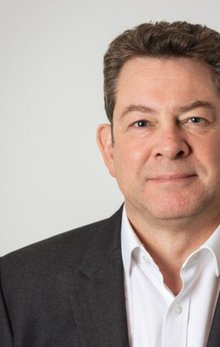
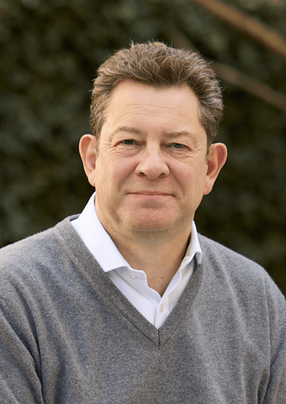
Rowan Adams has spent almost 25 years at Tate & Lyle, the global food ingredients and solutions business supplying customers in around 120 countries. Over that time, he has watched the company evolve from a traditional sugar business into a partner helping brands reduce sugar, calories and environmental impact in their products.
Today, Rowan is the company’s Chief Corporate Affairs and Sustainability Officer, a dual role that puts him at the nexus of strategy, reputation and climate action. “What's really important is that sustainability is part of the company's purpose – and it is one of our core pillars,” Rowan says.

Developing the sustainability function at Tate & Lyle
The sustainability function at Tate & Lyle today was born out of a “future-back” leadership exercise asking what the world, and the business, should look like in 2030 and what it would take to succeed responsibly. Climate change was recognised as a critical risk and opportunity, particularly given Tate & Lyle’s heavy reliance on agricultural supply chains.
Tate & Lyle has since secured 1.5 degrees aligned science-based greenhouse gas reduction targets from the Science Based Targets initiative. The business has also set public targets for waste and water and, crucially, embedded those ambitions into capital planning, innovation and M&A decisions. “The thing I’m most proud of is that sustainability is now a core part of our strategy and everything we do,” Rowan says.
Making sustainability a boardroom growth agenda
Tate & Lyle’s validated science-based targets on greenhouse gas emissions, waste, water and regenerative agriculture are backed by a detailed pathway showing how it will be delivered, including the required capital investment and operational changes. While those pathways are flexible enough to adjust as technologies, markets and regulations evolve, they are robust enough to give the board confidence.
“Board buy-in is about having credible, economically beneficial projects that are clearly part of your strategy,” Rowan says.
At a pectin plant near Copenhagen, one project has already cut emissions and energy use by 6%, with another multimillion-dollar investment set to reduce energy consumption and emissions by a further 20%.
The sustainability projects that make it into Tate & Lyle’s five-year capital plan are those that also improve efficiency, strengthen supply chain resilience and, in many cases, deliver attractive returns on investment.
That integrated thinking extends to acquisitions. When Tate & Lyle acquired CP Kelco, a leading hydrocolloids producer sourcing from citrus peel, seaweed and other crops, sustainability performance formed a core part of due diligence. “We look at the sustainability strategy and programme of any business we buy, just as closely as the financials,” Rowan explains.
Resiliency in the supply chain
As a business that sits in the middle of the food value chain, Tate & Lyle is exposed to climate-related risks both upstream at farm level and downstream through customers’ changing requirements.
“We act as a corridor from the farm to the fork, so resilience in the supply chain is incredibly important,” Rowan says. “An efficient supply chain is not enough – it needs to be a resilient supply chain.”
Rowan’s resilience strategy focuses on three areas: diversified sourcing, diversified raw materials and regenerative agriculture.
Tate & Lyle works with Manus to provide an alternative stevia supply chain outside China for Reb M, a high-purity stevia ingredient used as a zero-calorie sweetener. “It’s not that the traditional China supply chain doesn’t work,” Rowan explains. “But now our customers have options, which adds resilience if challenges arise.”
On raw materials, Tate & Lyle has reduced its historical dependence on maize or corn. About five years ago, roughly 85% of revenue came from corn-based ingredients. Following the CP Kelco acquisition and portfolio shifts, that figure is now nearer 50%, with more from citrus, seaweed and other crops.
Regenerative agriculture, meanwhile, is used to improve soil health, increase yields and boost climate resilience at farm level. “There is a lot of risk in agricultural supply chains, and resilience has to be built in from the ground up,” Rowan says.
Tailoring regenerative agriculture projects
Tate & Lyle’s regenerative agriculture strategy is anchored in practical partnerships tailored to local farming systems.
In the United States, the company helped to launch a major programme in 2019 with Truterra, part of farmer-owned cooperative Land O’Lakes, covering about 1.5 million acres of maize across the Corn Belt. The initiative promotes practices such as reduced tillage, cover cropping and optimised fertiliser use to improve soil health, cut emissions and build resilience.
In China, by contrast, Tate & Lyle supports smallholder stevia farmers, often family-run and sometimes women-led, managing only a few hectares each. Here, the emphasis is less on digital tools and more on face-to-face agronomy support.
Rowan notes that farmers in the programme have cut greenhouse gas emissions by more than 50% while increasing yields by about 6%, largely through improved fertiliser management. “By moving to more precise fertiliser application, we’ve reduced environmental impact and improved economics,” Rowan says.
Technology in the field
In France, Tate & Lyle is partnering with ag-tech firm Regrow Ag and three agricultural cooperatives supplying maize to its plants in the Netherlands and Slovakia. The programme uses AI and remote sensing to model and measure impacts on soil health, nitrogen management and other environmental indicators across participating fields.
Rowan says the experience underscored the need to help local farmers build resilience, both for their own livelihoods and for Tate & Lyle’s supply security. Regrow Ag’s platform can track around 20 agronomic indicators per field, giving farmers and the company granular insights into performance and risk. In the United States, similar data-led approaches have farmers reviewing metrics and identifying improvement opportunities.
Technology, however, is not a one-size-fits-all solution.
Rowan acknowledges a technology skills gap in some sourcing regions, especially where producers are smallholder farmers in places like rural China or seaweed growers in Zanzibar.
In those contexts, Tate & Lyle focuses on in-person training, simple tools and basic agronomy, sometimes with NGOs and local universities acting as critical intermediaries. He believes AI and digital tools will have “a major impact on agricultural farming in the future”, particularly for forecasting weather, guiding crop rotation and optimising inputs, but stresses that adoption must match local capabilities.
“Technology will massively help farmers, as long as they can use the data to improve yields and environmental performance,” Rowan says.
Purpose as the glue in a transforming business
If climate strategy gives Tate & Lyle direction, purpose – “transforming lives through the science of food” – provides the glue that holds a global, 166‑year‑old organisation together.
“Purpose shouldn’t be a top-down dictate,” he says. “It has to align with employees’ values and what they know they are doing every day.”
Tate & Lyle chose not to announce its new purpose internally or externally for two years. Instead, it seeded the concepts through internal communications and a series of “purpose experiments” in innovation, community projects and sustainability. When the purpose was formally launched in 2018, employees largely responded that it simply articulated what they already felt and saw in their work.
To avoid fragmentation, the company introduced a three-pillar framework in 2019:
- Supporting healthy living
- Building thriving communities
- Caring for the planet.
“Strategies come and go, but purpose should stay the same,” Rowan says. “If it’s authentic and aligned with values, it becomes part of your DNA.” In a company operating sites in more than 75 countries, purpose is also the common thread uniting employees in São Paulo, Shanghai, Chicago and London.
“It’s the culture and values that keep people here, as much as the work itself,” he says. The company’s evolution from sugar producer to “sugar reducer” has been underpinned by a consistent desire to do right by investors, customers, communities and the environment.
Company portals
Executives
Rowan Adams
Chief Corporate Affairs and Sustainability Officer