Amazon’s Water Pledge, Data Centre Security & Get Blue Work
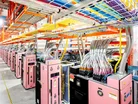
Demand for AI in cloud computing and data centres is becoming one of the world's most critical pieces of infrastructure.
Alongside rising energy consumption, water use has emerged as a key sustainability challenge, placing pressure on operators to improve efficiency while supporting the communities in which they operate.
Technology companies are recognising that long-term digital growth depends on responsible water stewardship as much as renewable energy investment.
Amazon is seeking to address both challenges simultaneously.
While the company continues to expand its global data centre footprint to support AI and cloud services, it is also strengthening water conservation initiatives and partnering with organisations tackling the global water crisis.
Through its role as a founding partner of Get Blue, Amazon is connecting its digital platforms, customer reach and sustainability strategy to help improve access to safe water around the world.

Get Blue’s founders and partners
Get Blue is a global movement designed to bring together businesses, creators, consumers and investment to help address one of the world's most pressing sustainability challenges: access to safe water and sanitation.
Created alongside Water.org, the initiative aligns corporate leadership with practical funding solutions that aim to accelerate access to clean water for families and communities worldwide.
The coalition launched with Amazon, Gap, Starbucks and Ecolab as founding partners, each contributing through different customer-focused initiatives.
Gap has introduced a limited-edition product collection that supports Water.org through every purchase, while Starbucks has committed donations linked to selected beverage sales.
Ecolab has pledged US$1m through the Ecolab Foundation, tied to customer water-saving achievements.
Additional partners including TikTok, Ripple and AccuWeather are expanding the campaign's reach through creator engagement, digital payments and awareness initiatives, demonstrating how cross-sector collaboration can scale both funding and public participation.
More than 2.1 billion people globally still lack access to safe drinking water, while projections suggest the world could face a 40% freshwater shortfall by 2030.
Water.org has already helped more than 92 million people gain lasting access to safe water or sanitation, with Get Blue supporting its wider ambition of reaching 200 million people by the end of the decade.
Amazon’s cloud infrastructure and water stewardship
For Amazon, participation in Get Blue complements a broader sustainability strategy that increasingly links digital infrastructure with environmental responsibility.
Since 2020, the company has supported access to safe water or sanitation for more than 1.25 million people through Water.org, while customers can now contribute through everyday interactions across Amazon's ecosystem.
Alexa users can trigger Amazon-funded donations through a simple voice command, Amazon Music listeners can generate donations by streaming participating artist playlists and dedicated Get Blue storefronts allow customers to support Water.org through selected purchases.
“It’s the summer of Get Blue! And I’m genuinely excited to share the ways that everyone reading this can help us support Water.org’s life-changing work,” writes Kara Hurst, Chief Sustainability Officer at Amazon, on LinkedIn.
“At Amazon, we’ve been working on water stewardship for years by reducing water use across our operations, reusing water where we can and funding replenishment projects in communities where we operate. Get Blue doesn’t replace any of that work – it’s just the logical next step!
“Alexa+ customers can say ‘Alexa, donate to Get Blue’ and Amazon contributes US$5 to Water.org on their behalf. For context, every US$5 provides one person with lasting safe water access for more than 20 years."
These initiatives reinforce Amazon's wider commitment to becoming water positive by 2030, returning more water to communities than its operations consume.
As AI workloads expand and cloud demand accelerates, integrating water stewardship into customer engagement demonstrates how technology companies can extend sustainability beyond operational improvements and into broader social impact.
Water efficiency in data centres
The growth of AI has significantly increased demand for hyperscale data centres, bringing greater attention to both electricity consumption and water use.
Cooling systems remain one of the largest environmental considerations for modern facilities, particularly as processors become increasingly powerful.
Amazon Web Services (AWS) has responded by redesigning how its facilities operate.
Around 90% of the time, Amazon's data centres rely on free-air cooling, using outside air instead of water-based systems.
“AWS is now the first cloud provider to show customers exactly how much water we withdraw on their behalf, based on their actual cloud usage,” writes Alexis Bateman, Head of Sustainability at AWS, on LinkedIn.
“Today, we’re adding that visibility to the AWS Sustainability console. We built it because you can’t improve what you can’t see and customers told us they wanted the same clarity on water that we provide on carbon. Now they can see both, in the same place.
“Transparency isn’t a ‘nice-to-have’ anymore – it’s a prerequisite for building trust.”
Water is only required during warmer operating conditions, representing roughly 10% of annual cooling needs.
Since 2021, Amazon says it has improved water efficiency by more than 50%, reducing water use to approximately 0.15 litres per kilowatt-hour of computing capacity while expanding AI infrastructure.
The company is also increasing the use of reclaimed water for cooling operations rather than drawing on potable supplies.
More than two dozen Amazon facilities already operate entirely on reclaimed water, with more than 130 additional facilities contracted to adopt similar systems globally.
“I’ve seen first-hand what happens when a family gains access to safe water for the first time. Children go to school. Women reclaim hours of their day. Communities build toward economic opportunity ”
These investments support both operational resilience and community water security, helping reduce pressure on local freshwater resources as demand for cloud services continues to rise.
Water management forms only one part of Amazon's broader data centre sustainability strategy.
As cloud computing and AI continue to increase electricity demand, AWS continues investing heavily in renewable energy projects, battery storage and grid modernisation designed to decarbonise electricity supply while improving network reliability.
Amazon also works with utility providers to develop infrastructure that supports growing digital demand without disproportionately increasing costs for surrounding communities.
Beyond operational efficiency, Amazon says its data centres generate long-term economic benefits through skilled employment, tax revenue, infrastructure investment and STEM education programmes in local communities.
With AI placing greater demands on both energy systems and water resources, initiatives such as Get Blue demonstrate that technology companies can address environmental challenges beyond their own operations.
By combining investments in efficient data centres with partnerships that expand global access to safe water, Amazon is positioning sustainability as an increasingly important component of future digital infrastructure.
Company portals









Executives

Alexis Bateman
Global Head of Sustainability
Kara H. Hurst
Vice President, CSO, Worldwide Sustainability