BMW’s Debrecen Plant Becomes First Fossil Fuel-Free Facility
BMW Group has launched a groundbreaking manufacturing facility in Debrecen, north-eastern Hungary, that operates entirely without fossil fuels.
This marks a significant milestone in automotive industry sustainability and demonstrates how renewable energy can power large-scale vehicle production.
Plant Debrecen represents the first BMW Group car plant to run exclusively on electricity from renewable energy sources. The new BMW iX3 electric vehicle will become the inaugural model to roll off the production line in late 2025.
The digitally planned manufacturing plant produces its own high-voltage batteries. It showcases an innovative approach to sustainable manufacturing that could reshape industry standards for environmental responsibility.
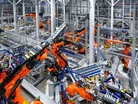
The facility was planned and structured fully digitally, with its virtual start of production in March 2023. Every stage of the process was simulated and validated beforehand.
This allowed BMW to determine the optimal positioning for each of the nearly 1,000 robots in the body shop. The digital-first approach not only improved efficiency but also reduced waste and resource consumption during the planning phase.
The inspiration for the production and assembly process came from Plant Lydia, a BMW site in China that opened in 2022. Plant Lydia was the first to be planned and simulated virtually.
The shop floor and conveyer system are set up identically in Debrecen. As BMW already had the technology and means, it simplified the process of implementation whilst minimising the environmental impact of trial-and-error approaches.
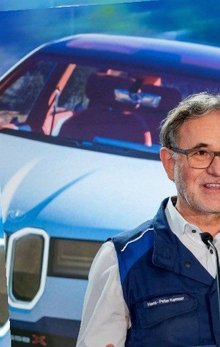
Hans-Peter Kemser, Managing Director BMW Group Plant Debrecen, says: "Our highly efficient and ergonomic assembly line immediately started running without any issues. We achieved this thanks to virtual planning and testing, as well as the outstanding collaboration between our new, highly motivated employees in Debrecen and our experts within the BMW Group's global production network."
Renewable energy powers production
Roughly a quarter of the plant's annual power needs will be met by the 50-hectare on-site photovoltaic system. This system converts sunlight to energy using solar panels.
Any surplus solar energy this generates, for example on non-working days, will be stored in a 1,800 m³ thermal storage system. This ensures maximum utilisation of renewable resources and reduces dependence on grid electricity.
The remaining energy requirements are fulfilled through renewable electricity sourced externally. This ensures the facility maintains its fossil fuel-free status throughout all operations.
This comprehensive approach to clean energy demonstrates how large-scale manufacturing can transition away from carbon-intensive power sources. The integration of on-site generation and external renewable supply creates a resilient energy infrastructure for the plant.

Significant carbon footprint reduction
The carbon dioxide equivalent (CO₂e) footprint of the BMW iX3 has seen a large-scale reduction compared to previous models. Production of each BMW iX3 will generate approximately 80 kg of CO₂e.
This includes emissions from the manufacture of in-house parts at other BMW facilities. The figure represents a substantial decrease in manufacturing emissions and sets a new benchmark for sustainable automotive production.
The iX3 is the first car to roll off the manufacturing line at Plant Debrecen. By manufacturing a new vehicle at a new plant, the company aims to reduce complexity and simplify processes in its manufacturing.
The car is a fully electric vehicle, the first model in a new generation of BMW's Neue Klasse range. This has been referred to as a new era in BMW cars that focuses on electrification, digitalisation and updated design.
Setting industry standards
Milan Nedeljković, Member of the Board of Management of BMW and incoming Chief Executive Officer, says: "Our new plant in Debrecen has been designed and built fully in line with our strategic vision of the iFACTORY: digital from the very beginning, the plant will offer a new dimension in efficient production without fossil fuels."
The Debrecen facility demonstrates that fossil fuel-free manufacturing at scale is achievable within the automotive sector. By combining renewable energy infrastructure, digital planning technologies and sustainable production processes, BMW has created a template that could influence how manufacturers across industries approach facility design and operations.
The plant's success in launching production without complications suggests that virtual planning and renewable energy integration can work together. This creates both environmental and operational benefits.
Nedeljković's vision for the iFACTORY concept positions Debrecen as a model for future BMW facilities worldwide. The plant represents a significant step towards the company's broader sustainability commitments in manufacturing.
Company portals

Executives
Hans-Peter Kemser
Leiter Werk Debrecen
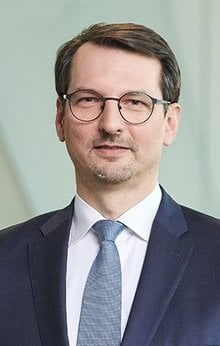
Milan Nedelijkovic
Head of Production Division