BMW: Producing Sustainability from a US$104bn Annual Spend
This transformation is led by Nicolai Martin, a Member of the Board of Management of BMW AG, who oversees the Purchasing and Supplier Network. His mission is to leverage an immense purchasing power of around US$104bn annually to achieve significant carbon reductions while maintaining BMW's competitive edge.
"We are constantly navigating a sea of complexity," Martin explains. "Every day, we bring together millions of components from thousands of suppliers across the globe to create some of the most intricate and emotionally resonant products on the planet."
Sustainability as a business imperative
For BMW, sustainability is not just a buzzword; it's a strategic imperative. "Sustainability is a key element of our future-proof business model," Martin asserts. "The global challenges we face today are accelerating the transition to a circular economy and more sustainable, innovative technologies."

This commitment is also a direct response to market and customer demand. "Meeting sustainability requirements and our commitment to the Paris Climate Agreement are our licence to operate and to lead," Martin says. He notes that several customers are demanding more sustainability in their products.
Martin’s remarks were delivered at BMW's Plant Landshut, a state-of-the-art production facility near Munich. He emphasised that sustainable supply chains also offer a competitive advantage. "More efficient, innovative and circular supply chains make us a more resilient BMW," he notes. "Resilience is increasingly a strategic competitive factor."
Plant Landshut is a testament to this commitment, producing millions of components annually, from cast metal parts and plastic components to drive shafts and cockpits.
- 3.1 million cast components
- 520,000 plastic components
- 1.5 million drive shafts
- 275,000 cockpits
- 25,000 special engines
- 560,000 logistics containers
The electrification challenge
The transition to electric mobility presents both opportunities and challenges. "The ramp-up of electric mobility is moving the focus of CO2 emissions to the supply chain," Martin points out. "Producing electric cars is resource-intensive and involves carbon-intensive processes."
Without the right measures, the CO2 emissions in the supply chain of an electric vehicle would actually increase. To address this, BMW has adopted a "360-degree" approach to decarbonisation, considering emissions across the whole vehicle lifecycle.
The BMW iX3: A case study in success
The BMW iX3 is a shining example of this strategy in action. BMW has achieved a 42% reduction in supply chain CO2e emissions compared to the previous model. This was accomplished by focusing on the four most carbon-intensive material categories: battery cells, aluminium, steel and thermoplastics.
BMW's approach combines a mandate for renewable energy with the principles of a circular economy. "Our battery cell suppliers are required to use 100% renewable energy in cell production, as well as in the production of anodes and cathodes," Martin says.
The key to resilience
The use of secondary materials offers both environmental and strategic benefits, conserving natural resources and reducing dependence on primary raw materials. For the iX3, BMW uses around 33% secondary raw materials. In the high-voltage battery cells, approximately 20% of the material is secondary, rising to around 50% for nickel, cobalt and lithium.
Achieving these goals requires a new level of collaboration. "Our supplier network is a source of expertise, ideas and innovative strength," Martin says. "Together with our partners, we want to shape value creation intelligently."
Setting the standard
BMW's Landshut plant is leading this transformation. Two-thirds of the aluminium used in its light metal foundry is already secondary aluminium and by 2026, 50% of the sand used in manufacturing will be recycled.
Furthermore, the plant's Zero Defect Supply Chain Campus extends BMW's quality and sustainability standards to its suppliers, training them in digital management, lean production and zero-defect principles to create a multiplier effect for best practices.
"The new BMW iX3 is the prime example of how our holistic approach leads to highly emotional and innovative products," Martin concludes. "Maximum emotional appeal and holistic sustainability go hand in hand here. This is only possible through close and collaborative partnership with our supplier network."
Company portals

Executives
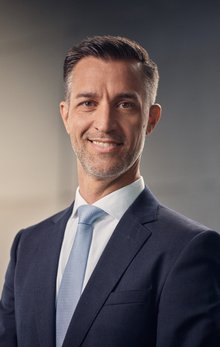
Nicolai Martin
Board Member Responsible for Purchasing and Supplier Network
Thomas Thym
Vice President Purchasing, Quality, Production Light Metal Casting, Head of Component Plant Landshut