Can Hyundai & GM Manufacture Sustainable Vehicles & EV Vans?
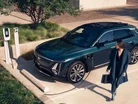
Hyundai Motor Company and General Motors (GM) have unveiled plans for their first five co-developed vehicles, a step forward in their strategic collaboration announced in 2024.
The partnership reflects both companies’ ambition to expand market reach, optimise production efficiency and drive sustainability across global automotive supply chains.

Multi-market vehicle development
Four of the co-developed models will target Central and South America.
These include a compact SUV, a car, a compact pick-up and a mid-size pick-up, each designed with flexibility to operate using internal combustion or hybrid propulsion systems.
In addition, the companies will co-develop an electric commercial van for North America.
Hyundai will take the lead on compact vehicle and electric van development, while GM will focus on the mid-size truck platform.
Both companies will share common platforms but design distinct interiors and exteriors aligned with their respective brand identities.
Once production is fully scaled, the companies expect annual sales of the co-developed vehicles to exceed 800,000 units.
“Hyundai’s strategic collaboration with GM will help us continue to deliver value and choice to our customers across multiple vehicle segments and markets,” says José Muñoz, President and CEO of Hyundai Motor Company.
“Our combined scale in North and South America helps us to more efficiently provide our customers more of what they want, beautifully designed, high-quality, safety focused vehicles with technology they appreciate.”
Sustainability and innovation
The electric commercial van is due to be manufactured in the US as early as 2028.
Beyond product development, Hyundai and GM have agreed to explore collaboration on low-carbon emissions steel.
The collaboration also extends to sourcing.
The two automakers plan joint initiatives across materials, transport and logistics in both North and South America.
“By partnering together, GM and Hyundai will bring more choice to our customers faster, and at lower cost,” says Shilpan Amin, GM Senior VP and Global Chief Procurement and Supply Chain Officer.
“These first co-developed vehicles clearly demonstrate how GM and Hyundai will leverage our complementary strengths and combined scale.”
Additional opportunities under review include raw materials, components and complex systems that could support more efficient and sustainable operations.
Looking ahead
Hyundai and GM are driving strategies to cut emissions and accelerate electrification.
Hyundai targets net zero by 2045, with plans to sell two million EVs annually by 2030, launching 21 new models and expanding production globally.
It is also doubling its hybrid lineup, advancing hydrogen mobility and developing extended-range EVs.
GM aims to eliminate tailpipe emissions from new light-duty vehicles by 2035 and achieve full carbon neutrality by 2040.

Backed by a US$35bn investment and its Ultium battery platform, GM expects 50% of its fleet to be electric by 2030, with sales of Ultium-based models recently rising 40%.
Design and engineering work is already underway, with the new vehicles for Central and South America set to launch in 2028.
The electric commercial van is also on track for a US production start that same year.
Following the framework agreement signed in September 2024, Hyundai and GM continue to evaluate further joint programmes for global markets.
These include collaboration across multiple propulsion systems, from internal combustion engines and hybrids to battery-electric and hydrogen fuel cell technologies.