CDP: The US$279bn Deforestation Blind Spot
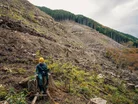
In 2024, 6.7 million hectares of primary rainforest alone were lost according to CDP.
This loss was an 80% increase from 2023 and caused the release of 3.1 gigatons of greenhouse gases.
Deforestation poses a range of risks, from supply chain disruption to undermining carbon sinks.
CDP analysis puts the financial effects from forest-related risks at US$279bn, or an average of US$338m per company.
Its report, Blind Spots on the Balance Sheet: Uncovering Financial Implications of Deforestation, says that the solution is “action underpinned by comprehensive dependency, impact, risk and opportunity assessments”.
The value of forests
In 2020, Boston Consulting Group found that global forests are worth as much as US$150tn, or nearly double the value of global stock markets.
According to the World Resources Institute (WRI), standing and intact forests absorb an average 14.4 gigatons of CO₂e each year.
Worldwide, forests cover roughly four billion hectares of land.
Agricultural expansion drove 33% of deforestation and forest degradation worldwide from 2001 to 2024 according to the WRI, followed by wildfires and logging.
If the major threats to forests today are not addressed, BCG estimates that global forest value will fall roughly 30% by 2050.
The financial implications of deforestation
Just less than half of substantive forest-related risks reported by companies have quantified financial effects despite clear financial dependence on commodities known to drive deforestation, CDP says.
It found that while 827 companies identified more than 1,200 substantive forest-related risks to their businesses, less than half of those risks have quantified financial impacts.
Financial institutions managing US$30tn in assets reported not knowing if they finance or insure companies with operations in commodity value chains.
The report says that improvements in dependency, impact, risk and opportunity (DIRO) assessments can provide crucial signals to the financial sector and policymakers on corporate risk management.
How businesses are approaching deforestation
While the significance of deforestation risks may not have been fully recognised, many businesses are working to reduce their negative impact on forests.
PepsiCo is a founding member of the Consumer Goods Forum’s Forest Positive Coalition to drive deforestation and conversion out of key commodities.
The company says it is striving toward deforestation-free sourcing by 2025 and toward deforestation- and conversion-free sourcing by 2030 for high-risk commodities in its company-owned and operated activities.
Jim Andrew, Chief Sustainability Officer at PepsiCo, says on LinkedIn: “PepsiCo has long recognised that to end deforestation in key commodity supply chains, we have to work beyond our individual supply chain and engage deeply in collaborative efforts.
“That collective action can bring an amplified impact across our entire industry and in the landscapes where commodities are produced.”
Tesco has rolled out LEAF Marque certification across all fruit and veg growers in the UK and is in the process of rolling it out to its global suppliers.
This certification requires farms to take a whole business approach to delivering more sustainable and climate positive farming, including addressing deforestation.
Ashwin Prasad, UK CEO at Tesco, said: “We’re excited to have completed the roll-out of LEAF Marque certification across all our UK grown fruit and veg supply base.
“Reaching this significant milestone was only possible by working in partnership with our suppliers and growers, and it’s really encouraging to see environmental improvements already having an impact on farms across the UK.
“As we continue our roll out of the LEAF Marque across our international supply chain, we’re calling on the whole of the food industry to join us in implementing consistent, improved environmental standards to ensure the food we eat is produced sustainably around the world.”
Bunge has worked with CP Foods to test a traceability platform using blockchain technology to ensure deforestation-free soybeans.
“Adding a layer of blockchain technology improves the transparency in end-to-end traceability that Bunge has been doing for some years,” says Rossano de Angelis Jr., Bunge’s Vice President of Agribusiness and Country Manager Brazil.
“This ability to increase end-consumer confidence in soy projects is only possible thanks to the robust supplier’s socio-environmental verification and monitoring system that we have structured over the last decade, which uniquely positions us to provide the connection of proven sustainable products with markets where the demand for them is increasing.”


Executives

Ashwin Prasad
UK Chief Executive Officer
Jim Andrew
Chief Sustainability Officer, EVP and Executive Committee member
Rossano de Angelis Junior
Vice President of Agribusiness and Country Manager Brazil