COP30: Iberdrola Unveils World's First 100% Renewable Island
Proceedings at COP30 began in earnest today, but leaders from both the public and private sectors have been in Belém for several days already, preparing for the world's most important climate conference to get underway.
On 7 November, Brazil's President, Luiz Inácio Lula da Silva, held a traditional summit for the heads of state and government, welcoming them to the conference.
More than a quarter of the world's political leaders were in attendance, including those from Germany, France and the UK, as well as the President of the European Commission, the UN Secretary-General and leaders from the International Energy Agency and World Bank.
Alongside these titans of politics were 10 of the most esteemed figures from the corporate world, including Ignacio Galán, the Executive Chair of Spanish renewable energy heavyweight Iberdrola.
The sessions addressed the energy transition, where Ignacio outlined investment priorities in electricity grids, renewable energy expansion and storage technologies as mechanisms to strengthen energy security and advance climate objectives.
Fernando de Noronha becomes Latin America's first renewable island
Following the summit, Ignacio gave a presentation on the Noronha Verde project alongside Brazil's Minister of Mines and Energy, Alexandre Silveira, and Pernambuco Governor Raquel Lyra.
This project sees Iberdrola investing US$55m into Brazil's territory Fernando de Noronha. The island, which is a UNESCO World Heritage Site, will become the first inhabited oceanic island in Latin America operating on a completely sustainable energy model thanks to Iberdrola's involvement.
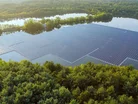
The project will see the installation of solar energy and battery storage systems with the aim of completely eliminating the island's dependence on fossil fuels.
Ignacio sees the initiative as "the best example of Neoenergia and Iberdrola's commitment to the future of Brazil, which over the almost 30 years has become an increasingly essential part of our Group".
The event was also attended by Brazil's Minister of Defence, José Múrcio, and Neoenergia CEO Eduardo Capelastegui.

Iberdrola's Brazilian operations and investment
Through its subsidiary Neoenergia, Iberdrola operates as Brazil's largest electricity company by customer numbers, with presence across 18 states and the country's Federal District.
The company holds assets valued at US$18bn, maintains 4,200 megawatts of installed capacity and serves approximately 40 million people.
Iberdrola has allocated more than US$15bn to generation, transmission and distribution infrastructure in Brazil over nearly three decades of operations in the country.
The company's investment plan includes a further US$7.3bn earmarked for Brazil over the next five years.
Context and significance
Ignacio Galán has been a mainstay of COP summits since Copenhagen in 2009, which reflects his and Iberdrola's dedication to global sustainability and the notion of international climate policy frameworks.
The Brazilian government highlighted the Noronha Verde project as a key milestone within COP30, which bears the slogan "fewer promises, more action".
The summit's focus on practical implementation rather than commitments reflects growing pressure on both governments and corporations to demonstrate tangible progress on decarbonisation targets.
Brazil's position as host nation for COP30 emphasises its significant renewable energy resources and expanding role in global climate action, though questions remain about balancing economic development with environmental protection in regions such as the Amazon.
The selection of just 10 business leaders to participate in the heads of state summit indicates a more restricted corporate presence compared to previous COP conferences, which have faced criticism for extensive industry lobbying.
Iberdrola's investment trajectory in Brazil demonstrates the commercial viability of renewable infrastructure at scale, though the company's continued operation of some fossil fuel assets elsewhere highlights the complexities of energy transition in diverse markets.