Decarbonisation & Supply Chains: This Week's Top 5 Stories
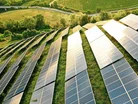

More companies are increasing their sustainability and decarbonisation ambitions (23%) compared to those that are decreasing (18%), according to PwC.
PwC has released its Third Annual State of Decarbonization Report, highlighting that the business case for decarbonisation is strengthening.
The company says that "82% of companies held steady or accelerated the timeline they needed for achieving sustainability ambitions".
The EU Sustainable Supply Chains Coalition has been launched in the European Parliament.
It brings together companies, NGOs and stakeholders to call for legislation and policy for sustainability in agricultural and timber supply chains.
It aims to partner with producing companies and coordinate advocacy efforts between members.

Consumer goods giant Colgate-Palmolive has unveiled its 2030 Sustainability & Social Impact Strategy, a framework that aims to align environmental stewardship with business growth objectives. The company, which specialises in oral care, personal care and home care products, is positioning sustainability as a core driver of long-term value creation rather than a standalone initiative.
The strategy represents the next phase of Colgate-Palmolive's sustainability journey, building upon the foundation established through its 2025 targets. According to the company, this approach reflects an understanding that sustainability investments must deliver measurable returns for stakeholders, including consumers, employees and investors, while addressing pressing environmental challenges.
The global energy system underwent a noticeable shift last year.
For the first time ever, a renewable energy source – solar – delivered the largest share of growth in global energy demand.
This landmark finding comes from the International Energy Agency’s Global Energy Review 2026, published earlier this month, which analyses data from 2025. Solar power alone accounted for more than a quarter of the world’s additional energy demand last year, a milestone that would have seemed unlikely just ten years ago.

Global supply chains were engineered for efficiency, not for withstanding the converging pressures of climate breakdown and widespread health system failure. According to the World Economic Forum (WEF), this structural vulnerability means that the workforce health crisis and the climate crisis are no longer separate challenges but interconnected threats to economic continuity.
From extreme weather events to pandemic outbreaks and regional instability, these disruptions reveal how deeply workforce health and climate resilience are intertwined.
Yet while global trade and production systems have expanded rapidly, access to healthcare and social protection has lagged behind. The result is a structural risk embedded within supply chains that undermines sustainability goals and climate adaptation efforts alike.
During a session at WEF's Annual Meeting in Davos, leaders highlighted what they described as "deep health protection gaps" across global supply networks, gaps that climate change is widening.
Company portals








Executives
Amy Barnes
Managing Director

Ann Tracy
Chief Sustainability Officer
Antonia Wanner
Chief Sustainability Officer

Atle Høie
General Secretary

David Linich
Decarbonisation and Sustainable Operations Lead
Fatih Birol
Executive Director

Francesco Tramontin
Vice President Global Public Affairs + Institutional Affairs & Corporate Comms Europe