Google & American Airlines on Reducing 270,000 tonnes of CO₂
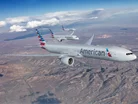
Sustainable Aviation Fuel (SAF) can be made from renewable feedstocks and mixed with traditional jet fuel to create cleaner fuel.
According to the SAF Coalition, SAF can reduce lifecycle GHGs by at least 50% and can reduce them by 100% in some cases.
Google and American Airlines have signed the largest publicly announced SAF agreement to date between an airline and a corporate end-user.

A multi-year partnership
According to Google, SAF is a promising solution that is available today.
The Google-American Airlines partnership is set to unlock 132 million litres of SAF.
In total, the partnership is set to reduce approximately 272,000 tonnes of CO₂e.
Due to the agreement, American Airlines has been able to sign a long-term agreement with fuel producer Valero.
Google plans to extend and expand its target to scale SAF production.
Sustainability leaders won’t want to miss Sustainability LIVE: The Leadership Summit at London Climate Action Week, taking place at Code Node on 25 June 2026.
Register now for this exclusive invite-only event.
“Travelling allows us to connect with the people and places that form who we are. But making travel more sustainable is a complex challenge; aviation remains one of the hardest industries to abate,” says Kate Brandt, Chief Sustainability Officer at Google, on LinkedIn.
“Google will receive the environmental benefits in the form of SAF certificates, totalling nearly 300,000 tons (272,000 tonnes) of carbon dioxide equivalent, which will help us address our emissions from employee business travel.
“By signalling long-term corporate demand, this partnership enables American Airlines to secure a long-term SAF agreement with fuel producer Valero, helping to scale the entire production ecosystem.
“American Airlines will take physical delivery of the fuel, made from waste feedstocks like used cooking oil, while Google receives the environmental benefits. All SAF will be third-party certified and the certificates will be independently tracked on the SAFc Registry.
“This partnership marks another critical step required to provide the predictable demand needed to scale sustainable technologies like SAF.”
How Google plans to decarbonise
Google is pursuing a decarbonisation strategy focused on clean energy, operational efficiency and net zero emissions across its operations and value chain.
As one of the world’s largest corporate purchasers of clean energy, Google has signed more than 170 agreements since 2010 to procure more than 22GW of renewable and carbon-free energy globally, enabling it to match 100% of its electricity consumption with renewable energy purchases since 2017.
The company is also improving the efficiency of its infrastructure, with its data centres now delivering more than six times the computing power per unit of electricity than they did five years ago.
In 2024, Google reduced data centre energy emissions by 12% despite a 27% increase in electricity demand driven by business growth and AI adoption.
The company is planning to invest in innovative technologies, including the world’s first corporate agreement to purchase power from multiple small modular nuclear reactors (SMRs), supporting its long-term goal of operating on carbon-free energy 24 hours a day, seven days a week while achieving net zero emissions across its entire value chain.
Recognising SAF's importance
SAF is central to American Airlines’ decarbonisation strategy, offering lifecycle greenhouse gas emissions reductions of up to 85% compared with conventional jet fuel.
“At American, we’re taking steps within our operations and across all the levers we can control to become more fuel efficient and sustainable,” says Robert Isom, CEO and Chief Recruitment Officer of American Airlines, in the company’s 2024 Sustainability Report.
“Among other things, we’re investing in more fuel-efficient aircraft and engines; we’re harnessing smart-gating technology and other strategies to reduce unnecessary fuel burn on the ground; and we’re advocating for a new, more modern, air traffic control system that will improve routing and make air travel more efficient.”
To support its long-term goal of achieving net zero emissions by 2050, the airline has committed to replacing 10% of its jet fuel consumption with SAF by 2030, which is expected to avoid approximately 3.5 million tonnes of CO₂.
While SAF adoption remains constrained by limited supply, high costs and insufficient production incentives, the airline continues to drive market development through strategic offtake agreements, industry partnerships and policy advocacy.
In 2024, American Airlines used 11 million litres of neat SAF, a 9.7% increase from the previous year, and expanded initiatives that allow corporate and cargo customers to support SAF deployment through the purchase of SAF environmental attributes.
The airline is also investing in next-generation fuels through partnerships with Breakthrough Energy Catalyst and Infinium, whose electrofuels (eSAF) could reduce lifecycle emissions by up to 90%.
Through collaboration across the aviation value chain and active support for policies that scale SAF production, American Airlines is working to accelerate the transition to a lower-carbon aviation sector while maintaining rigorous sustainability, safety and emissions-accounting standards.
Company portals

Executives
Kate Brandt
Member Board of Trustees

Robert Isom
CEO and Chief Recruitment Officer