How ABB is Powering Europe's Renewable Lithium Revolution
The intersection of renewable energy and critical mineral production could represent a turning point in the race to decarbonise Europe's industrial base.
Vulcan Energy's Lionheart Project in Germany's Upper Rhine Valley demonstrates how this dual approach might reshape the sustainability landscape of EV supply chains.
Vulcan Energy has selected ABB as the main electrical contractor for Phase One of its Lionheart Project, a renewable lithium facility that aims to set new standards for environmentally conscious mineral production.
The development is positioned as one of Europe's first fully-integrated operations to combine lithium production with renewable energy generation.

Integrating clean energy with lithium extraction
Through contracts worth more than US$50m, ABB has been tasked with delivering the entire electrical infrastructure across Vulcan's operations.
This includes powering the Lithium Extraction Plant in Landau, the Central Lithium Plant in Industriepark Höchst near Frankfurt and surrounding well sites.
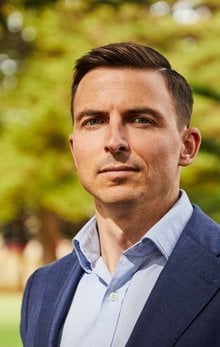
Björn Jonsson, Global Business Line Manager for Mining & Materials at ABB, says the partnership could demonstrate how energy transition and electrification can work in tandem.
"The Lionheart Project is a blueprint for how clean energy and advanced electrification go hand in hand," he says.
"We are building the foundations for a stronger European battery supply chain, helping to meet growing demand for EVs at a crucial point in the transition to clean mobility."
The Lionheart Project aims to produce 24,000 tonnes of lithium hydroxide monohydrate per year, enough to power around 500,000 EVs annually.
Beyond mineral extraction, Vulcan's approach integrates lithium production with renewable energy generation, targeting 275 GWh of electricity and 560 GWh of heat.
Reducing carbon footprint across supply chains
The integrated nature of the facility means that Vulcan can supply both lithium and renewable energy from a single project location.
The company has already secured agreements to supply lithium from 2028 for 10 years to major companies including Stellantis, LG Corp, Umicore and Glencore.
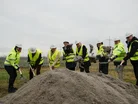
Francis Wedin, Executive Chair of Vulcan Energy, tells Reuters that construction is fully funded and set to begin immediately.
He confirms the project will take two-and-a-half years, with full-scale operations expected once commissioning is complete.
Vulcan’s funding package totals US$2.56bn and combines equity, grants and debt.
The equity component includes up to US$709m raised through institutional placements and entitlement offers at a fixed price of US$2.63 per new share.
This financing is backed by 13 financial institutions including the European Investment Bank, five export credit agencies and seven commercial banks.
Vulcan has also received US$122m in German government grants as part of Berlin’s strategy to reduce reliance on imported raw materials and strengthen domestic EV production.
Electrical infrastructure for decarbonisation
The partnership with ABB stems from a Memorandum of Understanding signed in April 2024, aiming to streamline engineering, optimise supply chains and reduce project costs.
"ABB's expertise and systems give us the certainty to scale efficiently," says Cris Moreno, Managing Director and CEO at Vulcan Energy.
"Together, we are establishing a robust model for industrial lithium production to meet market momentum while enabling battery supply chain decarbonisation at scale."
ABB's scope covers high-, medium- and low-voltage electrical systems, including switchgear, transformers, protection equipment and uninterruptible power supplies.
The goal is to ensure a stable and efficient flow of electricity from the 110 kV grid through to every process within the facility.
As Vulcan prepares for full-scale construction, ABB's electrical systems will play a role in delivering power safely and reliably whilst supporting the project's environmental objectives.
With lithium output backed by long-term contracts and supported by institutional investors, the Lionheart Project is positioned to become a potential cornerstone in Europe's transition to clean energy and sustainable mobility.
Company portals

Executives
Björn Jonsson
Global Business Line Manager Mining & Materials
Cris Moreno
Managing Director and CEO
Francis Wedin
Executive Chair