How Google AI Is Tackling Ocean Pollution & Climate Change
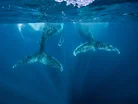
For centuries, the ocean has absorbed the consequences of human activity.
From industrial pollution to agricultural runoff, and particularly since the 1950s – when worldwide plastic manufacturing started its dramatic rise from two million tonnes per year to beyond 400 million currently – a mounting volume of plastic waste has accumulated.
The traditional approach was straightforward: send out additional vessels, employ more personnel and physically gather whatever was visible – yet this proved insufficient.
According to WWF projections, by 2050 the ocean could contain more plastic by weight than fish.
We're already witnessing early warning signs – with 90% of seabirds consuming plastic, half of sea turtles having ingested it – and the Great Pacific Garbage Patch represents more than visual pollution, actively undermining the ocean's climate regulation functions.
What's transformed isn't how critical the situation is, but rather the emergence of solutions that can match the problem's magnitude.
Machine learning (ML), satellite observation and cloud computing have evolved from experimental concepts into working systems.
For businesses, the deterioration of ocean health represents a proving ground for whether AI can function at the pace and scope that planetary challenges require.
Tech corporations AWS and Google are now implementing AI through collaborations that are transforming how we observe, rehabilitate and safeguard marine environments.
These solutions serve as testing platforms for AI's practical capabilities in volatile, resource-limited settings – and gradually, producing measurable results.
From the cloud to the ocean
The Ocean Cleanup's collaboration with AWS aims to develop a 'plastic navigation system' – essentially positioning technology for rubbish – which forecasts debris trajectories and streamlines clean-up activities before vessels depart.
"We are joining forces with AWS to accelerate ocean plastic removal using AI," The Ocean Cleanup says.
"AWS will provide a range of technologies from IoT, satellite and edge computing to deploying drones and flotation devices to precisely track plastic accumulation. This will help create a 'plastic navigation' system that predicts debris movement and optimises cleanup operations.
"AWS will enhance our marine life detection systems using AI-driven technologies, reducing the need for Protected Species Observers to monitor them 24 hours a day."
Rather than dispatching ships to search randomly across the Pacific, this approach uses data-informed forecasts to direct fleets toward the most productive collection areas – applying the same operational efficiency concepts that power logistics management across industries.
The organisation has already collected 64 million pounds of marine debris worldwide.
Through AI implementation, the companies aim for a 90% decrease in floating ocean plastics by 2040.
Currently, cloud-based systems are minimising the requirement for continuous Protected Species Observers, redirecting capacity from surveillance to genuine plastic collection.
"When people say something is impossible, the sheer absoluteness of that statement should be a motivation to investigate further," says Boyan Slat, CEO of The Ocean Cleanup, who established the organisation in 2013 after encountering more plastic bags than fish whilst scuba diving in Greece.
Dr Werner Vogels, Chief Technology Officer of Amazon, says: "Plastic pollution represents one of the most pressing environmental challenges of our time and The Ocean Cleanup's mission is vital for the health of our planet.
"This collaboration demonstrates how advanced cloud computing and AI can serve as powerful tools for environmental stewardship, not only transforming oceanic data into actionable insights but also creating a blueprint for how technology can address critical environmental challenges across the globe."
When AI can forecast debris patterns across thousands of kilometres of open water, those same predictive functions can enhance fleet coordination, emergency operations or infrastructure upkeep.
The ocean functions as a testing ground for AI systems that must deliver consistent results in unpredictable, critical environments.
How Google is charting the hidden underwater ecosystems
Whilst AWS focuses on surface-level concerns, Google is exploring what lies below, illustrating how AI pattern analysis addresses challenges beyond human observation capabilities.
Research has revealed that Australia's Great Southern Reef faces a critical situation.
Kelp forests that previously flourished now cover merely 5% of their historical extent in regions like Tasmania, casualties of climate-driven ocean temperature increases.
For organisations monitoring climate adaptation approaches, this exemplifies wider challenges: how do you recognise resilience within complicated systems experiencing pressure?
“Kelp is unlike any other organism on earth,” writes Kate Brandt, Chief Sustainability Officer of Google.
“Some of these seaweed species can grow two feet per day, up to 200 feet total.
“That rapid growth means less carbon in the atmosphere and fewer pollutants in the ocean.”
Google’s response, developed through its US$1bn Digital Future Initiative, leverages Google Earth Engine and Vertex AI to map over 7,000km² of kelp canopy.
The AI is identifying heat-resistant kelp strains – varieties that persist despite rising ocean temperatures – by analysing patterns across vast datasets that would take human researchers decades to process manually.
Google is using AI to identify outliers in a stressed system, then using those outliers to inform restoration strategy.
This represents anomaly identification applied to environmental science – the identical concept driving fraud prevention in banking, predictive servicing in production or quality assurance in manufacturing chains.
The programme includes partnership with CSIRO, IMAS, The Nature Conservancy, the Kelp Forest Alliance and the Great Southern Reef Foundation.
"With the help of Google AI and the spirit of collaboration between all partners, we're taking real steps towards restoring these vital kelp forests that previously seemed impossible," says Professor Craig Johnson, Marine Ecologist and Director at the University of Tasmania's Marine and Antarctic Futures Centre.
The operational efficiency breakthrough
Remove the environmental purpose and what these collaborations reveal is AI streamlining operations in circumstances where accuracy counts and inefficiency is prohibitive.

The Ocean Cleanup's predictive modelling demonstrates AI can substantially cut operational costs in unpredictable settings.
Studies show that the Great Pacific Garbage Patch isn't merely harming marine life but also impeding the ocean's climate regulation functions.
Plastics negatively impact ocean oxygen production and carbon absorption, potentially intensifying climate change – yet their extraction remains economically impractical without AI making the operation efficient enough to expand.
This is where Google's kelp charting demonstrates how satellite information and AI recognise patterns imperceptible to human observation.
Between 2014 and 2023, Google rehabilitated approximately 67 acres of indigenous habitat, planting 4,500 native trees near their Bay Area campuses.
These efforts reach beyond to AI initiatives like irrigation advancements in Taiwan and France, and infrastructure improvements in Chile.
"At Google, we're using AI to map the existing invisible forests and discover new varieties that can survive and thrive in more challenging environments," Kate highlights.
"It's just one of the ways we're seeing AI help preserve nature."
For business executives, the takeaway demonstrates how AI manages complexity, uncertainty and magnitude.
When ML can anticipate ocean movements and recognise climate-resistant species, comparable methods can forecast market changes or streamline resource distribution under unstable circumstances.
Both programmes illustrate something businesses frequently overlook: AI isn't substituting human knowledge; it's enhancing it.
The Ocean Cleanup still uses human decision-makers. Google's kelp initiative depends on marine scientists to contextualise AI discoveries.
The technology spots patterns and forecasts results, but humans establish what those insights signify. That partnership framework determines whether corporate AI implementations succeed or fail.
The consequences of failure
The ocean functions on geological timescales. Kelp may grow two feet daily, but ecosystems require decades to recuperate.
That's the challenge these AI programmes navigate: Implementing technology that operates in milliseconds to tackle problems that develop across generations.
For businesses, that challenge resonates.
The Ocean Cleanup's objective of 90% reduction by 2040 demands consistent AI functionality and operational rigour over 15 years.
The question isn't whether AI can support ocean sustainability – these initiatives confirm it can. The question is whether organisations can sustain AI systems at scale, under strain, when consequences are critical.
The Great Southern Reef stays relatively obscure compared to the Great Barrier Reef.
Google is tackling that through its Arts & Culture collection, highlighting the reef's significance and amplifying Indigenous narratives.
This serves as a reminder that technology independently doesn't generate change – it demands storytelling and stakeholder involvement.
These ocean sustainability programmes are early indicators of how AI will be implemented across sectors confronting complexity and pressing deadlines.
The fundamentals are applicable: Use AI to detect patterns humans cannot perceive, streamline operations where efficiency determines feasibility and construct partnership frameworks that capitalise on both machine accuracy and human judgement.
Company portals




Executives
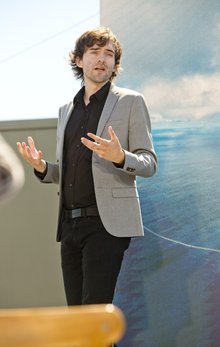
Boyan Slat
Kate Brandt
Member Board of Trustees
Werner Vogels
VP & CTO