Is Global Warming behind Australia's Barrier Reef Bleaching?
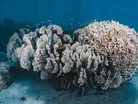
According to the Coral Reef Alliance, coral reefs are home to more than 840 species of coral and provide recreational benefits to more than 100 countries.
Despite being so important, The Great Barrier Reef (GBR) has endured one of its most challenging years on record.
According to the Australian Institute of Marine Science’s (AIMS) 2024–2025 Long-Term Monitoring Program (LTMP) Report, a combination of unprecedented heat stress, cyclones, floods and crown-of-thorns starfish outbreaks has caused substantial coral loss across all regions.
The 2024 mass coral bleaching event, the fifth since 2016 and the largest in spatial extent ever recorded, was the primary driver of this decline, reversing years of coral recovery.

Key Findings from AIMS
In the LTMP report it finds that coral cover dropped by 14% to 30% regionally, with some reefs losing more than 70% of their coral, compared to 2024 levels.
While some areas still hold relatively high coral cover compared to other reefs worldwide, the report highlights that recovery windows are shrinking as climate-driven marine heatwaves become more frequent and severe.
Without decisive global climate action, combined with strong local management measures, the resilience of this World Heritage site will be increasingly compromised.
Severe impacts
The report finds that the 2024 bleaching event affected all three regions of the GBR with high to extreme bleaching prevalence with more than 30% coral cover bleached.
Northern GBR coral cover fell from 39.8% to 30%, marking the largest annual decline on record for the region.
The Central GBR area also saw a cover drop of 4.6%, declining from 33.2% to 28.6%, with the steepest losses north of Cairns.
The worst area is the Southern GBR, suffering the most severe proportional loss, falling from 38.9% to 26.9%, well below its long-term average.
Multiple stressors
While bleaching was the main cause of mortality, other disturbances intensified the damage:
- Cyclones: Two significant events in late 2023 and early 2024 caused wave damage and freshwater inundation in some areas.
- Floods: Heavy rainfall and river plumes increased stress on inshore reefs.
- Crown-of-thorns starfish (COTS): Outbreaks persisted, particularly in the Southern GBR, with one reef experiencing a severe outbreak.
Ecological consequences
Fast-growing Acropora corals, which had driven rapid recovery from 2017 to 2024, were among the worst affected.
The loss of these habitat-building species reduces structural complexity, threatening biodiversity and reef ecosystem services.
Long-term outlook and recovery challenges
The LTMP notes that since 2016, mass bleaching events have occurred with increasing frequency, leaving shorter intervals for recovery.

This trend, coupled with cyclones, COTS outbreaks and chronic pressures such as poor water quality, is creating an “elevated disturbance environment” that vastly limits the reef’s resilience.
Local management efforts, such as the Great Barrier Reef Marine Park Authority’s Crown-of-Thorns Starfish Control Program, are showing promise in protecting priority reefs.
However, the report stresses that only urgent global reductions in GHG emissions can address the root cause, AIMS states there is strong evidence that ocean warming is the issue and gives the reef a fighting chance to adapt and recover.
The 2024–2025 GBR condition report paints a stark picture of a reef system under intense and escalating pressure.
While local conservation measures remain essential, the future health of the GBR ultimately hinges on global climate action.
As the report warns, without sustained periods free from severe disturbances, the reef’s capacity to recover will continue to diminish — risking the loss of one of the world’s most iconic marine ecosystems.
Why save the coral reefs?
The Coral Reef Alliance state that coral reefs are home to:
- 4,000 species of reef fish
- 840 species of corals
- More than 1 million species of other animals.
The alliance also states that:
- 275 million people live within 19 miles (30km) of coral reefs.
- More than 100 countries benefit from the recreational value of coral reefs.
- 350 million people travel to coral reefs each year.
The United Nations (UN) states that recent estimates suggest that more than 90% of coral reef species have not been named and that total reef species numbers exceed 800,000.
Coral reefs are also known to be rich with symbiotic relationships amongst species, due to millions of years of evolution and co-evolution.
Coral reefs benefit an estimated one billion people, either directly or indirectly, from the many ecosystem services they provide.
The UN also estimates coral reefs provide up to US$2.7tn per year in services, including providing critical natural infrastructure that protects increasingly vulnerable coastlines from storms and flooding, food security for vulnerable populations, tourism revenue and even raw materials for life-saving medicines.