How Google Balances Data Centre Demand With Sustainability
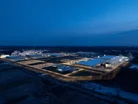
The well-documented surge in data centre demand is putting pressure on cloud providers as they look to scale operations without increasing their environmental footprint.
Business leaders are having to walk a tightrope between progress on sustainability and meeting customer needs.
The demand for Google data services in 2025 led to a 37% increase in annual electricity load, the company revealed in its latest environmental report.
A core sustainability issue facing the sector is that infrastructure growth is outpacing electricity grid expansion.

In 2025, Google procured 12GW of clean energy – eight times as much clean energy as it did in 2019 – in its bid to achieve a 24/7 clean energy procurement to cover its electricity demand.
This included “always on” clean power such as a 600MW nuclear restart project at Iowa’s Duane Arnold Energy Center, 115MW of enhanced geothermal in Nevada and some agreements for fusion energy.
"Our report comes at a critical time—as we navigate the tension between hyper-growth and environmental stewardship—and proves our enduring commitment to a more sustainable future,” says Kate Brandt, Chief Sustainability Officer at Google.
"At Google, we’re deeply committed to responsibly managing the environmental footprint of our operations and unlocking the power of AI for the planet, and I’m proud of the progress that we’ve made.
“We continue to evolve our approach in tandem with the technology we build, regularly assessing our strategy as we move forward with steady execution, balancing bold ambition with real-world impact.
“We’ll continue to prioritise AI stack efficiencies, clean energy and innovation to ensure our efforts make use of the transformative potential of AI to enhance lives globally.”
Showing that its strategy is working, Google achieved a 2% year-on-year reduction in operational emissions, despite the growth in load.
This reduction was partly due to more efficient data centres. The company claims its data centre fleet operated with a Power Usage Effectiveness (PUE) of 1.09 in 2025. Cloud rival Microsoft reported a global average PUE of 1.17.
Google also claimed its data centres used 83% less overhead energy than the industry average.
"While we have made progress, the outlook remains challenging. Our supply chain emissions have continued to increase. Moreover, given the growth of AI, systemic grid bottlenecks and supply chain complexities, there is an uphill climb ahead," adds Ben Gomes, Chief Technologist, Learning and Sustainability at Google.
While its operations emissions fell, Google’s supply chain emissions grew 25% in 2025, highlighting the difficulties in managing growth with a net zero target.
This was partly driven by land constraints, policy delays and high construction costs across the Asia-Pacific region preventing Google’s suppliers from sourcing low-carbon energy.
To help combat this, the company has engaged its supply chain participants to encourage sourcing clean power and the use of low-carbon materials in data centre construction.
Company portals

Executives
Ben Gomes
Chief Technologist, Learning and Sustainability
Kate Brandt
Member Board of Trustees