How McKesson Cuts Emissions & Increases Renewable Energy Use

McKesson employs more than 43,000 people worldwide and handles delivery for more than one-third of all US prescriptions. The company published its Fiscal Year 2026 Impact Report, outlining progress across four impact pillars: Our People, Our Partners, Our Community and Our Planet.
According to the report, McKesson has focused on integrating AI into operations, advancing sustainability, expanding community access to care and strengthening supply chain resilience. The company describes sustainability as central to its operational strategy.
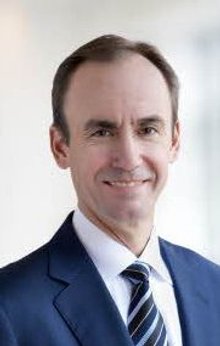
"At McKesson, impact is at the heart of our strategy and embedded in how we operate every day," says Nimesh Jhaveri, Executive Vice President and Chief Impact Officer at McKesson.
"This year's report reflects our progress in strengthening healthcare for the providers, patients and communities we serve today, while building the capabilities needed for tomorrow."
Emissions reduction progress accelerates
According to the FY26 Impact Report, McKesson set a target in FY23 to reduce operational Scope 1 and Scope 2 emissions by 50.4% by FY32, relative to an FY20 baseline. The company has achieved 72% progress toward that goal as of FY26.
The emissions reduction targets align with the Science-Based Targets initiative. McKesson has also aligned its sustainability reporting with the Global Reporting Initiative, Sustainability Accounting Standards Board and the Task Force on Climate-related Financial Disclosures frameworks.
The company tracks renewable energy adoption across its facilities. In FY26, approximately 32% of electricity used by McKesson buildings was generated from renewable energy sources.
McKesson has not yet disclosed specific plans for the remaining 28% of its emissions reduction target. The company faces an FY32 deadline for achieving the full 50.4% reduction commitment.

Green building standards expand footprint
McKesson applies proprietary Green Building Standards across its facilities. The Green Building Standards (GBS) scheme assesses environmental performance and operational efficiency at company sites.
According to the report, 52 buildings within McKesson's real estate portfolio have been assessed since the scheme's introduction. The company has awarded 17 GBS certifications to date.
The standards could mean McKesson can measure and compare environmental performance across different facilities. The certification programme appears to focus on operational buildings rather than new construction.
McKesson has not disclosed what percentage of its total real estate portfolio the 52 assessed buildings represent. The company also has not specified the timeline for assessing remaining facilities.
Digitised distribution network reduces waste
McKesson operates an automated distribution network that handles medicine delivery to pharmacies, providers and hospitals. In FY26, this network distributed one-third of America's medicines with more than 99% inventory and order accuracy, according to the report.
The high accuracy rate could show that digital systems help reduce waste from misdelivered or incorrectly stored medicines. The network also prevented 12m prescriptions from being abandoned during FY26.
Brian Tyler, CEO and Chair of McKesson, says: "By continuously investing in a digitally enabled supply chain, advanced cold-chain capabilities, automation and AI, we're building a smarter network, one designed to support today's needs and handle the growing complexity of tomorrow's therapies."
The cold-chain capabilities could mean McKesson can transport temperature-sensitive medicines more efficiently. This may reduce spoilage and the environmental impact of replacing damaged inventory.
Community investment complements environmental goals
According to the report, McKesson and the McKesson Foundation contributed more than US$17m to organisations and initiatives supporting vulnerable or disadvantaged communities across the US and Canada. Employees volunteered for nearly 40,000 hours with more than 700 charitable organisations.
McKesson operates The US Oncology Network, which includes approximately 3,300 independent oncology providers. The network provides practices with access to therapies, clinical trial opportunities and resources for managing treatment complexity.
The community-based model could show that McKesson aims to reduce patient travel for cancer treatment. Reducing travel distances may decrease transportation-related emissions, though the company has not published data on this connection.
McKesson has trained more than 95% of its wired employees through an eight-month learning series focused on digital skills, efficiency and transformation. The company introduced the McKesson Leadership Prescription, a behavioural and values framework for an AI-driven healthcare environment.
Company portals

Executives
Brian Tyler
CEO
Nimesh Jhaveri
Advisory Board Member