How Will the US’ WHO Exit Affect ESG & Health Strategies?
The US withdrawal from the World Health Organization (WHO) could reshape global health infrastructure and sustainability initiatives, with significant implications for ESG frameworks worldwide.
Founded in 1948, WHO has coordinated international health programmes that combine with environmental protection, climate resilience and sustainable development goals, making the exit important for ESG-aligned health systems.
After a year of initiation, on 20 January 2026 the US Department of Health and Human Services (USDHHS) announced that it had officially left WHO.
The withdrawal from WHO is due to “organisation's mishandling of the COVID-19 pandemic that arose out of Wuhan, China, its failure to adopt urgently needed reforms and its inability to demonstrate independence from the inappropriate political influence of WHO member states,” says USDHHS in its press release.

Implications for sustainable development
The decision could affect global sustainability frameworks, as WHO initiatives have historically linked public health with environmental factors including air quality, water sanitation and climate change adaptation.
WHO programmes addressing pandemic preparedness often incorporate sustainable healthcare infrastructure, waste management protocols and low-carbon health systems, all critical components of environmental stewardship within ESG strategies.
WHO advocates for the "One Health" approach, recognising the interconnection between humans, animals, plants and the environment, which is closely aligned with ESG’s emphasis on ecological and social responsibility.
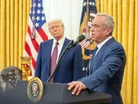
Robert F. Kennedy Jr, Secretary of the US Department of Health and Human Services, and Marco Rubio, the Secretary of State, issued a joint statement on 22 January 2026 confirming the termination of US membership.
"Today, the US withdrew from the World Health Organization, freeing itself from its constraints, as President Trump promised on his first day in office by signing E.O. 14155.
"This action responds to the WHO’s failures during the COVID-19 pandemic and seeks to rectify the harm from those failures inflicted on the American people.
"Promises made, promises kept."
President Trump first announced the plan to withdraw on 20 January 2025, signing Executive Order 14155 to formally initiate the process.
During the transition, the US stopped all funding to the organisation, recalled personnel and contractors from WHO headquarters in Geneva and from offices worldwide and suspended hundreds of engagements previously conducted through WHO structures.
All sustainability, net zero and sustainable supply chain leaders should attend:
- Sustainability LIVE: The Net Zero Summit - QEII Centre, London, March 4-5
- Sustainability LIVE: The US Summit - Navy Pier, Chicago, April 21-22
Co-located with Procurement & Supply Chain LIVE, these events brings together CSOs, ESG leaders and senior decision-makers at a moment when sustainability, supply chains and commercial performance are increasingly interconnected.
Tickets can be booked online today for The Net Zero Summit and The US Summit. Group discounts available.
Implications for sustainable development
The decision could affect global sustainability frameworks, as WHO initiatives have historically linked public health with environmental factors including air quality, water sanitation and climate change adaptation.
WHO programmes addressing pandemic preparedness often incorporate sustainable healthcare infrastructure, waste management protocols and low-carbon health systems.
The organisation has also adopted initiatives to align with UN 2020 to 2030 strategies, including paperless approaches, purchasing EVs and implementing sustainable water management.
Officials argue the organisation delayed declaring both a global public health emergency and a pandemic, costing the world critical weeks as the virus spread.
During the early stages, WHO leadership echoed and praised China's response despite evidence of underreporting, suppression of information and delays in confirming human-to-human transmission.
Following the pandemic, US officials say the organisation did not adopt meaningful reforms to address political influence, governance weaknesses or poor coordination.
Resource allocation and accountability
The administration has framed the withdrawal as a step towards restoring accountability for US taxpayers whilst potentially redirecting resources towards bilateral sustainability partnerships.
Although the WHO is comprised of 194 member states, US officials argue the US has carried a disproportionate share of the organisation's financial burden.
In recent years, US assessed contributions averaged approximately US$111m annually, with voluntary contributions averaging roughly US$570m per year, amounting to billions of dollars over time.
These funds previously supported programmes integrating health security with environmental resilience and sustainable infrastructure development in vulnerable regions.
Collaborative efforts between organisations like the WHO and private sector entities, including pharmaceutical companies, are crucial for implementing ESG in areas such as disease control and pandemic response.
Despite the withdrawal, the US government maintains it remains the world's leading force in protecting public health, saving lives and responding rapidly to infectious disease outbreaks.
Future partnerships and engagement
Following its formal withdrawal in January 2026, the US has now completed the legal withdrawal process, ending its membership, governance participation and funding contributions.
According to Secretary Kennedy and Secretary Rubio, US engagement with the WHO will be limited strictly to effectuate the withdrawal and to safeguard the health and safety of the American people.
"Going forward, US engagement with the WHO will be limited strictly to effectuate our withdrawal and to safeguard the health and safety of the American people," says Robert and Marco.
"All US funding for and staffing of, WHO initiatives has ceased.
"The US will continue to lead the world in public health, saving millions of lives and protecting Americans at home by preventing infectious disease threats from reaching our shores while advancing global health security through direct, bilateral and results-driven partnerships.
"We will continue to work with countries and trusted health institutions to share best practices, strengthen preparedness and protect our communities through a more focused, transparent and effective model which delivers real outcomes rather than the bloated and inefficient bureaucracy of the WHO."
The US will continue to lead global health through direct, bilateral and results-driven partnerships.
The Executive Order also revoked prior actions that had retracted the US withdrawal notice in 2021 and halted negotiations on the WHO Pandemic Agreement and amendments to the International Health Regulations.
The administration has directed the National Security Council to establish mechanisms to safeguard public health and fortify biosecurity, signalling what it describes as a new chapter in US global health strategy that could prioritise direct engagement with sustainability-focused health initiatives.