The Impact of Ball & Beiersdorf’s 100% PCR Aluminium Cans
Aluminium has long stood as one of the world’s most efficient circular materials – able to be recycled infinitely without any loss of quality.
Recycling it requires about 95% less energy than creating new aluminium from raw materials, and an estimated 75% of all aluminium ever produced is still in use today. That remarkable material efficiency is now powering new progress in consumer goods sustainability.
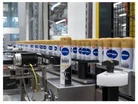
As closed-loop packaging and the circular economy across the personal care sector come into focus for consumers and companies alike, Beiersdorf and Ball Corporation have successfully transitioned all Beiersdorf’s European aerosol cans to 100% post-consumer recycled (PCR) aluminium.
“This achievement reflects our belief in the infinite potential of aluminum to drive a world free from waste,” says Victoria Marletta, VP Commercial, Personal & Home Care at Ball Corporation.
“It’s proof that sustainability and commercial success can go hand in hand – and it supports our global commitment to reduce absolute emissions by 55% by 2030.”
The move to 100% post-consumer recycled (PCR) aluminium
The collaboration between Ball and Beiersdorf began with a pilot project in 2024 to test the production and performance of aerosol cans made entirely from recycled material. Following its success, the initiative was swiftly scaled up across Europe in 2025.
Today, many of Beiersdorf’s most popular products – including NIVEA MEN Deo sprays and select 8x4 lines – are available in the fully recycled packaging.
“This is more than a packaging innovation, it’s a bold step toward true circularity and fully supporting our Sustainability Agenda,” adds Kelvin Oecksler, R&D Global Packaging Development at Beiersdorf AG.
“We want to reach Net Zero by 2045 and for this, we must embed solutions that are a true win – not only for our planet, but also for our consumers and our business. Our strategic cooperation with Ball delivers very well into that.”
Why is circularity important to Ball and Beiersdorf?
For Beiersdorf, the shift represents a tangible reduction in emissions tied to packaging, directly supporting its broader commitment to achieving net zero emissions by 2045.
For Ball, it highlights the company’s position as a leader in sustainable aluminium packaging and its technical strength in lightweighting – showcasing how innovation and circularity can operate at commercial scale.

Ball Corporation, a global leader in aluminium packaging with 16,000 employees across more than 70 sites, reported net sales of US$13.16bn in 2025. Beiersdorf, headquartered in Hamburg, Germany, employs over 22,000 people and generated €9.9bn (US$11.35bn) in 2024 sales from its portfolio of globally trusted brands, including NIVEA, Eucerin and La Prairie.
Beyond individual corporate achievements, this partnership sends a clear message to the industry: circular packaging is both achievable and commercially viable.
By collaborating across the value chain, companies like Beiersdorf and Ball are setting a new standard for packaging that meets sustainability goals – without compromising design or consumer experience.
Company portals

Executives
Kelvin de Oliveira Oecksler
Senior Packaging Specialist
Maria Victoria Marletta
Commercial Vice President, Aerosol Packaging