
Carbon Direct & Microsoft: A New Plan for Carbon Removals
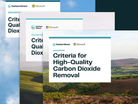
Carbon Direct, a global leader in science-based carbon management, has unveiled the fifth edition of its Criteria for High-Quality Carbon Dioxide Removal (CDR), developed in close collaboration with Microsoft.
The updated framework, released on 10 July 2025, sets a new benchmark for evaluating and procuring carbon removal projects across all major pathways, from afforestation to direct air capture.
Closing the carbon removal gap
Climate science and evolving global policy highlight the scale of the challenge: to limit global warming to 1.5°C, the world must remove 5–10 Gt of CO₂ annually by midcentury, totalling 100–1,000 Gt by 2100.
However, current CDR deployment is far below these levels.
This growing urgency underpins the significance of Carbon Direct’s updated criteria, which serve as a quality compass for project developers, buyers and policymakers navigating an increasingly complex carbon market.
“Science and policy advances continue to demonstrate the critical need for equitable, science-based CDR standards that not only guide CDR, but also inform broader sustainability procurement strategies, including environmental attribute certificates for industrial decarbonisation and corporate insetting programs,” says Jonathan Goldberg, CEO of Carbon Direct.
“Quality remains the biggest challenge in rapidly scaling and advancing high-impact carbon dioxide removal.
“Adhering to evidence-based CDR criteria is imperative; these updated 2025 benchmarks provide the rigorous, science-based framework needed to help the industry maintain quality, assisting buyers in making informed decisions as we scale toward the gigatonne removals needed to achieve climate goals."
What’s new in 2025?
The 2025 criteria incorporate fresh insights from Microsoft’s expansive 22 million tonne CDR procurement programme, as well as learnings from more than 400 evaluated project applications.
Marine carbon dioxide removal (mCDR) guidance
For the first time, the criteria include dedicated standards for ocean-based carbon removal pathways such as Ocean Alkalinity Enhancement (OAE) and Direct Ocean Removal (DOR).
These nascent technologies offer potentially large-scale carbon removal but come with heightened ecological and technical uncertainties.

The new guidance addresses challenges such as biogeochemical monitoring, ocean circulation modelling and environmental risk mitigation, making it among the most comprehensive standards yet for marine CDR.
Elevated community engagement standards
The 2025 edition mandates collaboration with local communities and, where relevant, Indigenous groups across the entire lifecycle of a project.
This shift reflects growing recognition of the need to embed environmental justice and equitable benefit-sharing into all forms of carbon removal, from engineered solutions to nature-based methods.
Adoption of dynamic baselines
Dynamic baselines are now endorsed as best practice for establishing carbon project impact.
These evolving benchmarks offer more objective and transparent crediting, enabling projects to more accurately measure additionality while accounting for shifting environmental and policy contexts.
Policy and pathways
The nine CDR methods include:
- Afforestation
- Mangrove restoration
- Improves forest management
- Soil carbon sequestration
- Enhanced rock weathering
- Biomass carbon removal and storage
- Mineralisation
- Direct air capture
- Marine CDR.
These now benefit from expanded glossaries, refined technical protocols and strengthened measurement requirements.
There’s a heightened focus on direct measurement more than modelling and new tools such as remote sensing and automated monitoring systems are being encouraged.
Recent US legislation has delivered record funding for CDR, while the EU has introduced a certification framework aimed at ensuring transparency and trust.
COP29 has also clarified Article 6.4 guidance, laying international foundations for carbon trading.
Microsoft's expanding role
Microsoft’s experience continues to shape the criteria’s evolution.
Since launching its programme in 2021, Microsoft has grown its carbon removal contracts from 1.3 million to more than 22 million tonnes.
“These updated criteria reflect our accumulated experience evaluating hundreds of CDR projects across multiple pathways and geographies," says Brian Marrs, Senior Director of Energy Markets at Microsoft.
“The 2025 criteria reflect the latest science and operational insights, providing a foundation for continuous improvement to help ensure that as the carbon removal market grows, it does so with integrity and transparency.”
