
Isuzu & Toyota Partner on Hydrogen Truck for Decarbonisation
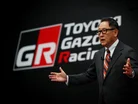
Isuzu Motors Limited and Toyota Motor Corporation have announced a collaboration to develop Japan's first mass-produced light-duty fuel cell electric vehicle (FCEV), marking a significant step toward decarbonising commercial transport. The partnership combines Isuzu's expertise in commercial vehicles with Toyota's three decades of fuel cell technology development, positioning hydrogen as a viable alternative to diesel in the logistics sector.
The companies aim to begin production of the FCEV in 2027, targeting delivery operations for supermarkets and convenience stores where zero-emission transport could significantly reduce carbon footprints. Unlike battery electric vehicles (BEVs), FCEVs generate electricity through a chemical reaction between hydrogen and oxygen, producing only water as a byproduct. This technology could offer commercial operators extended range and faster refuelling times compared to battery-powered alternatives.

Hydrogen technology meets commercial needs
The new vehicle will be based on the ELF EV, which Isuzu launched in 2023 using its I-MACS3 product development platform. Specifications from an earlier EV model of the ELF indicate the vehicle measures 6,690 mm in length, 2,154mm in width and 3,000mm in height, with rear-wheel drive configuration.
The truck features a maximum loading capacity of 3,000 kg and can be equipped with refrigeration or frozen storage capabilities, making it suitable for temperature-controlled deliveries. The vehicle adopts Toyota's fuel cell stack, which Toyota says it will enhance durability and extend service life, addressing key concerns around the longevity of hydrogen-powered commercial vehicles.
Toyota's fuel cell journey
Toyota began development of hydrogen FCEVs in 1992, demonstrating a long-term commitment to alternative fuel technologies. The company successfully introduced the Mirai sedan to world markets in 2014, establishing itself as a pioneer in consumer fuel cell vehicles.
Toyota's updated Mirai model, released in 2021, has a driving range of 650 km and the company has sold approximately 28,000 units globally. Toyota says in a statement it "will continue to accelerate efforts to expand the use of hydrogen and contribute to the realisation of a hydrogen society". In 2025, Toyota announced a new fuel cell system designed specifically for the commercial sector, featuring the same durability as conventional diesel-powered engines with improved fuel efficiency and significantly reduced costs compared to previous versions.
Overcoming adoption barriers
One of the primary challenges facing widespread adoption of FCEVs remains the high vehicle price point compared to conventional diesel trucks. Isuzu says it is working to reduce costs of its new light FCEV truck by optimising the vehicle body structure and reviewing manufacturing processes, making hydrogen technology more accessible to fleet operators.
The commercial sector's transition to zero-emission vehicles is crucial for meeting decarbonisation targets, as freight transport accounts for a substantial portion of urban emissions. According to the American International Automobile Dealers Association, Toyota sold 11.3 million vehicles in 2025, retaining its position as the world's top automaker. This success was partly attributed to Toyota's focus on hybrid models rather than positioning themselves entirely toward battery electric vehicles.
Toyota Chairman Akio Toyoda has argued hybrids could have a better environmental impact than battery electric vehicles in certain contexts. In an interview with Automotive News, Chairman Toyoda claimed: "We have sold some 27 million hybrids. Those hybrids have had the same impact as 9 million BEVs on the road." The collaboration between Isuzu and Toyota represents a pragmatic approach to decarbonisation, leveraging hydrogen fuel cell technology where it could offer the most significant environmental benefits in commercial applications requiring heavy payloads and extended range.
Company portals

Executives
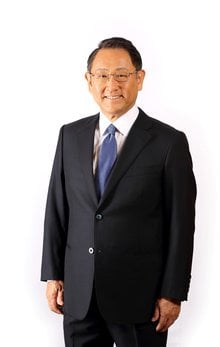
Akio Toyoda
Chairman