
LCAW 2026: Expert Discussions at The Global Climate Forum
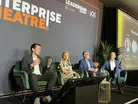
As Sustainability LIVE @ LCAW – The Leadership Summit, taking place on 25 June at CodeNode London, in association with Philip Morris International, drew to a close, The Global Climate Forum brought together sustainability leaders, policymakers and business executives to explore the evolving challenges and opportunities shaping global climate action.
Hosted in the Enterprise Theatre, the session examined how organisations are navigating an increasingly complex sustainability landscape influenced by changing regulations, regional climate policies and growing stakeholder expectations.
The speakers included:
- Roel van Poppel, Chief Sustainability Officer, ofi
- Glynn Roberts, Global Director, Corporate Sustainability Advisor at SLR Consulting
- Derrick Emsley, CEO & Co-Founder, veritree
- Manal Hassan, Chief Sustainability Officer, Elsewedy Electric.
As nations and industries transition towards a low-carbon economy at different speeds, businesses must adapt their strategies to manage uncertainty while continuing to deliver meaningful environmental progress.
The discussion explored how organisations can balance ambitious climate commitments with operational realities, including regulatory pressures, investment decisions and long-term resilience planning.
By focusing on collaboration, adaptability and strategic leadership, the session highlighted the approaches needed to accelerate climate action across different markets.
Ultimately, the forum demonstrated that successful sustainability strategies depend on understanding the global context while turning climate challenges into opportunities for innovation and transformation.

Accelerating climate action
Climate change is one of the most significant global challenges facing society, requiring urgent and coordinated climate action from governments, businesses and communities to reduce GHG emissions, protect ecosystems and strengthen long-term resilience.
“Between 60 to 80% of a company's emissions sit in their Scope 3, we need the concise data at a product level to track them,” said Glynn
The transition towards a low-carbon economy is reshaping how energy is produced, consumed and managed across all sectors, with key strategies including improving energy efficiency, expanding renewable energy generation, electrifying transport, reducing scope 1 and 2 emissions and deploying technologies such as carbon capture and storage (CCS).
The UK’s Low Carbon Transition Plan highlights that these measures are essential not only for limiting climate change but also for improving energy security, supporting economic resilience and enabling sustainable growth despite challenges such as infrastructure transformation and significant upfront investment.
Also at risk are supply chains and value chains. “Long-term supply of cocoa and coffee is at serious risk if we carry on the way we are,” said Roel.
The World Economic Forum (WEF) describes the low-carbon transition as the fourth major global energy shift, following the eras of coal, oil and natural gas.
Unlike previous energy transitions, this shift is primarily driven by the need to address climate change and meet international commitments, including the Paris Agreement's ambition to reach net-zero emissions by around 2050.
“Organisations are part of an ecosystem, they operate as part of a system,” said Glynn.
The Global Climate Forum
However, WEF emphasises that the transition requires a balance between sustainability, economic development and energy access, particularly as approximately 800 million people globally still lack access to electricity.
“You cannot discuss the climate when there are people who don’t have food on the table or education,” said Manal.
As emissions are unevenly distributed across industries and regions, climate action requires a combination of solutions, including renewable energy, energy efficiency improvements, low-carbon technologies and nature-based solutions.
“Policies are different to realities, they are detached,” Manal added.
“We need to focus on the E, the S and the G, not just one discussion.”
Innovation and technology are also becoming increasingly important in accelerating climate action.
Corporate action is also a major driver of global decarbonisation, with initiatives such as the Science Based Targets initiative (SBTi) supporting more than 11,000 companies and financial institutions in setting emissions reduction targets aligned with climate science.
When dealing with large numbers of companies, Roel can relate and states that in order to help, “Language needs to be concise, simple and clear.”
“Some companies are holding back when it comes to compensating for footprints,” said Derrick.
Recognising that sustainability has many forms, Derrick says, “we need people to gain confidence in offsets and nature based solutions.”
Through frameworks covering sectors including energy, agriculture, buildings, steel and cement, the SBTi enables organisations to establish credible near-term and net zero commitments while managing climate risks and demonstrating environmental leadership.
Ultimately, achieving climate goals requires collaboration across policy, technology, finance and industry, combining renewable energy expansion, emissions reduction strategies, innovation and responsible business practices to create a more sustainable and resilient future.
“It’s about taking action; perfection is getting in the way of progress,” said Derrick.
Company portals




Executives

Derrick Emsley
CEO and Co-Founder

Glynn Roberts
Global Corporate Sustainability Director

Manal Hassan
Chief Sustainability Officer

Roel van Poppel
Chief Sustainability Officer