Mars & Einride's Expanded Partnership With Six New e-HGVs
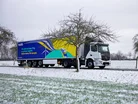
Mars is extending its partnership with Swedish freight technology company Einride by deploying six new Mercedes-Benz eActros 600 trucks across its German and Dutch delivery routes.
Though adding just six new vehicles to the fleet does not sound particularly impactful, these state-of-the-art HGVs will electrify more than 760,000 kilometres of annual driving, which is a testament to the sheer distances covered across Mars' global supply chain each year.
With the help of Einride's trucks, Mars expects to save around 1,690 tonnes of CO₂e per year.

From urban to cross-border operations
The collaboration between Mars and Einride first began in January 2024, with the procurement of two eActros 300 trucks operating between Mars' feed factory and warehouses in northern Germany.
That initial deployment covered journeys that were only 90 kilometres each way, generated annual savings of about 360 tonnes of CO₂e.
The six new trucks represent a significant expansion in scope, though, connecting the Mars factory in Viersen, North Rhine-Westphalia, and its chocolate factory in Veghel, Netherlands, to its warehouse in Minden.
The routes will also include deliveries to retail customers and make use of the charging infrastructure that was installed at the Minden warehouse in 2024.
Mars' 2030 targets and emissions reduction
Mars has set a target to operate 300 electric trucks across Europe by 2030 through partnerships with its logistics providers.
The company expects fleet conversion to reduce CO₂ emissions by more than 18,000 tonnes annually, representing approximately 10% of its greenhouse gas emissions from European logistics.
By the end of 2025, Mars will have at least 25 e-HGVs operating across its European network.
"Sustainability in logistics is crucial for a business that strives for significant progress in environmental sustainability. In addition to investment and infrastructure, this transformation requires innovative solutions and a long-term commitment," says Nicolas Storck, Head of Logistics at Mars.
The expansion of the fleet expansion aligns with Mars' commitment to halving its greenhouse gas emissions across Scopes 1, 2 and 3 by 2030, all of which are measured against a 2015 baseline.
The economic and operational considerations of Mars' decarbonisation
For Mars, electrification is viewed as both an ecological and economic decision.
The company says that electric vehicles demonstrate lower operating costs over extended periods alongside technological advantages and driver comfort.
Nicolas added that Mars can only pursue environmental sustainability in logistics through collaboration with partners.
After just one year of joint operations, Mars and Einride have developed an effective working relationship.
"With Einride, we have a technology partner who supports us with expertise and digital solutions," Nicolas explains. "Our goal is to create a scalable e-roadmap for 2030."
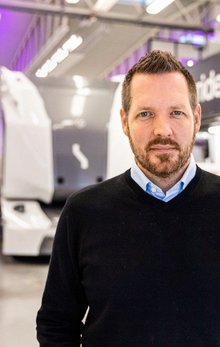
David Hallgren, General Manager of Electric Mobility at Einride, sees the partnership as critical not just to Mars' net zero journey but to the fulfilment of Einride's broader mission.
"We are proud to continue our successful and ongoing partnership with Mars to actively support their ambitious and significant goals to electrify their transportation fleet," he says.
"This collaboration is a critical part of our larger mission to create and implement a more resilient, efficient and sustainable supply chain, not only for the short term but also for the long-term transformation of logistics."
The expansion's feasibility depends on vehicle availability and cooperation with Mars' various carriers across Europe.
Mars has committed to achieving net zero emissions by 2050 through an 80% reduction in greenhouse gases and offsetting remaining emissions with carbon credits.


Executives
David Hallgren
General Manager - Electric Mobility
Nicolas Storck
Head of Logistics