
MycoToilet: Behind UBC's Mushroom-Powered, Waterless Toilet
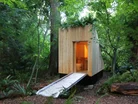
A group of researchers from the University of British Columbia (UBC) have launched a new prototype for a waterless toilet, which uses mushroom root networks to decompose human waste into compost.
The MycoToilet, which opened for use on 26 September in the university's Botanical Gardens, is the result of several years of development by lead researcher Joseph Dahmen and his team.
The facility was born from early designs that sought to provide refugee camps with functioning toilets where water is not readily accessible.
The system uses mycelia, the underground networks of fungi, to break down solid waste in lined compartments while separating liquid waste for use as fertiliser.
"Fungi are very good at breaking down biomass, including human and animal waste," says Dr Steven Hallam, a Professor in UBC's Department of Microbiology and Immunology.
"They produce enzymes that transform material into simpler compounds whilst supporting microbial communities that accelerate decomposition. No added water, electricity or chemicals are required."
After testing the MycoToilet in the lab, the team at UBC found that these mycelium liners can remove more than 90% of odour-causing compounds, which is a huge improvement on most compost toilets.
Since its launch in September, the facility has undergone a six-week pilot programme which monitored how microbial communities interact with the mushrooms to optimise aerobic waste breakdown and avoid odours associated with anaerobic composting.
Could the MycoToilet cut down on plumbing costs?
The wedge-shaped structure sits in a grove of Douglas fir trees near the entrance to UBC's Botanical Gardens.
The building is made up using prefabricated dowel-laminated timber panels, manufactured by in British Columbia using computerised tools.
Its exterior features charred cedar for antimicrobial properties, while a planted roof supports local vegetation. The facility is lit by a skylight, cutting down on the need for electric lighting. It is also accessible by wheelchair.
"What's novel about this project is that it's a modular, common-sense solution to a widespread problem," explains Joseph.
"Traditional chemical toilets smell unpleasant and convert a valuable resource into toxic waste. We've wrapped the whole system into an architecturally compelling package that's a pleasant experience that smells good, looks good and works seamlessly."
The research team expects that the toilet will require four maintenance visits a year. Traditionally, a connection to plumbing infrastructure accounts for about half the cost of installing public toilets. That percentage rises massively for toilets in remote locations.
With the MycoToilet, Joseph and the team hope to skirt some of those issues sustainably.
"From an operations perspective, this is streamlined by design," he says.
"We've taken out the uncertainty that can scare municipalities away from composting toilets and solved it – the schedule is set, the ventilation is integrated, everything works as it should."
A toilet that can produce valuable resources
The system is expected to produce roughly 600 litres of soil and 2,000 litres of liquid fertiliser a year by the time it is fully operational.
The Botanical Garden at UBC plans to use these products for its own on-site maintenance when it can, reducing its reliance on energy-intensive fertilisers and establishing a more self-sufficient supply chain.
"Allowing this new structure to become part of the Botanical Garden's regular cleaning schedule with UBC Custodial will provide some cost savings – and more importantly reduce the environmental impact of multiple truck visits into the garden for cleaning and service," says Brendan Fisher, the Head Trades Horticulturist at UBC Botanical Garden.
The team expect the MycoToilet to eventually replace one of the site's existing chemical toilets, which currently requires weekly services all through the year.

Because chemical toilets contain things like formaldehyde and other compounds that require treating waste as toxic material, disposing of waste properly can be a challenge. With the MycoToilet, waste might instead become a valuable resource for UBC.
While the facility is just a small, local project for the time being, the team believes it has the potential for expansion.
"If successful, the MycoToilet could provide a self-contained, cost-effective solution for managing waste in parks, municipalities, remote communities and developing regions," Joseph says.
To this end, the research team is hoping to demonstrate the technology to municipal and provincial governments following the pilot period.
With untreated human waste causing disease among the 2.3 billion people who lack access to proper sanitation, and with centralised waste treatment facilities requiring huge amounts of water and energy to function, the MycoToilet could provide a better option going forward.
Company portals

Executives
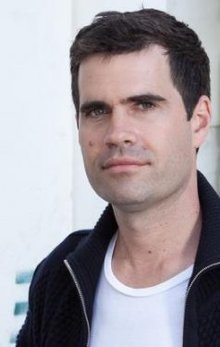
Joseph Dahmen
Associate Professor at the School of Architecture and Landscape Architecture
Steven Hallam
Professor in the Department of Microbiology and Immunology
