
Siemens, eHGVs & the Journey to Slash Supply Chain Emissions
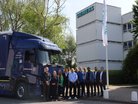
Siemens has teamed up with its long-time logistics partner Kuehne+Nagel to roll out a number of electric lorries (eHGVs) across its operations in the northwest of England.
The eHGVs will service the German company's factory in Congleton, Cheshire, UK, replacing its outmoded fleet of diesel trucks.
The fleet will operate on what the company calls a "milk run" model, where a single truck collects or delivers goods from multiple stops along a fixed route.
The vehicles have a 400km range and enough power to haul loads of up to 44 tonnes.
Should this pilot be a success, the two companies will look to replicate it across Siemens' other UK facilities and networks.
Modest but measurable reductions in emissions
Siemens anticipates that its new eHGVs will help it to elimiate around 12 tonnes of CO₂e per year, per route.
This experiment will be regarded as a proving ground for electrification across Siemens' operations, testing whether electrification can work in real-world industrial logistics without compromising delivery schedules or operational performance.
Rob Matthews, who is Managing Director of Siemens Congleton, sees the project as a fundamental rethinking of his firm's logistics, rather than a simple upgrade on vehicles.
"This partnership represents a meaningful shift in how we approach logistics and sustainability," he says.
"By introducing electric Heavy Goods Vehicles into our operations at Congleton, we are not only reducing emissions but also rethinking how we deliver efficiency and resilience across our supply chain."
For Rob, the key to the success of the initiative will be balancing sustainability with the same high standards Siemens' teams and customers have come to expect.
"This is a clear example of how collaboration and technology can accelerate the transition to a low-carbon economy while continuing to support the industries and communities we serve," he explains.
The electrification of logistics
Rob Palmer, Commercial Director at Kuehne+Nagel, sees the project as part of an industry-wide transition that needs pioneers willing to test new models.
"We're proud to partner with Siemens in accelerating the shift to low-emission transport across their operations," he explains.
"It's inspiring to see industry leaders like Siemens championing the adoption of electric trucks - setting a powerful example for how the UK can scale low-emission logistics."
The partnership leverages a long-term logistics relationship between the two companies, providing the trust and operational knowledge needed to navigate the uncertainties of new technology deployment.
Siemens sustainability in the UK
Siemens' factory in Congleton isn't new to environmental initiatives.
Specialising in low-voltage variable speed drives and power electronics, the site manufactures controls and drives that increasingly carry the EcoTech environmental product performance label, a marker of sustainable materials and circular design thinking.
The facility already generates 75 kW of renewable electricity through the Havannah Weir Hydro Scheme, developed with Dane Valley Community Energy.
That project taps the River Dane and feeds power directly into the Congleton site via a kilometre-long underground cable.
The eHGV deployment slots into Siemens' broader DEGREE Framework, which embeds sustainability considerations throughout product and process development.

The scale-up challenge
The pilot's 400 km range works well for regional distribution networks like the milk runs serving Congleton, but longer-haul routes present different challenges.
Charging infrastructure remains patchy, and the payload-to-range calculations that favour diesel in certain applications haven't disappeared just because batteries are improving.
The 12-tonne annual CO₂e reduction from a single route looks modest, but multiplication across multiple routes and sites could deliver substantial emissions cuts if the pilot proves the concept.
Company portals

Executives
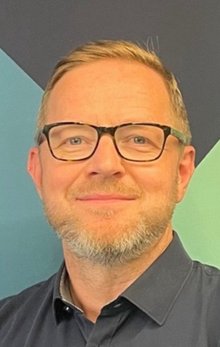
Rob Matthews
Managing Director of Siemens Congleton

Rob Palmer
Commercial Director