
How Will Schneider's New CSO Drive Deeper Decarbonisation?
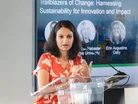
Esther Finidori describes working in sustainability as a “marathon without a finish line”.
It is a great way for Schneider Electric’s new Chief Sustainability Officer to describe her work, which is a relentless race to preserve the planet.
Thankfully, she has the energy and the stamina to keep going. And, in Schneider, Esther works for a sustainability exemplar – the company ranked at number one in Sustainability Magazine’s Top 250 World’s Most Sustainable Companies.
We caught up with Esther during Sustainability LIVE: London.
Esther assumed her role on 1 June, stepping into a position leading one of the most comprehensive corporate sustainability programmes in the industrial sector.
Within a month, Schneider was given the top spot in TIME and Statista’s World’s Most Sustainable Companies. Two months later, the company ranked at number one in Sustainability Magazine’s Top 250 World’s Most Sustainable Companies.
For Esther, the accolades are “extremely humbling”.
But she adds: “When I look at the bigger picture, there is so much to do to transform the company, to transform our value chains, to transform the way we work with our customers."
Schneider operates in over 100 countries and is one of France's largest corporations.
Its scale makes its sustainability commitments both challenging and significant as a potential model for other industrial operations.
- Job title - Chief Sustainability Officer
- Company - Schneider Electric
- Industry - Automation Machinery Manufacturing
- Location - Paris, France
A 25-year strategy shaping Schneider’s culture
The foundation for the company's current sustainability position was laid 25 years ago when its leadership decided to centre the business around helping customers deliver the energy transition through electrification and efficiency.
This decision changed the company's portfolio over time, shifting focus towards technologies and services that support decarbonisation.
"Twenty-five years ago, our CEO decided that our purpose would be to help our customers deliver the energy transition through electrification, through efficiency, and that has massively changed our portfolio of offers over the time," Esther explains.
She says the strategic direction has remained consistent across leadership changes, providing a single goal that has guided business decisions and investments.
The second element Esther identifies as central to the company's approach is employee engagement.
"People in Schneider strongly believe in the topic of sustainability: they understand that this will shape the world, this will transform the economy, this must transform the way we operate," she says. This cultural element translates into practical action because employees feel empowered to change operational practices.
Esther says: “Having this level of appropriation does mean that people can get it done on the ground because they feel empowered to change the way we operate.
“So the strategy and the empowerment of the people to get things done is a combo that makes a difference.”
The combination of strategic clarity and employee empowerment creates conditions where sustainability considerations become embedded in daily operations rather than existing as a separate initiative.
This integration has also become a primary reason new employees cite when joining the company, creating what Esther describes as "a self-fulfilling prophecy or positive feedback loop".
Targeting net zero operations by 2030
Among the company's commitments, the target to achieve net zero on scope one and two emissions by 2030 is one of the most demanding. The deadline covers emissions from sites and company vehicles across the global operation.
"The reason we did that is because we want to demonstrate that it's feasible that a very large corporation – we operate in over 100 countries in the world – can decarbonise its operations extremely quickly," Esther says.
The practical implications involve switching all company vehicles to EVs, which requires changes to work organisation and employee habits. Sites are being decarbonised through various approaches.
In some cases, the company relocates operations because existing facilities cannot be transformed into net zero sites. Other locations undergo refurbishment, including installation of heat pumps.
"Whenever a site achieves zero CO2 in operations, there would be some celebrations," Esther says.
The visibility of these changes allows employees to connect global commitments with local action. She suggests this has ripple effects beyond company walls, influencing employee behaviour at home and encouraging suppliers who visit facilities to implement similar changes in their own operations.
Schneider and Nvidia partner on data centre design
The “marathon without a finish line” nature of sustainability means Esther need not be daunted by Schneider’s efforts so far – there is plenty of scope to continue improving.
She identifies partnerships across the value chain as a priority area for expansion. She also sees collaboration between businesses as increasingly driven by commercial logic rather than policy requirements alone.
"What I observe now, and we're operating in a different context, is in practice businesses coming together to see how they can do business differently or without the need or the support or the push from climate policies," she says.
Schneider’s partnership with Nvidia is an example of this approach. The collaboration focuses on designing data centres differently, allowing smaller data centre customers to adopt highly efficient designs without requiring the same level of expertise or time investment.
"Through such partnerships which are not obvious – Nvidia and Schneider, we don't operate at the same level of the value chain in the data centre segment – through such partnerships you can create more value and you can transform the way the companies do business," Esther explains.
She says the partnership connects companies from different points in the value chain to create solutions neither could develop independently.
Innovation focussed on grid technology
As an energy technology company, Schneider Electric's innovation priorities centre on electrification and efficiency technologies.
Esther describes the sector as an old industry facing disruptive innovations, particularly in managing high power demand and intermittent renewable energy sources.
"A lot of our R&D innovation road map is extremely busy so that we can invent the gear, the assets, the infrastructure and the digital capabilities that will enable us basically to have the world powered 100% by renewable energy," she says.
The challenge involves developing systems that allow grids to operate differently than they have historically, accommodating variable renewable generation while maintaining reliability. This is the primary item on the business agenda for the coming years.

Helping suppliers and customers to find a way
The company works with stakeholders at different points in the value chain through distinct approaches.
With suppliers, Schneider Electric has developed programmes focused on capability building rather than simply making demands.
Esther says: “We've taken a strong posture that we don't want to be in a demanding negotiation type of relationship with them when it comes to sustainability.
“We want to be helping them to build the capabilities they need to put sustainability at the core of their own strategy.
"From the very early days of awareness, to strategic thinking, to taking the commitments and then supporting them in practice, we've used some of our energy experts in our own factories to run energy audits at suppliers’ factories," Esther says.
The approach involves helping suppliers make sustainability strategic to their own operations, using Schneider Electric's scale to provide support smaller companies might struggle to access independently.
On the customer side, the company operates a consulting branch that emerged from the original decision 25 years ago to centre the business on energy transition.
"With this consulting branch, we're helping customers find the ways, find the new ways to operate their business to change the way they run their operations," Esther explains. The consulting activity focuses not only on strategy but on implementation, working through practical steps to achieve operational changes.
Esther recognises that Schneider’s profile and expertise give it an "important role”.
She says: “We believe we must use this role to help transform our entire value chain. We just need to make sure we are forward-looking.
“We think about what must change within the next five years, the next 10 years, and then build a stepping stone to succeed."
Company portals


Executives
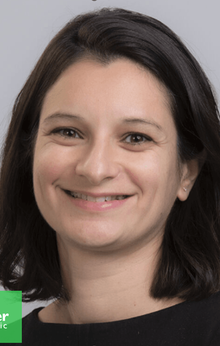
Esther Finidori
Chief Sustainability Officer