
Tesco: Climate and Supply Chain Under the Spotlight
Tesco’s 2026 Sustainability Report includes performance data across carbon reduction, energy use, food waste and nutrition programmes across the company's operations and supply networks.
It examines Tesco's work with suppliers, farmers, charities and sector organisations to advance net zero commitments and related environmental targets.
These partnerships extend from agricultural interventions to customer-facing health services, illustrating how retail operations can influence population health through business decisions.
Packaging and recycling infrastructure
According to the report, 99% of Tesco's own-brand packaging is now recyclable in the UK. This includes 87% recyclable through household kerbside collections.

Packaging sustainability directly affects environmental outcomes. Reducing plastic waste and improving recycling rates decreases exposure to environmental pollutants, though the direct health impacts require further study.
The retailer also improved the sustainability of its packaging while promoting healthier food choices.
Supply chain resilience and logistics
Tesco's work with suppliers includes data programmes to improve the accuracy of carbon reporting and to encourage science-based climate targets throughout the supply chain.
Climate change could disrupt food production and distribution systems. According to the report, sustainable supply chain practices could mean more stable access to diverse, nutritious foods during environmental disruptions.
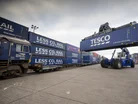
The retailer invests in lower-emission logistics, including electric vans, Bio-CNG trucks and rail freight expansion.
Transport efficiency projects are designed to reduce road miles and fuel use. Efficient transport systems support food freshness and nutritional quality.
Reduced transit times could mean higher nutrient retention in fresh produce, though specific data on these outcomes was not provided in the report.
"Sustainability, and seeking the protection of workers' rights across the food value chain, is central to everything we do," says Ken Murphy, Chief Executive Officer of Tesco.
"We are as committed as ever to playing our part in reducing our impact on the planet.
"Many of the challenges where we need to make further progress are areas that no company can tackle alone.
"It will take shared efforts across supply chains, government and the entire food industry to overcome the most complex issues facing our food system."
Food waste and redistribution
Tesco has committed to cutting food waste in its operations by 50% before 2030. The company acknowledged it did not meet its original 2025 target.
"As Chair of the Sustainability Committee, I have seen first-hand the determination across Tesco to embed sustainability into every part of the business," says Stewart Gilliland, Chair of the Sustainability Committee and Non-Executive Director at Tesco.
"The store demonstrates how practical solutions can help us decarbonise retail and inspire change across the industry.
"Alongside this, we have supported progress on healthier baskets, nature-based solutions and waste reduction, while continuing to champion human rights and community programmes such as Fruit & Veg for Schools."
During the reporting year, Tesco redistributed 44,554 tonnes of surplus food to people and animals in the UK. The retailer converted more than 5,000 tonnes of food surplus into animal feed.
According to the report, redistributed food reaches people who might otherwise experience food insecurity, potentially improving their nutritional intake.
Sustainability leaders won’t want to miss Sustainability LIVE: The Leadership Summit at London Climate Action Week, taking place at Code Node on 25 June 2026.
Register now for this exclusive invite-only event.
The connection between food waste and public health extends beyond immediate hunger relief. Sustainable food systems could provide more stable access to nutritious food, which could benefit population health over time.
Climate and farming systems
Tesco's report notes that food production generates roughly a third of global greenhouse gas emissions. Climate-related issues, including droughts, flooding and biodiversity loss, are placing pressure on food supply chains.
According to Tesco, almost 99% of its total carbon footprint comes from its wider value chain, particularly agriculture and customer product use. The company works directly with farmers through Sustainable Farming Groups to introduce lower-carbon farming techniques and nature-based solutions.
"As food systems come under increasing pressure, sustainability is key to our long-term resilience," says Christine Heffernan, Group Chief Communications and Sustainability Officer.
"Our actions today help meet customer needs and strengthen supply chain stability for the future."
Climate resilience in food production systems could protect against future nutrition security challenges. Diversified farming practices and improved soil management could help maintain consistent food supplies during environmental disruptions.
Company portals
Executives

Christine Heffernan
Group Chief Communications and Sustainability Officer

Ken Murphy
CEO

Stewart Gilliland
Chair of the Sustainability Committee and Non-executive Director