This is Where Amazon Puts Sustainability Ideas to the Test
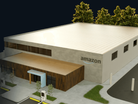
Amazon has developed a mass timber warehouse in Elkhart, Indiana, which will serve as a live testing environment for more than 40 distinct sustainability strategies.
The project could provide a blueprint for integrating sustainable practices into logistics and industrial buildings without disrupting core business operations.
Amazon’s Chief Sustainability Officer Kara Hurst says: “In climate action, we need to move fast. So our teams got creative and asked: ‘What if we created a real-world testing ground for some of the best sustainability initiatives, in one place?’
“That's exactly what we did at DII5, our brand-new mass timber delivery station in Elkhart, Indiana.”
Scalable green building solution
The DII5 facility was constructed primarily from mass timber and designed by ZGF Architects.
It incorporates features such as clerestory windows for natural light, circadian lighting systems and electric vehicle charging stations.
These elements align with Amazon's objective to achieve net-zero operations by 2040. The project demonstrates a large investment in exploring scalable green building solutions.
"By testing several sustainability initiatives under one roof, we're accelerating our progress toward achieving scalability and standardisation of these initiatives across our building portfolio," Daniel Mallory, VP of Global Realty at Amazon, says.
Daniel continues: "At the same time, it serves as a 'test and learn' platform for Amazon and the broader industry to explore how buildings can become more adaptive, high-performing and resilient in a changing climate.
“The lessons we learn here will guide the future design, construction and operation of our spaces."

Data gathering for sustainable change
Amazon’s aim is to use the findings from the test centre to scale sustainable projects.
Kara explains: “Buildings account for 40% of greenhouse gas emissions globally and with that in mind we designed DII5 to be a working laboratory with dozens of solutions – from the walls, water and lighting, to the desks where our employees work.
“The data we are gathering will help us determine which technologies and initiatives can be scaled across our global operations.”
Mass timber and embodied carbon
According to Amazon, the building is "the first large-scale owner-occupied mass timber logistics facility in the United States".
The construction utilised Southern Yellow Pine cross-laminated timber (CLT) panels, glulam beams and wood fibre insulation.
The use of mass timber in construction can significantly lower a building's embodied carbon compared to traditional materials like steel and concrete.
Beyond the structure, the site integrates permeable paving, "lower carbon concrete", high-efficiency outdoor lighting and a bio-retention pond for managing stormwater.
These site-wide features contribute to a holistic sustainability strategy, addressing water management, energy use and material science.
The building’s clerestory windows, which line the delivery floor, "bathe the interior in sunshine", according to Amazon.
The sustainability successes stories so far
DII5's sustainable innovations include:
- Mass timber construction: DII5 utilised over half a million board feet of Southern Yellow Pine for its walls, and other mass timber elements in its beams and framing
- Water re-circulation system: this approach captures rainwater for use in restrooms, reducing dependence on municipal water
- EV investment: there are more than 170 electric vehicle charging stations and 125 EVs already delivering from the site
- Natural lighting: the delivery station has clerestory windows, allowing daylight to brighten the interior
- Air source heat pumps: eliminating the need for gas utilities on-site
- Biodiversity initiatives: the site includes 90+ plant species for pollinators and 2,900 newly planted tree saplings
- Bio-based materials: throughout the delivery station, there is everything from wood studs to wood fibre insulation and salvaged wood desks.
Kara says: “These solutions can be changemakers - and the beauty of this approach is, it doesn't impact our operations at all.
“Packages are being delivered with the same reliability our customers expect and we still get to test our sustainability initiatives.”
A testbed for operational sustainability
The facility is designed to prove that sustainability can be integrated without compromising operational efficiency.
"These solutions can be changemakers - and the beauty of this approach is, it doesn't impact our operations at all.
“Packages are being delivered with the same reliability our customers expect and we still get to test our sustainability initiatives," a statement from Amazon explained.
This approach allows for real-world testing of green technologies in a live, high-volume logistics environment.
Daniel says Amazon will track a range of data points.
"We're tracking multiple metrics, including total embodied carbon reduction compared to conventional construction, operational energy efficiency, water conservation performance, impacts of biodiversity, etc," he says.
"We're also studying how the building performs in various weather conditions and monitoring construction and operational costs to assess the business case for scaling these approaches."
Scaling innovations across existing assets
The insights gained from the Indiana warehouse are not just for future constructions.
The project is intended to generate a catalogue of proven, retrofittable solutions for Amazon's existing portfolio of buildings.
This makes the facility a strategic tool for decarbonising a vast real estate footprint.
"While we view DII5 as a strategic investment in designing and implementing sustainability strategies in our future buildings design, it will also give us an opportunity to test which of these initiatives can be scaled across our existing buildings portfolio," says Daniel.
This project follows other Amazon developments that have used mass timber, including its HQ2 buildings in Arlington, Virginia.
Company portals

Executives
Kara H. Hurst
Vice President, CSO, Worldwide Sustainability