
UK Space Agency: A Year of Debris Cleanup and Sustainability

The UK Space Agency has announced the conclusion to its year as chair of the Inter-Agency Space Debris Coordination Committee (IADC).
The announcement marks the end of a term that saw the UK strengthen international cooperation on space safety and sustainability.
The IADC shapes how spacecraft are designed, how they operate in orbit and how space travel and exploration is regulated globally.

Chairing the IADC
The IADC brings together 13 national space agencies including:
- ASI (Agenzia Spaziale Italiana)
- CNES (Centre National d'Etudes Spatiales)
- CNSA (China National Space Administration)
- CSA (Canadian Space Agency)
- DLR (German Aerospace Center)
- ESA (European Space Agency)
- ISRO (Indian Space Research Organisation)
- JAXA (Japan Aerospace Exploration Agency)
- KARI (Korea Aerospace Research Institute)
- NASA (National Aeronautics and Space Administration)
- ROSCOSMOS (State Space Corporation)
- SSAU (State Space Agency of Ukraine)
- UK Space Agency.
The committee also involves three associate members who aid in the coordination of technical space debris research – non-functional satellites, rocket stages and fragments.
The UK last chaired the IADC in 2015, ending their term in 2016.
By taking the role again, it allows the UK to demonstrate leadership on the international stage and highlight the need to monitor and reduce the growing risk that space debris has to active and future missions.
Andrew Ratcliffe, Chief Engineer at the UK Space Agency, led the UK’s chairship from 2025 to 2026.
“As Chair of the IADC for the last year, one of my key objectives was to improve the engagement of the Committee with the broader community of operators, industry and academia involved and impacted by the space debris environment,” writes Andrew on LinkedIn.
Sustainability leaders won’t want to miss Sustainability LIVE: The Leadership Summit at London Climate Action Week, taking place at Code Node on 25 June 2026.
Register now for this exclusive invite-only event.
A space agency committee
A key date in the UK’s term was the IADC Plenary Day, which opened the Annual Meeting at Harwell Campus in late April and attracted around 185 participants from government, industry, operators and academia.
Rebecca Evernden, Director at the UK Space Agency, opened the event, highlighting why space safety and sustainability are central to UK government priorities.
“Space has never been more important to the UK’s economy and security and the new UK Space Agency will play a vital role, working across the whole of government, in setting national direction and leading the delivery of world class science and innovation programmes,” said Rebecca after she was appointed as Director.
She was followed by a keynote from Aarti Holla-Maini, Director of the United Nations Office for Outer Space Affairs, who emphasises how strong technical evidence aids in underpinning effective and inclusive international space governance.
The Plenary Day provided an opportunity for the IADC to showcase its current research portfolio, ranging from studies on spacecraft vulnerability to measuring the amount of debris at different orbital altitudes.
The IADC shared how spacecraft can be designed and operated to actively reduce debris generation as well as missions and trends that could influence how space safety and sustainability is considered.
At the end of the conference, two areas stood out: sustainability of the space environment and approaches to debris mitigation around the Moon.
The ESA states that, “every step of a mission, from design to launch and operations, can be made more sustainable.”
Creating a sustainable space environment
The United Nations (UN) has previously defined sustainability as “meeting the needs of the present without compromising the ability of future generations to meet their own needs.”
Building upon this, the IADC is working to set up the metrics that can be used to define a sustainable space environment.
The UN states that using data from the IADC can already lead to multiple concerns regarding the future of sustainability.
The Organisation for Economic Co-Operation and Development (OECD) states that space activities can generate negative environmental effects on Earth and in the atmosphere, including:
- Stratospheric ozone depletion
- Air acidification
- Smog
- Toxic waste spills
- Water pollution
- Noise pollution
- Water consumption
- Material demands which can contribute to resource depletion.
The growth in space activities also creates new light pollution impacting astronomical research, highlights OECD.
According to the IADC’s ‘Report on the Status of the Space Debris Environment’, there has been an accelerated change in low Earth orbit traffic, due to the deployment of large constellations and commercial operations.
NASA states that there is 5,443 tonnes of materials in low Earth orbit and some of these can reach speeds of 18,000 miles per hour.
The widespread adoption of the COPUOS and IADC space debris mitigation guidelines, along with the IADC’s recommendations for large constellations, remains the most effective approach for reducing the long-term environmental impact of space activities by slowing the growth of the debris accumulation.
The IADC states that the rising number of active satellites has made collision avoidance increasingly critical.
Current data trends suggest that, if launch activity continues at its present rate, the number of orbital objects could grow rapidly, with environmental evolution models indicating that the space debris population may double in less than 50 years.
Even in a scenario where no additional launches occur, collisions among existing debris objects are expected to continue increasing the debris population.
The ESA highlights that the gold standard for sustainability is a circular economy, reusing and recycling as much as possible, also in space.
As a result, the IADC continues to advocate for broader adoption of its guidelines and recommendations, while also recognising that these measures alone cannot entirely eliminate environmental impacts.
The IADC also encourages continued international research and discussion to build a global consensus on what constitutes a sustainable space environment and plans to continue supporting these efforts through regular environmental reports and contributions to UN discussions.
Company portals



Executives

Andrew Ratcliffe
Chief Engineer at the UK Space Agency
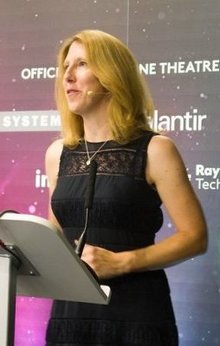
Rebecca Evernden
Director of the UK Space Agency