Why the Canadian Space Agency Handed ABB a Climate Tech Deal
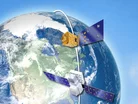
ABB has secured a contract with the Canadian Space Agency to develop the Thin Ice Clouds and Far InfraRed Emissions (TICFIRE) instrument, a specialised infrared spectral imager designed to observe the upper atmosphere.
The instrument will form part of the High-altitude Aerosols, Water Vapour and Clouds (HAWC) satellite mission, a Canadian-led initiative scheduled to contribute to NASA's proposed international Atmosphere Observing System mission.
The contract covers Phase A conceptual development of TICFIRE, alongside additional technology development activities that will be defined as the project goes on.

Addressing gaps in climate modelling technologies
The HAWC mission targets a specific gap in climate science: quantifying how thin ice clouds affect climate predictions.
Current climate models face significant uncertainty around aerosol-cloud interactions, particularly regarding how cold water vapour and ice clouds regulate Earth's energy balance.
TICFIRE will measure how these ice clouds block incoming solar energy and trap outgoing terrestrial radiation, which represents Earth's primary cooling mechanism.
The instrument will observe the atmosphere from above in infrared wavelengths, an approach that previous technologies could not achieve.
"We are proud to be a part of this important scientific mission that will advance our understanding of the Earth's climate," says Marc Corriveau, GM for ABB's Measurement & Analytics division in Canada.
The practical applications beyond the initial research project
The HAWC mission's data will support forecasting of severe weather events and extreme conditions, alongside improvements to climate modelling accuracy.
Additional applications include air quality assessments and tracking natural disasters such as wildfires, volcanic eruptions and intense rainfall events.
The mission's orbit will maximise observations over the Arctic region, where climate change impacts are particularly pronounced.
"ABB's purpose is to enable a more sustainable and resource efficient future, and it is precisely through work like this we can contribute to a deeper understanding of our planet, helping to ensure long-term resilience," Marc explains.

ABB's extra-terrestrial credentials
The contract will be executed by ABB's 220-person engineering team at its Quebec City facility, which specialises in space technologies.
ABB currently operates over 40 optical instruments in orbit monitoring Earth's atmosphere and surface, establishing the company as a leader in satellite optics.
The company's first collaboration with the Canadian Space Agency was for the MOPITT atmospheric sensor, launched in 1999 as the first instrument to map carbon monoxide globally.
The Swiss-headquartered technology firm employs approximately 110,000 people worldwide across its electrification and automation businesses.
The HAWC mission targets a 2031 launch date, though this timeline depends on the progression of NASA's broader Atmosphere Observing System initiative.
The Canadian Space Agency's tech portfolio
TICFIRE represents one of three Canadian instruments being developed for the HAWC satellite, each addressing different aspects of atmospheric observation.
The Aerosol Limb Imager (ALI) will observe mid-to-high-altitude aerosol particles, enabling scientists to understand particle sizes, densities and their effects on cloud formation and reflected sunlight.
The Spatial Heterodyne Observations of Water (SHOW) instrument will measure water vapour in the upper reaches of the lower atmosphere, a powerful greenhouse gas that drives atmospheric heating and cooling.
Canadian universities have designed and developed these concept technologies, supported by the Canadian Space Agency.
Participating institutions include the University of Saskatchewan, Université du Québec à Montréal, University of Toronto and McGill University, among others.
The mission represents a continuation of Canada's half-century track record in atmospheric science missions.
How this technology could improve climate forecasts
HAWC's planned orbit will concentrate on Arctic atmospheric conditions, providing data on how polar weather patterns affect climate across Canada and beyond.
The mission's three-year duration, with potential for extension, will generate data to improve infrastructure planning for northern and coastal communities.
Information gathered will support wildlife and habitat management decisions, alongside improved projections for storms, floods, droughts and air quality conditions affecting Canadian populations.
Company portals

Executives
Marc Corriveau
General Manager & LBU Canada - Business Unit Measurement & Analytics