Water & Circularity: Inside Ecolab’s Ovivo Takeover
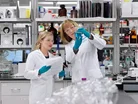
Pure water technology uses processes like reverse osmosis and deionisation to remove impurities from water, resulting in ultra-pure water with very low levels of contaminants – including plastic waste.
Ecolab, a global sustainability leader in water, hygiene and infection prevention solutions, is entering an agreement to acquire Ovivo’s Electronics business.
Ovivo is a leading global provider of breakthrough ultra-pure water technologies for semiconductor manufacturing.
This acquisition is set to further Ecolab’s expertise in water management systems.

Ecolab’s water management
The acquisition hopes to further strengthen Ecolab’s global high-tech growth engine by bringing together Ovivo’s ultra-pure water technologies with Ecolab’s leading water solutions, digital technologies and global service capabilities.
By combining technological platforms, Ecolab will be able to expand its opportunities for circular waste management solutions.
The aim is to “significantly reduce fresh water use in their manufacturing process while maximising chip production along with quality,” says Ecolab.
In 2025, Ovivo Electronics is expected to generate US$500m in sales and Ecolab is set to pay approximately US$1.8bn in cash at the closing of the transaction subject to contrary adjustments.
The positives of acquiring Ovivo
“Ovivo Electronics’ unique technologies deliver the world’s purest water, which is essential for manufacturing today’s most advanced microchips,” says Christophe Beck, Chairman and CEO of Ecolab.
“A single microelectronics fab can consume the drinking water needs of 17 million people per year.
“By integrating Ovivo’s ultra-pure water technologies with Ecolab’s global water, digital and service capabilities, we’re deepening our support for the fast-growing microelectronics and AI sectors.
“The combination will enhance our connection to high-tech customers and deliver a compelling circular water platform to maximise chip quality, performance and sustainability.”
The acquisition is expected to close in the first quarter of 2026, subject to the parties obtaining regulatory clearance and satisfaction of other customary closing conditions.
“This acquisition will more than double the size of our global high-tech water growth engine, establishing Ecolab as a clear leader in these very large, high-growth markets,” continues Christophe.
“Combined, we expect our US$800m global high-tech business to grow strong double-digits, with an attractive operating income margin.
“We look forward to welcoming Ovivo Electronics’ talented global team to Ecolab, as together we will win with our customers and deliver strong returns for our shareholders.”
During the first year post-acquisition, Ecolab expects the acquisition will be neutral to adjusted earnings per share, excluding approximately US$45m of non-cash amortisation costs.
Contribution to adjusted earnings per share is expected to build through 2027 and beyond.
Sustainability at Ecolab
Ecolab has set ambitious environmental goals across multiple areas.
In water stewardship, it aims to reduce enterprise-wide water impact by 40% per unit of production by 2030 from a 2018 baseline and restore over 50% of its absolute water withdrawal volume at high-risk sites.
The company has achieved Alliance for Water Stewardship certification at several facilities and uses digital tools such as the Smart Water Navigator to enhance water management.
By 2024, Ecolab had reduced overall water impact intensity by 29% and replenished 64% of withdrawal at high-risk sites.
On climate action, its science-based targets commit to reducing absolute Scope 1 and 2 greenhouse gas emissions by 50% by 2030, with a net zero goal for 2050.
By 2024, emissions had been cut by 33% and 71% of electricity was sourced from renewables.
In product design, Ecolab integrates sustainable principles to minimise lifecycle footprint while optimising customer productivity, safety and efficiency.
For packaging, the company targets all non-regulated product packaging to be reusable or recyclable-by-design by 2030, already reaching 91% by weight and in 2024 avoided 15.9 million pounds of virgin plastic resin through design and material choices.
In formulation innovation, it incorporates bio-based raw materials such as enzymes to replace conventional chemicals, partnering with suppliers like Novonesis on circular production.
Globally, Ecolab collaborates with organisations including the United Nations Global Compact, Alliance for Water Stewardship, Water Resilience Coalition and The Nature Conservancy to advance water security, stewardship, education and climate action.