
World Sustainable Transport Day Q&A: Aramex’s Circularity

Aramex is advancing its sustainability agenda alongside its mission to connect the world, building on deep Middle East roots, a light-asset model and a long-standing commitment to environmental leadership.
The company is sharpening execution, turning global goals into market-level plans and budgets across climate action, renewable energy, fleet transition, circularity and ESG reporting.
As Group Chief Sustainability Officer, Manosij Ganguli leads the integration of sustainability into strategy, operations and culture, positioning it as a driver of competitiveness, resilience and growth for Aramex and its customers.
Before joining Aramex, Manosij led net zero pathways for aviation, shipping and road transport at the Energy Transitions Commission and the Mission Possible Partnership in London and held senior roles at BP, Shell and in strategy consulting overseeing large-scale transformation programmes.
Manosij’s focus is on delivery at scale, ensuring that “connecting the world” and achieving “net zero by 2050” are mutually reinforcing goals.
Manosij shares his insights with Sustainability Magazine in this Q&A on World Sustainable Transport Day.
How is Aramex building on sustainability in the Middle East?
Aramex was founded in the Middle East, so the region is not just a geography for us; it is our beginning.
The Middle East is emerging as an important global logistics hub, with increasing trade flows and substantial infrastructure investments.
At the same time, it is already vulnerable to climate risks such as extreme heat and water scarcity.
This combination means a logistics company in this region cannot ignore sustainability and still claim to be a long-term player.
Our response has been to develop a sustainability strategy that complements our commercial strategy, rather than being subordinate to it.
In practice, this means setting clear climate targets and focusing on three key areas in the region.
First, decarbonising operations: we are investing in solar power at facilities in markets such as the UAE, Jordan and Egypt and improving energy efficiency in our hubs and offices.
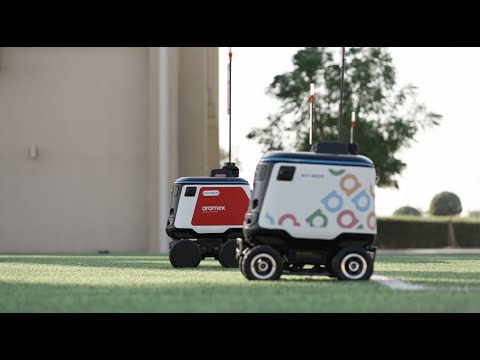
Second, transforming our fleet: our strategy is to convert vehicles to low-emission models, introduce EVs and use sustainable fuels where they are available and viable.
Third, we are embedding circularity by reducing material use, shifting to degradable pouches and tightening our waste management systems.
I also examine the regional signalling effect, which means that when a Middle East-based logistics company can expand, uphold service excellence and reduce emissions simultaneously, it sends a powerful message to the market.
It proves that the region can be a leader in sustainable logistics innovation, rather than merely being a consumer of global ideas.
This is the role we envision for Aramex.
What is Aramex doing to decarbonise its journey?
When you examine logistics through an honest lens, the most significant environmental issue is clear: carbon.
Emissions from vehicles, facilities and the broader transport value chain are where we have the largest impact.
For a light-asset company like Aramex, this includes not only what we own, but also what we contract with airlines, sea lines and road partners.
So, decarbonisation is not a “nice to have”; it is our core environmental priority.
We have worked on and created our new sustainability strategy which is grounded in real world data, which has since been blessed by our board.
Our new sustainability strategy commits to a significant reduction in carbon emission by 2030 and sets out a Net Zero Emission target for 2050.
We will be focusing on reducing direct and indirect emissions, including the electrification and use of HVO in our owned fleet as well as switching to renewable energy deployment and purchasing renewable energy from the grid.
Further gains can be expected through the development and delivery of new green products.
The new strategy both reaffirms our dedication to transparency and accountability,
while seeking to create value for the business, customers and shareholders.
What does circularity and green innovation look like for/in the Middle East?
In this region, circularity is not an abstract concept.
You feel it when you design a warehouse cooling system for a 45-degree summer, or when you think about water use in a desert environment.
For a logistics company like Aramex, the circular question is straightforward: how do we move more parcels with less energy, fewer materials and less waste?
We started by mapping where our material and resource use is most intense.
To give you an example of real world change - Aramex has accelerated its sustainability initiatives across global operations, driving measurable environmental, social and operational impact.
From renewable energy and fleet electrification to smart logistics and water management, Aramex’s projects demonstrate innovation, efficiency and commitment to the ESG strategy, circular economy and decarbonisation roadmap.
We have already generated 12,610,363 kWh of renewable energy in 2024, equivalent to 19% of electricity consumed and avoided 5190 tonnes of CO₂e.
Innovation here is also digital.
As someone who has worked on sector roadmaps, I know that “green” and “smart” often go hand in hand.
We are using better data and optimisation tools to cut empty kilometres, improve load factors and plan smarter routes.
These changes reduce emissions and fuel use and they also improve service reliability.
Over time, I envision the Middle East serving as a test bed for circular logistics models under real-world constraints.
If we can make these models work in hot, fast-growing cities with complex supply chains, they will be robust enough to scale.
That is where Aramex can add value to the sector, not just to our own operations.
How is Aramex aligning with the UN’s Sustainable Development Goals?
The UN Sustainable Development Goals help frame a simple question: are we solving problems in a narrow way, or are we contributing to broader economic and social resilience as well?
At Aramex, we use the SDGs as a reference point to balance climate, people, communities and governance.
We focus on multiple SDGs and they form the main pillars of our sustainability strategy across E,S&G.
From a climate perspective, Climate Action (SDG 13) and Affordable and Clean Energy (SDG 7) underpin our net zero 2050 ambition, our 2030 emissions reduction targets and our drive for renewables and energy efficiency.
For me, a credible logistics business in this region must demonstrate not only that it is creating jobs but also doing so in a way that protects and develops its people.
Responsible Consumption and Production (SDG 12) guides our work on packaging, circularity and resource use.
We also place strong emphasis on Partnerships for the Goals (SDG 17).
From a sectoral view, logistics decarbonisation and circularity cannot be delivered by a single company alone.
We engage with the UN Global Compact, regional business councils, green building councils and other platforms to share our experiences and push for clear, transparent standards.
Our reporting backs the SDGs.
Aramex has a long-standing track record of sustainability and integrated reporting and we are aligning with emerging standards, including IFRS.
For me, this is about discipline.
If we claim to contribute to the SDGs, we must be prepared to share our numbers, identify our gaps and outline our plans.
What does the future of sustainable logistics look like?
The future of logistics will be defined by sustainability - not as a box to tick but as the standard for what “good logistics” means.
Customers, regulators and investors are already moving from asking whether we care to demanding clear pathways, transparent data and measurable progress.
I see three major shifts ahead.
First, logistics networks will align with net zero goals: fleets powered by electricity and low-carbon fuels, facilities running on renewable energy and companies setting credible 2030 milestones for their direct operations while putting in place robust strategies to tackle Scope 3 through greener products and partnerships.
Second, carbon transparency will become the norm. Emissions data will sit alongside financial data, enabling customers to choose partners who can support their own sustainability goals.
Third, deep cross-sector collaboration will be essential - logistics companies, energy providers, OEMs, technology players and regulators will need to coordinate on infrastructure, incentives and standards.
At Aramex, we’re focused on delivering our own net zero pathway: electrifying our fleet, scaling renewable energy, enhancing circularity and helping customers reduce their supply-chain emissions with credible green solutions and transparent reporting.
World Sustainable Transport Day reminds us that transport can be both a challenge and a catalyst.
Our commitment is to turn ambition into practical, measurable action.
Company portals

Executives

Manosij Ganguli
Group Chief Sustainability Officer