What Caused Spanish Blackout? Clue: Don’t Blame Renewables
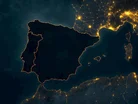
On 29 April, Sustainability Magazine asked: “Did renewable energy cause Spain and Portugal’s power cut?”
The question arose the day after a huge power outage hit cities including Lisbon, Madrid and Barcelona and brought major industries to a standstill.
Shortly after midday on 28 April, Spain and Portugal were disconnected from the European electricity grid for several hours.
Rumours circulated in the wake of the outage, with real concerns that rapid changes in temperature and/or wind speed had caused a significant spike in voltage from wind and solar.
Others feared a cyber attack, but this was quickly ruled out.
Now the (disputed) truth has been revealed, in the pages of The Report of the Committee for the Analysis of the Circumstances Surrounding the Electricity Crisis of 28 April 2025.
Playing the blame game
The report, by Spain’s Minister for Ecological Transition Sara Aagesen says the unprecedented “electrical zero had a multifactorial origin”.
But, amid the multiple factors, the national grid operator and private power generation companies come in for most of the blame.
Sara said the partly state-owned grid operator Red Eléctrica had miscalculated the power capacity needs for that day.
"The system did not have enough dynamic voltage capacity," she added, saying the regulator should have switched on another thermal plant.
Sara also blamed private generators for failing to regulate the grid's voltage shortly before the blackout happened.
"Generation firms which were supposed to control voltage and which, in addition, were paid to do just that did not absorb all the voltage they were supposed to when tension was high," she said.
Cyber attacks and renewables are in the clear
The fallout from the outage has been political and bad-tempered.
On 29 April, Prime Minister Pedro Sánchez suggested that private electricity companies might have played a role.
And the new report implicated Beatriz Corredor, president of Red Eléctrica and a former Socialist minister, who had insisted that the grid regulator had not been at fault.
Sara said that there was no evidence that a cyber attack had caused the blackout.
“It can be determined that no indications or evidence have been found that point to a cyber attack or cyber incident as the cause of the energy crisis.
“However, other risks have been identified, such as vulnerabilities, deficiencies or inadequate configurations of security measures, which may expose networks and systems to risks.”
The Spanish opposition had suggested that an increasing reliance on renewables and rejection of nuclear energy may have played a part.
But the government has repeatedly insisted that Spain's renewable energy output was not the cause – a response it sticks to in the report.

Power plants, not us, says operator
Spanish grid operator Redeia blamed power plants for the blackout, angrily disputing the government report that partially blamed its failure to calculate the correct energy mix.
It said a surge in voltage was the immediate cause, with conventional power plants – thermal power plants using coal, gas and nuclear – at fault for failing to help maintain an appropriate voltage.
"Based on our calculation, there were enough voltage control capabilities planned" by Redeia, operations chief Concha Sanchez told a news briefing on Wednesday.
"Had conventional power plants done their job in controlling the voltage there would have been no blackout," she said.
Group representing firms including Iberdrola hits back
Aelec, which represents Spain's main electricity companies including Iberdrola and Endesa, said that "claiming everything was done correctly" while blaming some power plants for the blackout was damaging to the sector's reputation.
"The operator failed to safely cover all the system's needs," the organisation added.
In order to immediately counter claims in the government report, on Wednesday Redeia released its own full report on the causes of the outage.
Concha said the system was in "absolutely normal conditions" at noon just before the blackout and that adding another gas plant to the system to absorb additional voltage would have made no difference.
An expert’s view
Writing on LinkedIn, Jan Rosenow, Energy Programme Leader at Oxford University, UK, said: “‘It was renewables that did it!’ That was the headline of a lot of media commentary when the Spanish blackout happened back on 28 April this year.
“Not so fast tiger - the reality is (as so often) much more complex. It is a combination of several factors with human error playing a significant role.”
He said several conventional generators – gas, nuclear, and hydro – failed to deliver when needed most, while the system operator “lacked the necessary foresight to anticipate and manage the unfolding crisis”.
Jan said: “What’s clear is that we need stronger enforcement to ensure all generators meet their obligations, as well as more interconnections to boost system resilience.
“Better access to real-time information is also essential for operators to make informed decisions in critical moments.
“Grid reliability isn’t about pointing fingers at one technology – it’s about building a smarter, more robust system for the future.”
Explore the latest edition of Sustainability Magazine and be part of the conversation at our global conference series, Sustainability LIVE.
Discover all our upcoming events and secure your tickets today.
Sustainability Magazine is a BizClik brand