Global warming is accelerating at an alarming pace, driven by human activity across nearly every sector of the global economy.
According to the Intergovernmental Panel on Climate Change (IPCC), greenhouse gas concentrations are now higher than at any point in at least 800,000 years, with carbon dioxide levels surpassing 420 parts per million in 2025.
Energy, transportation, manufacturing, buildings and agriculture account for over 80% of all global emissions.
Mining and construction alone contribute roughly a quarter of industrial CO₂ output, while deforestation removes the planet’s most vital carbon sinks at a rate of 10 million hectares annually.
With temperatures already about 1.2°C above pre-industrial levels, every sector must accelerate its transition toward low-carbon solutions, and some of the world’s largest companies have initiatives to target impact in these areas.
10. Mining
Initiative: Low-carbon steelmaking
Company: Rio Tinto
HQ: London, United Kingdom
CEO: Simon Trott
Mining operations are among the biggest industrial sources of greenhouse gas emissions, driven by fossil-fuel-powered machinery and energy-intensive extraction processes. From coal to precious metals, mining contributes both direct carbon emissions and environmental degradation.
Rio Tinto, one of the world’s largest mining firms, is rethinking its entire process chain with BioIron ,a low-carbon method of iron production using biomass instead of coal. The company is investing in renewable energy and electrified equipment across its sites to reduce emissions. Sustainable mining has now become central to keeping industrial progress aligned with net zero targets.
9. Construction
Initiative: Low-carbon concrete
Company: Holcim Group
HQ: Zug, Switzerland
CEO: Miljan Gutovic
The construction industry accounts for a major share of global greenhouse gas emissions, largely due to energy-hungry cement production and heavy machinery powered by fossil fuels.
Concrete alone is responsible for around 8% of global CO₂ emissions.
Holcim has developed ECOPact, a low-carbon concrete that significantly reduces embodied carbon in infrastructure projects. Combined with innovations in circular construction and waste reuse, this strategy places the company at the forefront of building-sector decarbonisation.
As cities expand, low-carbon construction solutions will be vital for balancing growth with climate responsibility.
8. Deforestation
Initiative: Right Now Climate Fund
Company: Amazon
HQ: Seattle, US
CEO: Andy Jassy
Deforestation remains one of the most damaging drivers of global warming, releasing vast amounts of stored carbon and weakening nature’s capacity to absorb emissions.
Around 10 million hectares of forest disappear each year as land is cleared for agriculture and livestock.
Amazon’s Right Now Climate Fund invests hundreds of millions in forest restoration and conservation projects worldwide, including efforts to rehabilitate degraded tropical ecosystems.
By funding reforestation and supporting agroforestry, Amazon aims to counterbalance delivery-related emissions and promote more sustainable land use – a critical step in protecting global biodiversity and stabilising the climate.
7. Transportation
Initiative: Electrification of transport
Company: Tesla
HQ: Austin, US
CEO: Elon Musk
Transport accounts for roughly a quarter of all energy-related CO₂ emissions, with most vehicles still reliant on petrol, diesel and other fossil fuels.
Road traffic is the primary source, but aviation and shipping are growing contributors. Tesla’s push toward vehicle electrification has transformed the global mobility landscape, proving that cleaner alternatives can also be high-performance and profitable.
The expansion of EV infrastructure, including gigafactories and charging networks, supports the broader green transition. As electric vehicles gain mainstream adoption, the decarbonisation of transport becomes increasingly achievable.
6. Buildings
Initiative: EcoStruxure Building Solution
Company: Schneider Electric
HQ: Rueil-Malmaison, France
CEO: Olivier Blum
Buildings consume nearly 60% of global electricity and contribute heavily to carbon emissions from heating, cooling and lighting.
Schneider Electric is leading the shift toward intelligent, energy-efficient infrastructure through its EcoStruxure Building platform, which optimises energy use and integrates renewable sources.
By improving building management systems and leveraging IoT-enabled controls, the company helps reduce emissions without compromising occupant comfort.
Retrofitting existing real estate with smart energy solutions is now seen as one of the fastest ways to cut urban carbon footprints.
5. Food Production
Initiative: Regenerative Agriculture Programme
Company: Unilever
HQ: London, United Kingdom
CEO: Fernando Fernandez
Food production – from livestock farming to fertiliser use – generates substantial emissions of methane, CO₂ and nitrous oxide.
Agricultural expansion drives deforestation and the global food system accounts for one-third of all greenhouse gases.
Unilever is tackling the problem through regenerative agriculture, supporting farmers to restore soil health, protect biodiversity and reduce fertiliser dependency. The company’s long-term goal is to make sustainable agriculture the default across its supply chain.
4. Manufacturing
Initiative: Siemens Xcelerator
Company: Siemens
HQ: Munich, Germany
CEO: Roland Busch
Manufacturing creates vast emissions from energy-intensive processes such as steelmaking, cement and electronics production. Siemens is advancing industrial decarbonisation with its Siemens Xcelerator platform, using digital twin technology and automation to optimise energy efficiency and eliminate waste.
The company helps manufacturers transition towards electrified and hydrogen-based production lines. As industries race toward net zero targets, digitalisation and renewable integration represent key enablers for a cleaner manufacturing future. Siemens’ approach demonstrates how innovation can reconcile industrial growth with environmental stewardship.
3. Waste and Pollution
Initiative: Circular Economy and Waste Recovery
Company: Veolia
HQ: Paris, France
CEO: Estelle Brachlianoff
Waste management contributes to global warming through methane emissions from landfills and energy-intensive disposal methods.
Veolia leads the global shift toward circularity by turning waste into resources – capturing biogas, recycling materials and promoting sustainable urban systems. Its strategy focuses on recovering energy and materials that would otherwise be lost, closing the loop for industries and cities alike.
By reimagining waste as a valuable asset, Veolia shows how resource efficiency can be a cornerstone of emissions reduction and ecological progress.
2. Over-consumption
Initiative: Worn Wear and “Earth is Our Only Shareholder” model
Company: Patagonia
HQ: Ventura, US
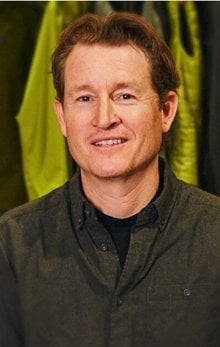
CEO: Ryan Gellert
Over-consumption lies at the heart of climate change, with affluent lifestyles and endless consumer demand driving emissions from production, transport and waste.
Patagonia has built its brand around a radical alternative – consuming less. Through its Worn Wear programme and its decision to transfer ownership to a trust directing profits toward environmental causes, Patagonia promotes circular consumption and long-term product lifespan.
Its message is clear: addressing climate change requires not only cleaner production but also cultural change in how we value and use material goods.
1. Fossil Fuel Power Generation
Initiative: Renewable energy
Company: Ørsted
HQ: Fredericia, Denmark
CEO: Rasmus Errboe

Electricity generation from coal, oil and gas remains the single largest source of global greenhouse gas emissions.
Ørsted has transformed from one of Europe’s most fossil-fuel-dependent energy companies into a leading force in offshore wind and renewable power. By committing to phase out coal entirely and invest exclusively in clean energy, Ørsted demonstrates how large utilities can successfully pivot toward sustainability.
Its projects now power millions of homes with green electricity, making the company a model for corporate energy transition and climate leadership.









Executives
Andy Jassy
President and CEO
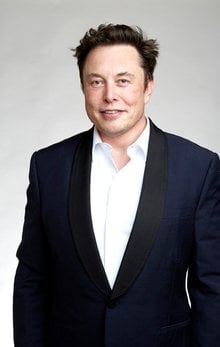
Elon Musk
Tesla CEO
Estelle Brachlianoff
Group CEO
Fernando Fernandez
Chief Executive Officer

Olivier Blum
Chief Executive Officer
Rasmus Errboe
CEO and Group President
Roland Busch
President and CEO of Siemens AG
Ryan Gellert
CEO
Simon Trott
Chief Executive - Rio Tinto