Top 10: Green Transport Solutions
As cities and industries race toward net zero, green transport solutions are redefining how people and goods move around the world.
From EVs and hydrogen-powered fleets to advanced public transit systems and smart mobility platforms, innovation in sustainable transportation is driving cleaner, more efficient and more connected networks.
These solutions reduce emissions and also enhance accessibility, cut congestion and support healthier urban environments.

Here, we explore some of the most promising and impactful green transport technologies shaping the future of mobility – and setting new standards for sustainable progress.
10. AI-routing software
Company in focus: UPS
HQ: Atlanta, Georgia, US
CEO: Carol Tomé
UPS is using advanced AI-powered routing software to shrink fuel use and emissions across its global delivery network. Its ORION system analyses hundreds of thousands of route options to find the most efficient path, avoiding unnecessary turns and idling.
The company says the software saves around 10 million gallons of fuel and US$100m a year, highlighting the power of algorithms in climate strategy.
As UPS continues to modernise its fleet, digital optimisation is proving as impactful as hardware upgrades in cutting the carbon cost of parcel delivery.
9. Rail electrification
Company in focus: Siemens
HQ: Munich, Germany
CEO: Roland Busch
Siemens is a major force in rail electrification, supplying power systems, signalling and rolling stock for cleaner mass transit.
Robust demand for rail projects, including large turnkey systems, is helping to offset headwinds in other parts of the group. Governments are turning to electrified rail as a backbone for low-carbon mobility, from high-speed lines to urban metros.
Siemens’ technology is enabling shifts from road and air to rail, cutting emissions while improving reliability for passengers and freight operators across Europe, the Middle East and beyond.
8. SAF
Company in focus: Airbus
HQ: Toulouse, France
CEO: Guillaume Faury
Airbus is championing sustainable aviation fuel as the most immediate lever to cut emissions from commercial flight.
The aircraft manufacturer has launched voluntary SAF schemes, encouraging airlines and corporate customers to co-fund higher blends of cleaner fuels. It argues that SAF demand could reach 183 million tonnes by 2040, requiring swift policy support and investment.
Alongside record 2024 revenues and strong order books, Airbus is testing SAF on new aircraft and pushing infrastructure partners to scale supply, framing SAF as a bridge to future hydrogen and electric aircraft.
7. E-fuels in shipping
Company in focus: A.P. Moller–Maersk
HQ: Copenhagen, Denmark
CEO: Vincent Clerc
A.P. Moller–Maersk is steering the carbon-heavy shipping sector towards methanol and other low-carbon e-fuels. The company has begun deploying dual-fuel vessels capable of running on green methanol, slashing lifecycle emissions compared with traditional bunker fuel. Its ECO Delivery service claims emissions reductions of more than 80% for customers opting into alternative fuels.
With 2024 revenue above US$55bn dollars, Maersk’s investment decisions send a powerful signal to fuel suppliers, ports and regulators about the viability and urgency of e-fuels in deep-sea trade lanes.
6. Electric last mile delivery
Company in focus: Rivian
HQ: Irvine, California, US
CEO: RJ Scaringe
Rivian is redefining the last mile with purpose-built electric delivery vans designed for urban routes and tight logistics schedules.
Its vans, originally developed with Amazon, have already delivered over a billion packages, proving that zero-emission deliveries can scale. The company’s latest financials show improving unit economics and growing software and services income, underlining a shift towards fleet platforms rather than just vehicles.
As retailers and logistics providers face stricter emissions regulations, Rivian’s electric vans are emerging as a practical solution to decarbonise doorstep delivery without sacrificing reliability.
5. Shared mobility electrification
Company in focus: Uber
HQ: San Francisco, California, US
CEO: Dara Khosrowshahi
Uber is turning its vast ride-hailing platform into a testbed for urban electrification, nudging millions of drivers towards cleaner vehicles. Since 2020, the company has committed hundreds of millions of dollars to incentives, discounted charging, EV rentals and grants, aiming for zero-emission operations by 2040.
That transition is already reshaping city streets, particularly in European capitals where regulation is tightening. As shared mobility expands to include e-bikes, scooters and public transport integrations, Uber’s electrification push is becoming a key lever in cutting tailpipe emissions and congestion in dense urban areas.
4. EV batteries
Company in focus: CATL
HQ: Ningde, Fujian, China
CEO/Founder: Robin Zeng
CATL sits at the heart of the EV revolution, supplying lithium-ion batteries to leading carmakers across China, Europe and the US. The company has used its scale to drive down cell costs while investing in next-generation chemistries and stationary storage.
Revenue in 2024 exceeded US$50bn dollars, reflecting surging demand for both vehicles and grid-level batteries. CATL is also moving into renewable energy integration and power grid applications, positioning itself as a cornerstone of the wider clean energy system rather than a pure automotive supplier.
3. EV charging technology
Company in focus: Tesla
HQ: Austin, Texas, US
CEO: Elon Musk
Tesla’s Supercharger network has become the benchmark for fast, reliable EV charging, underpinning the company’s wider zero-emission strategy. With tens of thousands of high-speed chargers worldwide, the network increasingly serves rival manufacturers as well as Tesla drivers.
Analysts estimate the charging business is now a multi-billion-dollar operation in its own right, cementing its role as critical grid-edge infrastructure. As more automakers adopt Tesla’s connector standard, the company is positioning its technology as the de facto backbone for mass EV adoption, cutting range anxiety and enabling longer, cleaner journeys.
2. Low-emission logistics
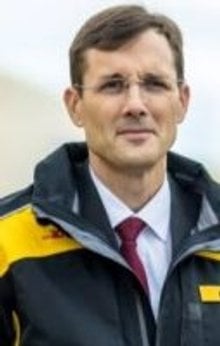
Company in focus: DHL Group
HQ: Bonn, Germany
CEO: Tobias Meyer
DHL Group is leveraging its vast global network to decarbonise freight through electrified fleets, route optimisation and low-carbon fuels.
In 2024, the logistics giant generated more than €84bn (US$97bn) in revenue while cutting emissions via sustainable aviation fuel, electric pick-up and delivery vehicles, and greener warehouses. Its GoGreen services allow customers to shrink supply-chain footprints, increasingly a boardroom priority.
By pairing operational efficiency with climate targets, DHL is showing how big logistics players can remain profitable while investing heavily in cleaner technologies and infrastructure at scale.
1. EVs
Company in focus: BYD
HQ: Shenzhen, China
CEO: Wang Chuanfu
BYD has emerged as a flagbearer for the global shift to electric mobility, combining vertically integrated manufacturing with aggressive international expansion. The Chinese automaker now counts millions of annual EV and plug-in hybrid sales and is rapidly scaling exports to Europe and emerging markets.
Backed by hefty R&D investment and strong cash reserves, BYD is pushing into premium marques, buses and rail, and building its own charging and battery ecosystems.
For policymakers seeking rapid emissions cuts from road transport, BYD’s scale and cost base make it an increasingly pivotal partner.







Executives
Carol B. Tomé
Chief Executive Officer
Dara Khosrowshahi
CEO

Elon Musk
Tesla CEO
Guillaume Faury
Chief Executive Officer

RJ Scaringe
Roland Busch
President and CEO of Siemens AG
Tobias Meyer
CEO
Vincent Clerc
Chief Executive Officer
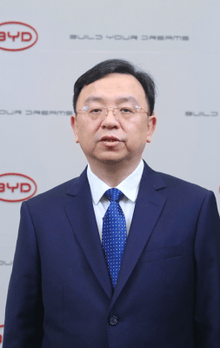
Wang Chuanfu
CEO

Zeng Yuqun (Robin Zeng)
CEO