Endangered Species Day 2025: A Celebration to Save Species
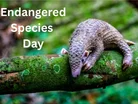
Endangered Species Day (ESD) brings light to the more than 47,000 (28%) species that are currently assessed as being under threat of extinction according to The International Union for Conservation of Nature (IUCN).
Since 2006, every year on the third Friday in May, thousands of people participate in celebrating, educating and acting on protecting threatened and endangered species.
This year's theme is Celebrate Saving Species, calling for action to reduce harmful human activities and strengthen conservation efforts.

The day, supported by the Endangered Species Coalition and organisations such as the National Wildlife Federation (NWF), is a time for reflection, education and conservation.
What is an endangered species?
An endangered species is a plant or animal at serious risk of extinction unless its population numbers recover.
In the US designations fall under the Endangered Species Act (ESA), enforced by federal agencies like the US Fish and Wildlife Service (USFWS) and the National Marine Fisheries Service.
Globally, assessments come from the International Union for Conservation of Nature (IUCN) Red List which guides protective efforts across borders.
"The ESA has saved hundreds of animals that once teetered on the brink of extinction," says the NWF.
"Without its protections, we might not have gray whales spouting off our coasts today or alligators roaming mangrove swamps, brown pelicans gliding above beaches or grizzly bears lumbering through western mountains."
The IUCN ranks endangerment by: Data Deficient, Least Concern, Near Threatened, Vulnerable, Endangered, Critically Endangered, Extinct in the Wild, Extinct and Not Evaluated.
Some of the most affected groups include:
- Cycads = 71% threatened
- Reef-forming corals = 44% threatened
- Amphibians = 41% threatened
- Trees = 38% threatened
- Sharks, rays & chimeras = 37% threatened
- Conifers = 34% threatened
- Selected crustaceans = 28% threatened
- Mammals = 27% threatened
- Freshwater fishes = 26% threatened
- Reptiles = 21% threatened
- Birds = 12% threatened
However, species can bounce back, and one of the most successful stories is the gray wolf.
Once absent from Yellowstone National Park since 1926, a reintroduction programme initiated in the 1990s has led to a thriving population in the Northern Rockies.
By 2008, USFWS biologists estimated that 1,639 wolves roamed through Montana, Wyoming and Idaho – five times higher than the minimum population goal.
This year, the West Indian Manatee is under the spotlight, thanks to a partnership between NWF and LG Electronics.
How companies are protecting biodiversity
Private sector investment is playing an increasingly vital role in conservation.
Amazon’s US$1.2m-backed Mumbai Mangrove Restoration Project is a leading example.
The initiative focuses on the mudflats of Thane Creek, home to flamingoes and 180 other bird species.
“We’re working to clear plastic and waste from areas that support Mumbai’s iconic flamingoes,” explains Abhinav Singh, Vice President of Operations, Amazon India.
Efforts include replanting 150 hectares of mangroves, more than 375,000 trees, and creating economic opportunities for local communities.
“The biggest threat to the flamingo's habitat is the rampant development happening along the coast,” says Dr Girish Jathar, Executive Director at the Srushti Conservation Foundation.
"Plastic not only reduces habitat but impacts the tiny organisms birds feed on."
Another initiative using tech innovation is Rainforest Connection’s Guardian platform.
These solar-powered acoustic devices are placed in tree canopies to detect illegal logging and other threats in real time.
“It plays a vital role in this constant connection between us and the rainforest,” says Topher White, CEO of RFCx.
“Our system isn't just about saving the rainforest.
“It’s about saving the sounds of the rainforest as they were... so that we don’t completely miss out on what we’ve lost along the way.”
So far, the system has collected 160m audio recordings across 37 countries, identifying more than 4,200 species – 408 of which are threatened.
Elsewhere, IBM and WWF Germany are harnessing AI to monitor African forest elephants, whose numbers have dropped by more than 80% in the Congo Basin.
Using IBM Maximo Visual Inspection, camera trap images now help track individual elephants, offering better insights into migration routes and reducing human-wildlife conflict.
"With AI, we can better protect migration corridors," explains Dr Thomas Breuer, Programme Officer for Central and West Africa and African Forest Elephant Coordinator at WWF Germany.
Aramco has also taken a leading stance in the Gulf region.
Its Shaybah Wildlife Sanctuary has successfully reintroduced the Arabian Oryx, once extinct in the wild.
The firm also runs a sea turtle rescue centre and supports wetland restoration projects overseas.
Aramco maintains 12 biodiversity protection areas across Saudi Arabia, covering more than 980 km², ensuring vital habitats remain intact.
Help from humans
Ultimately, these projects underscore a core truth: protecting biodiversity is a shared human responsibility.
From tech entrepreneurs and oil companies to researchers and local communities, collective action is key.
"People come to see the flamingoes, and we take them out on our boats. It's nice to have the flamingoes around. We don't need to sing—they keep singing, and we just listen." comments Akash Dinanath Patil, a Mumbai Fisherman.
Despite habitat degradation, the coordinated clean-up effort that is removing up to 150kg of plastic daily is already having a positive impact.
"The goal is to remove 150 tons of plastic waste from the mangroves and bird habitats," explains Sheeba Sen, Co-Founder of Hasten Regeneration.
Meanwhile, in forests across the world, RFCx’s Guardians continue to monitor for threats, collecting audio of a living ecosystem for future generations.
Ultimately the way to save and preserve species is by:
- Reducing pollution
- Protect habitats
- Adopting sustainable practices
- Avoid poaching/hunting, overfishing and bottom-trawling
- Support and educate local communities
- Plant, restore and look after all species, when possible
From AI to community-led restoration, this Endangered Species Day is a powerful reminder that humanity holds the tools to protect Earth’s most vulnerable inhabitants, before it’s too late.
Explore the latest edition of Sustainability Magazine and be part of the conversation at our global conference series, Sustainability LIVE.
Discover all our upcoming events and secure your tickets today.
Sustainability Magazine is a BizClik brand