Huafeng, Cyclone & Covestro: Creating Sustainable Sportswear
As the climate crisis drives demand for more responsible, sustainable production, the sportswear industry is under increasing pressure to evolve.
From raw materials to finishing processes, sustainability in apparel is gaining ground thanks to innovations in recycling, bio-based chemistry and low-impact design.
A standout example is the latest collaboration between Huafeng, Cyclone and Covestro, which combines technical excellence with environmental ambition.
Sustainable materials
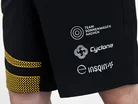
Huafeng, a leader in advanced textile coatings, has partnered with Cyclone and Covestro to develop a high-performance, low-impact kit for Team Sonnenwagen Aachen – a student solar racing team from RWTH Aachen and FH Aachen in Germany.
The apparel includes shorts, sports shoes and trousers crafted from recycled PET yarns supplied by Cyclone.
These yarns are made from discarded plastic bottles in Fujian Province.
Once collected, these bottles are dyed using a water and energy-saving dope-dyeing method that cuts CO₂ emissions by more than 50% compared to traditional techniques.
"By using partly bio-based Impranil CQ solutions from Covestro, we’re pioneering sustainable textiles with innovations such as HAPTIC Art ink,” says Dr. Thomas Schmidt, Director of Innovation & Creation at Huafeng.
“This ink formulation delivers a reduced CO2 footprint, offers extensive customisability, and can be used in high-performance textiles like sportswear.”
Low-carbon innovation
To ensure the gear performs under race conditions while reducing its environmental footprint, Huafeng is applying its innovative HAPTIC textile coating.
This advanced screen-printing ink, based on Covestro’s partly bio-based Impranil CQ polyurethane dispersion, adds unique 3D visual effects and resilience to wear.
With a 38% lower carbon footprint than standard PU coatings, it provides a durable and sustainable alternative for technical textiles.
The launch of Team Sonnenwagen’s 2025 kit follows the unveiling of their new solar race car, the Aethon, which they will drive during the 3,000-kilometre Bridgestone World Solar Challenge in Australia this August.
“The new sports kit looks fantastic! By incorporating our partially bio-based Impranil CQ PU dispersion into its textile coatings and using recycled yarns from Cyclone, Huafeng has successfully achieved an excellent balance of high performance, aesthetic appeal and low environmental impact,” comments Dr. Torsten Pohl, Head of Global Textile Coatings at Covestro.
“This collaboration demonstrates that manufacturers can meet the increasing demand for more sustainable sportswear without compromising durability, style or performance.”
Covestro’s materials are also present in the car itself, including in the textile wrap on the steering wheel – demonstrating a holistic approach to sustainable engineering and design.
What companies are making sustainable changes?
Adidas, Under Armour, Puma, ASICS and Nike are also advancing sustainability across their products, operations and supply chains.
Adidas is aiming for 90% of its products to be sustainable by 2025, having already achieved 70% in 2022.
Adidas is also aiming to replace 96% of virgin polyester with recycled alternatives.
Its innovations include PRIMEBLUE and PRIMEGREEN fabrics and it targets climate neutrality by 2050 with a 15% emissions cut per product by 2025.
Under Armour is planning to cut single-use plastic packaging by 75% by 2025 and make half its products circular by 2027.
It is aiming for 30% absolute emissions cuts by 2030, full renewable energy in owned facilities and net zero by 2050, whilst also exploring circular footwear and fibre-shedding solutions.
Puma reduced emissions by 29% from 2017 levels and cut 24% more in 2023 alone.
It’s also expanding lower-carbon materials, electric fleets and renewable power for suppliers.
Through collaboration with Puma, Spinnova is helping to create chemical-free fibre from wood, supporting Puma in creating sustainable clothing.
ASICS will use 100% recycled polyester by 2030 and is running take-back schemes to support circularity while aiming for 98% waste recovery in direct operations and focusing on durable, recyclable product design.
Nike aims for 50% of key materials to be sustainable by 2025, 39% as of 2022, and diverts 97% of waste from landfill, with 80% recycled into products.
The company is cutting water use and emissions while encouraging longer product life through care, repair and refurbishment.
Sportswear is only a small section when looking at apparel overall, climate, circularity and renewable initiatives are paving the way for sustainable clothing.
The collaboration between Huafeng, Cyclone and Covestro proves that sustainable sportswear can meet the high demands of elite racing while supporting circularity, innovation and climate goals.
Explore the latest edition of Sustainability Magazine and be part of the conversation at our global conference series, Sustainability LIVE.
Discover all our upcoming events and secure your tickets today.
Sustainability Magazine is a BizClik brand