Schneider Electric Q&A: Stuart Lemmon on Climate Consulting
Climate consulting is a bigger and more valuable sector than it ever has been, with companies all over the world seeking the expertise and assistance of sustainability practitioners as the race to net zero heats up.
EcoAct is one such consultancy. Its credentials were so impressive that Schneider Electric, one of the world’s most sustainable businesses, came in to acquire the firm in 2023.
Since integrating operations, the two companies have been helping organisations to navigate the often unsteady terrain of decarbonisation and climate strategy.
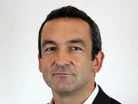
Stuart Lemmon, CEO of EcoAct and Head of the Global Sustainability Practice at Schneider Electric’s Sustainability Business, has been the central figure in this integration.
Sustainability Magazine caught up with Stuart at Innovation Zero to discuss all things sustainability.
Please introduce yourself, your role and tell us how you first came to work in sustainability.
I'm Stuart Lemmon and I’m the Head of Global Sustainability Practices within Schneider’s Sustainability Business. I'm also formerly the CEO of Eco Act, which was acquired by Schneider towards the end of 2023, having come from Atos, the global IT company who are our previous owners.
I'm an environmental scientist by degree. As of January this year, I’ve spent 30 years in environmental consulting. And my career, I guess, has followed in some ways the evolution of environmental consulting. I started off doing pollution monitoring, visiting factories, climbing up the chimney, measuring what was coming outside.
Then there was a lot of focus on environmental management, industrial pollution prevention, control permitting, environmental management systems and that kind of stuff.
Laterally, I’ve focused much more on global issues, starting to get into global sustainability strategy. The last 12 or 13 years I’ve been looking at everything to do with carbon energy and climate change.
In particular, I look at both sides of the coin. That’s the company's impact on the environment, all of the carbon accounting, science-based targets and net zero and also the impact of the environment on the company. That’s climate risk, fiscal risk, transition risk and things like that.
What’s the story behind Schneider’s acquisition of EcoAct?
I'll go back to the previous acquisition to set the scene. EcoAct was acquired by Atos in the middle of 2020, right in the middle of Covid. Their strategy was two pillars: cybersecurity and decarbonisation. Clearly they knew they were doing with cybersecurity because they're a company of a hundred thousand IT specialists, but they had less knowledge when it came to decarbonisation, so they bought EcoAct.
There were lots of good people with some good intentions, but at the same time, Atos suffered some quite major setbacks from a business and strategy perspective. Their share price started to go down and they had changes of leadership and rapidly became a very distressed business. During the time we were at Atos, we doubled the size of the business in about three and a half years.
It was a good place to be from that perspective, it was a sort of safe haven and allowed us to leverage our skills and grow. I took over about a year into our time at Atos and we recognised that the long-term future for EcoAct wasn't going to be as a part of Atos. Equally, Atos recognised that EcoAct was an asset that they could basically make something of.
We had a number of large corporations who were interested in purchasing us and it became pretty clear fairly early on that Schneider was the keenest. Schneider's one of the most sustainable companies on the planet. People get sustainability. It's built into the strategy, so it’s a really, really good place for us to be.

How has EcoAct’s integration with Schneider been?
At the point of joining, we were about 360 people. We've taken our shared functions, finance, HR, marketing and merged it with Schneider's Sustainability Business.
We've taken all of their consulting teams, people who are doing offsetting related work, and we've brought it together into what we are calling the Global Sustainability Practice, which is about 400 to 450 people across 15 countries.
We're doing everything that both sides were doing before, but just at a greater scale. We're able to find those synergies to bring in energy efficiency, renewable energy, PPAs and more and it's working really well.
We're now working on that bigger picture, longer-term strategy. Any integration and an acquisition is always difficult, but this is going really well.
How do you see the relationship between government and the private sector when it comes to sustainability?
Policy absolutely has a role to play in terms of driving corporate sustainability and I think we've certainly seen that in the UK.
I think to some extent, though, legislation is only one of the drivers. There's a lot of pressure from investors, customers, supply chains and increasingly employee pressure as well.
Large organisations that are increasingly recruiting millennials and younger people - those people want to work for organisations that recognise this stuff.
I think where policy and regulation can be very significant is in some of these hard-to-abate sectors. If you need to invest in novel technologies over a long period of time, you need certainty of markets and renewable energy purchase pricing. You need certainty of financial stimulus for potentially more expensive greener products.
How do you see hard-to-abate sectors progressing over the next 10 years?
The challenge is not necessarily around having to invent something. Most of the technologies are there. The question is around how do those technologies become scalable and commercially viable?
You have the challenge of infrastructure: We can generate renewable energy, but how do you get the permissions and the grid connections done quickly enough to enable that?
How do you get the grid infrastructure in place and digitised and running with AI so that it can deliver and optimise across complex dispersed grids?
If you think about something like glass where you've got to keep glass at 1200 degrees or it goes solid, most of that's fired by gas.
The glass is the hard to abate part in what's called a hard to abate industry. But you've got the full value chain of that industry.
We’ve looked into this with a German bottle manufacturer. We've done the full value chain analysis on it and electrified and digitised as much of that process as possible.
A lot of these hardware industries use quite old technology, they don't have a lot of automation or digitisation. We've digitised them end to end, done a full value chain decarbonisation assessment, worked on the supply chain as well, provided renewable energy and energy efficiency.
What they've managed to do is they've changed the energy mix. They're down to the value chain only using about 20% gas now. In comparison to the parallel process, they're about 70% more carbon efficient.
Explore the latest edition of Sustainability Magazine and be part of the conversation at our global conference series, Sustainability LIVE.
Discover all our upcoming events and secure your tickets today.
Sustainability Magazine is a BizClik brand