Stella McCartney, Sustainability, Ethics & Fashion
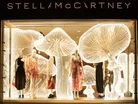
The fashion industry is known for creating roughly 1.2b tons of GHG's annually as well as the wastage of 92 million tons of textiles.
The industry is renowned for creating fast fashion that often ends up in landfill - nowadays, circular fashion is still rare.
A brand that is keen on sustainability and circularity is Stella McCartney, the first luxury fashion brand to never use animal leather, feathers, fur or skins.
The owner of the brand, Stella McCartney has recently bought back the minority share from Moët Hennessy Louis Vuitton SE (LVMH).
Despite this, the British designer will stay on as global ambassador on sustainability and continue to advise LVMH on sustainability issues.
Inside Stella McCartney's shift
After five years of partnership LVMH no longer has shares with Stella McCartney, likely due to a downturn of high-end goods.
LVMH sales fell as much as 1% in early trading in Paris, causing a 2.8% downfall in the past year.
Analysts predict that the sales of the luxury group, who own Louis Vuitton and Christian Dior, fell in the fourth quarter due to a lack of demand in China.
The lack of China's demand may not be all bad, the country throw's away more than 26 million tons of clothing each year.
Data from the UK registry Companies House state that Stella McCartney Ltd had sales of £40m (nearly US$50m) in 2022.
Again in 2022, the company also had an operating loss of £8.8m (nearly US$11m).
Sustainability at Stella
Stella McCartney’s designs are renowned for avoidance of animal products like leather, fur and feathers whilst offering eco-friendly alternatives like glue-free trainers.
The company already incorporates organic cotton, recycled polyester, biodegradable shoe soles and bio-acetate into its products.
The innovative brand is developing many eco-friendly alternatives like grape-based leather alternatives (via a partnership with Clicquot) and mycelium-based leather (via a collaboration with Bolt Threads).
Stella McCartney Ltd is also working on algae-based sequins and knits that are completely biodegradable.
The brand owner states: “We try to make earth-friendly decisions whenever we can, as it's part of our brand DNA. I think the moment that I'm very proud of is building a business without using animals.
“And, hopefully, changing people's perception of how you can do luxury fashion.
Similar to Stella McCartney, Vivienne Westwood also uses innovative material alternatives, to substitute real leather.
These include recycled polyester and partially or fully bio-based PU leather, whilst exploring alternative materials such as cactus leather, apple leather, cotton canvas, wool and recycled materials.
Sustainability: A fashion trend
Sustainability doesn't have to be a 'fashion trend', it can be a way of life for people and businesses.
Stella’s UK stores, offices and studios are powered by wind energy, adding to the fact that 45% of the company's operations run on 100% renewable energy.
The brand achieved a 76% reduction in operation emissions in 2022, solidifying its pact to being a sustainable business.
In 2012, 34.3 metric tons of waste was diverted from landfills and either recycled or reused.
A result from the company’s recycling commitment was the brand’s first completely circular product, a mono-material parka coat made from 100% regenerated nylon.
Another British fashion brand that's proud to be sustainable is Vivienne Westwood.
In its RTW mainline collection, where cotton is used most, more than 95% of the cotton the brand buys is organic (70%), recycled (3%) or from farms with regenerative agriculture practices (12%).
Stella McCartney comments: “Fashion can be incredibly wasteful and damaging to the environment, but it doesn’t have to be.
“We can all make a difference by choosing to support companies that are committed to sustainable practices.”
Along with many other businesses, the company is aiming to be net zero by 2040.
In line with the Paris Agreement, Stella McCartney Ltd targets a 46.2% reduction in supply chain emissions by 2030 along with a Scope 1 and 2 emission reduction of 75%.
The luxury brand has also co-founded the Collab SOS Fund, a US$200m (£160m) initiative to support climate solution startups.
Another luxury fashion brand accelerating in sustainable practice is Dior, focusing on protecting biodiversity, fighting climate change and creating a circular economy.
Like Stella McCartney, Dior has science-based targets to reduce its energy consumption emissions by 50% by 2026 and Scope 3 emissins by 55% by 2030.
Through these initiatives and ongoing efforts, Stella McCartney continues to lead the way in sustainable fashion, combining luxury with environmental responsibility.
Explore the latest edition of Sustainability Magazine and be part of the conversation at our global conference series, Sustainability LIVE.
Discover all our upcoming events and secure your tickets today.
Sustainability Magazine is a BizClik brand