
80+ Nations Demand Fossil Fuel Exit Plan Before End of COP30

More than 80 countries have joined forces to demand a roadmap for phasing out fossil fuels at the UN COP30 climate summit in Belém, in a dramatic intervention into negotiations which have been stalling.
The coalition spans countries from Africa, Asia, Latin America and the Pacific alongside EU member states and the UK, collectively pushing for the "transition away from fossil fuels" to become a central outcome of the talks.

Tina Stege, Climate Envoy for the Marshall Islands, addressed a packed press conference flanked by ministers from 20 countries when she announced the coalition's collective demands.
"Let's get behind the idea of a fossil fuel roadmap, let's work together and make it a plan," she told the assembled media.
Jasper Inventor, the Deputy Programme Director at Greenpeace International, believes that this last minute intervention could potentially be decisive.
"This could be the turning point of COP30," he explains. "This was a strong signal coming from global south and global north countries on the need to phase out fossil fuels."
The call for action at COP30
The commitment to "transition away from fossil fuels" was the key outcome of COP28 in Dubai in 2023.
At last year's climate talks in Baku, attempts to follow up and implement the commitment failed. This year, Brazilian hosts refused to include any mention of the transition on the official agenda but have branded the summit as the "COP of implementation".
UK Energy Secretary Ed Miliband, who was active in the coalition's discussions, has emphasised the importance of unity.
"This is a global coalition, with global north and global south countries coming together and saying with one voice: this is an issue which cannot be swept under the carpet," he says.
"We are all saying very clearly that this issue must be at the heart of this conference."
Rachel Kyte, the UK Climate Envoy, also noted that implementation of this roadmap is now essential. "We agreed this at COP28 but have not been able to find ways to implement it," she explains.
Drafts for the roadmap have fallen short
On Tuesday morning, the Brazilian presidency produced a draft text that included mention of a roadmap as an option.
However, some countries deemed this insufficient.
Ralph Regenvanu, Minister for Climate Change for Vanuatu, told the Guardian that the original text lacked the requisite ambition.
"It's not strong enough, it needs to be more action-oriented, it needs measurable targets, there need to be elements showing what this roadmap is going to look like," he says.
Rachel acknowledged that the transition will be more difficult for some nations than others depending on their fossil fuel reserves, import dependencies and development needs. Nevertheless, she says that this is non-negotiable.
"This is not an imposition," she said. "Every country has a transition it needs to go through. These transitions are quite different, depending on your energy mix and other factors."
Opposition to the phasing out of fossil fuels
Stiff opposition to the coalition is anticipated from Saudi Arabia, Russia, Bolivia and other petrostates.
While supporters believe they command a majority including neutral countries, the consensus-based process means even a handful of opponents can block progress.
The US is notably absent from the Belém talks, with President Donald Trump making clear his lack of regard for the global climate movement. Closer to the conference, Brazil itself is facing internal government conflicts over the transition away from hydrocarbons.
President Luiz Inácio Lula da Silva has spoken about the need to "move away from fossil fuel dependency", yet sections of his government support expanding oil and gas drilling.
Environment Minister Marina Silva called the roadmap "an ethical answer" to the climate crisis and urged all countries to "have the courage" to consider it.
Company portals


Executives
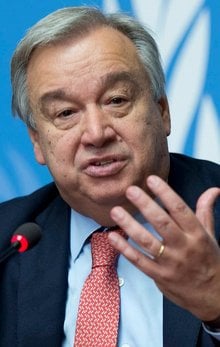
António Guterres
Secretary General

Jasper Inventor
Deputy International Programme Director