Amazon India Surpasses 10,000 EVs in Sustainability Drive
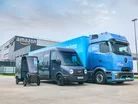
Investment in electric vehicles is a core component of Amazon's strategy to decarbonise logistics operations and achieve its goal of net zero carbon by 2040.
In particular, the company is directing efforts towards the electrification of its last-mile fleet while also investigating solutions for its medium and heavy-duty transport needs - this dual focus is fundamental both to Amazon's climate strategy and its capacity to lower emissions worldwide.
Amazon's transportation decarbonisation plan involves optimising its network to reduce unnecessary journeys, encouraging electrification where it is practical and exploring fuel solutions with lower-carbon emissions.
Vehicle electrification is a top priority for decarbonisation, given the millions of packages delivered daily to customers around the world.

Expanding the EV fleet
Amazon has established an ambitious target to have 100,000 electric delivery vans in service globally by 2030, with a specific goal of deploying more than 10,000 in India by 2025.
Against this goal, the company has made accelerated progress, surpassing 31,400 electric vans in use worldwide by 2024, an increase from 19,000 in the previous year. This figure includes more than 24,000 vans from Rivian.
In addition, Amazon met it's target for India a year ahead of schedule, with more than 10,000 EVs on the road in 2024.
These vehicles collectively enable Amazon to deliver 1.5 billion packages using EVs globally in 2024.
“The diverse nature of our business allows us to test new sustainability solutions across industries,” says Kara Hurst, Chief Sustainability Office, Amazon.
“When we discover a solution in one area, we can quickly adopt it across our business, helping us move faster toward our sustainability goals.
“We recognise that the path to being a more sustainable company will never be linear, because we’re charting new territory at an unprecedented scale.
“While we are firm on our goals, our approach will continuously evolve with emerging challenges and opportunities.”
Developing EV charging infrastructure
To accommodate this expansion, a robust charging infrastructure is necessary. In 2024, Amazon installed 11,770 new chargers, raising its total to 24,000 chargers across 50 delivery stations. These efforts resulted in the largest private charging network in the US.
Similar infrastructure projects are also in progress in Europe and Asia to support the continued growth of the company's electric fleet.
Amazon is also increasing the use of EVs in its middle-mile network, which handles shipments between its facilities.
This includes a range of light, medium and heavy-duty electric goods vehicles (eHGVs).

In early 2025, Amazon placed its largest order for zero-tailpipe-emission trucks, acquiring more than 200 Mercedes-Benz eActros 600 vehicles for its European operations.
These are expected to transport 338 million packages a year once they are fully operational, joining a fleet of 300 middle-mile EVs scheduled for use across the UK by the end of 2025 and Germany by 2026.
Prime Air drone safety and innovation
Amazon's sustainability efforts also encompass its Prime Air electric drone delivery service, where safety is a primary consideration in every design choice.
The drones follow specific flight paths between delivery centres and customer properties, operating at altitudes of 35 to 122 metres (115 to 400 feet) to remain clear of ground-level obstacles and conventional air traffic.
While most flights proceed without issue, the system is designed with a precautionary measure known as a Safe Contingent Landing (SCL).
This procedure enables drones to land securely if unexpected conditions arise, such as sudden weather changes or technical problems.
The drones are fitted with cameras, radar and advanced perception systems to evaluate their surroundings in real time, allowing them to avoid people, animals and other obstacles while finding safe landing locations.
The new MK30 drone has been subjected to extensive safety testing to ensure it can adapt under pressure. For example, SCLs are a planned capability, not an emergency procedure, showing how Prime Air prioritises safety.
Amazon is also electrifying on-site vehicles, with 360 electric yard hostlers in North America by 2024, which are used to move trailers within fulfilment centres.
Despite these significant advancements, Amazon acknowledges that large-scale electrification presents challenges.
Amazon's operations differ considerably between regions, meaning it must navigate technical, cost and sustainability requirements alongside practical issues like land availability, energy dependence and local policy environments.
To address these obstacles, the company is collaborating with government and private sector partners to improve access to electrification and speed up the transition.