Amazon: The Private Sector Aid Response to Hurricane Melissa
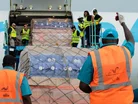
Hurricane Melissa made landfall in Jamaica on 28 October as a Category 5 storm. It was the strongest hurricane to directly strike the island since records began.
The storm also caused catastrophic damage across several other Caribbean nations, including Cuba, the Bahamas and Bermuda. Early reports indicate that 30 people have died and hundreds of thousands have been left without power.
The global response from both the public and private sector has been quick and significant. Amazon, the world's largest online retailer, has been helping to support the communities affected by Melissa, with its Disaster Relief team working to distribute emergency supplies and coordinate international aid efforts.
Amazon has activated its global disaster relief infrastructure in response, positioning emergency supplies and coordinating with international aid organisations to support affected communities.
The company is deploying resources from its Disaster Relief hub in Georgia, US, one of 15 such facilities Amazon maintains globally to respond rapidly to natural disasters.
These hubs are pre-stocked with tarps, blankets, medical devices and other emergency supplies, meaning that aid can be consigned to nearby disaster zones within hours of an event.
Kara Hurst, Amazon's Chief Sustainability Officer, has acknowledged the scale of the crisis.
"It's hard to find the right words in describing the humanitarian disaster caused by Hurricane Melissa. More than 30 people have died, hundreds of thousands across the Caribbean are without power and we don't yet know the extent of all the destruction.
"My heart is with everyone impacted, and I'm grateful Amazon's Disaster Relief team can quickly mobilise to help."
The company is coordinating emergency donations for delivery by both ocean and air transport, with supplies prepared to ship as soon as conditions permit.
Technology and connectivity support
Beyond physical supplies, Amazon is providing technical support to help restore some of the critical infrastructure in the affected areas, including power grids and communication networks.
"We're serving as a technology advisor to help restore power and internet connectivity as quickly as possible," says Kara. "The catastrophic infrastructure damage has isolated many communities, so we're coordinating emergency donations for delivery by both ocean and air."
The company is working alongside the Information Technology Disaster Resource Center, which specialises in helping first responders restore connectivity after disasters.
Footprint Project, another partner organisation, will deploy solar generators and off-grid equipment to provide temporary power solutions while permanent infrastructure is rebuilt.

Coordinating responses with aid organisations
Amazon is collaborating with six major humanitarian organisations, including UN agencies and specialist disaster relief groups.
The World Food Programme is providing emergency food assistance to affected communities, while the International Organization for Migration is supplying water, shelter and sanitation services.
Good360 is facilitating the distribution of donated goods from large corporations to smaller non-profit organisations on the ground, while Global Empowerment Mission focuses on rapid delivery of essential items to those in immediate need.
Abe Diaz, Amazon's Head of Disaster Relief, has also emphasised the importance of community-led recovery efforts.
"Amazon's approach to supporting communities starts with listening to local organisations about what people actually need," he explains.
"We've positioned donated emergency supplies at our Atlanta Disaster Relief hub to use Amazon's logistics capabilities to get them to communities quickly. What matters most is that these supplies reach the right places at the right time to support community-led recovery efforts."
How Amazon coordinates the response of its teams
The disaster response has involved Amazon employees across multiple departments, from fulfilment centre associates preparing relief shipments to operations leaders coordinating real-time logistics.
Kara says: "Watching Amazonians across teams step forward to help is an inspiring reminder that our greatest strength is our people. Amazonians are problem solvers by nature - in the face of challenges, they act."
The company has stated that employee and partner safety remains its primary concern, with dedicated teams working continuously to provide alerts and updated information to inform operational decisions in affected areas.

Hurricane Melissa in the context of climate change
Hurricane Melissa is the most powerful storm globally in 2025 and arrived during a period of increasing concern about climate-related extreme weather events.
The Caribbean region is particularly vulnerable to such events due to its geography and the concentration of population and infrastructure in coastal areas.
The long-term recovery effort is expected to take months, with infrastructure damage likely to have significant economic impacts across the affected nations.
Jamaica, as the country that experienced the direct landfall of a Category 5 system, is set to face a particularly extensive reconstruction process in the coming months.
Company portals


Executives
Abe Diaz
Head of Disaster Relief
Kara H. Hurst
Vice President, CSO, Worldwide Sustainability