Behind Polestar's Guinness World Record for EV Range
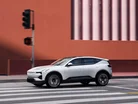
Polestar’s long range single motor Polestar 3 has set a Guinness World Record for the longest journey travelled by an electric SUV on a single charge.
The record saw the vehicle travel 935.44 km (581.3 miles) across UK public roads.

Record-breaking achievement
The endurance test lasted 22 hours and 57 minutes, during which professional efficiency drivers Sam Clarke, Kevin Booker and Richard Parker rotated every three hours to maintain focus.
Despite mixed weather conditions, including rain, the Polestar 3 delivered an energy consumption rate of 12.1 kWh/100 km (19.5 kWh/100 miles).
In fact, the SUV exceeded its official WLTP range figure of 706 km (438 miles), reaching the record-breaking distance with 20% battery still available.
Even after displaying 0%, the car managed an additional 12.8 km (8 miles) before arriving safely at a charger.
“We are very proud to say we have a world record holder in the Polestar family,” says Michael Lohscheller, CEO of Polestar.
“This official Guinness World Record for range is another proof point that Polestar 3 is setting new standards.
“We will continue to push the boundaries of technology and electric performance.”
The attempt was adjudicated by Guinness World Records judge Paulina Sapinska, with data independently verified by Webfleet.
The vehicle was fitted with standard Michelin Sport 4 EV tyres on 20-inch wheels and supported by the AA.
Sustainability at the core
“While the drivers pushed the Polestar 3 to the boundaries of its range capability, it goes to show how battery range has improved exponentially over the past few years,” explains Matt Galvin, Managing Director at Polestar UK.
“For a large premium SUV to go way beyond a London to Edinburgh distance is truly impressive and with this the adage that ‘EVs can’t go far’ has been very much consigned to the history books.”
Through the Polestar 0 Project, launched in 2021, the company aims to produce a truly climate neutral car by 2030.
Unlike carbon offsetting, the project is focused on eliminating emissions across the supply chain, manufacturing and end-of-life stages.
Polestar’s strategy includes designing for longevity and recyclability.
To date, more than 85% of the Polestar 2 and Polestar 4 are recyclable.
Material innovations include carpets made from discarded fishing nets, textiles from recycled PET bottles and MicroTech upholstery derived from bio-attributed sources.
Polestar is publishing detailed Life Cycle Assessments (LCAs) for each model.

Customers can track cradle-to-gate emissions, recycling potential and recommendations for reducing footprint through renewable energy charging.
The Polestar 4, for example, carries the lowest cradle-to-gate footprint to date at 19.8 tCO₂e for the Long Range Single Motor variant.
The company leverages blockchain technology to improve traceability of raw materials such as cobalt, mica, nickel and lithium.
Supplier audits reinforce accountability, while battery production is powered by renewable energy.
The Polestar 2’s cradle-to-gate emissions have already been cut by 3 tonnes since its launch, aided by a factory powered entirely by solar energy.
The Polestar 4 builds on this, combining recycled materials and lower-impact manufacturing processes.